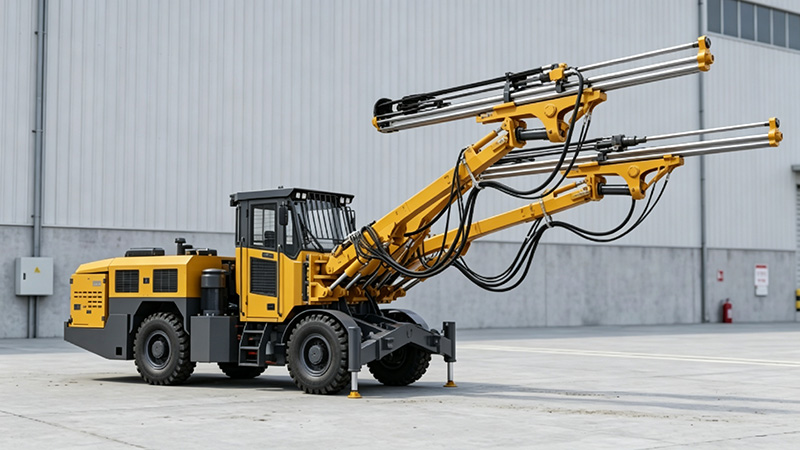
Subsurface excavation and mining demand equipment engineered to operate under severe physical constraints. Restricted drift cross-sections, strict ventilation limits, high rock stresses, and continuous production cycles dictate machinery design. At the core of any hard-rock development or production cycle is the underground drill rig, a purpose-built system designed to execute precise blast, support, and production holes in confined underground environments.
Selecting the correct drilling platform directly dictates operational expenditures (OpEx), drill-and-blast cycle times, fragmentation quality, and overall mine safety. This guide examines the mechanical architectures, selection parameters, and geotechnical variables critical to deploying subterranean drilling equipment.
Engineering Differences: Underground vs. Surface Drilling Machinery
While surface rigs prioritize gross mast height, massive down-pressure, and high-volume single-pass capabilities, an underground drill rig must resolve complex spatial and environmental constraints:
- Kinematic Flexibility within Confined Profiles: Underground booms require multi-axis articulation to drill radial patterns, parallel face rounds, and vertical up-holes within heading cross-sections as narrow as 2.0 m × 2.0 m.
- Powertrain and Ventilation Dynamics: Surface rigs rely almost exclusively on high-displacement diesel engines. Underground rigs prioritize electro-hydraulic power packs during the drilling phase to minimize heat rejection and eliminate toxic emissions, relying on Tier 4/Stage V diesel or battery systems strictly for tramming.
- Ground Support Integration: Underground units often feature dual-purpose feeds capable of rock bolting, screen installation, and face drilling to stabilize exposed ground immediately after excavation.
- Flushing and Dust Abatement: Because dry dust accumulation presents catastrophic pulmonary and explosion hazards underground, subsurface machines integrate high-pressure water flushing systems rather than dry cyclone collectors.
Core Classifications and Drilling Mechanics
Subsurface drilling methods are categorized by percussive mechanism location, hole diameter, and operational purpose:
1. Face Drilling Rigs (Development Jumbos)
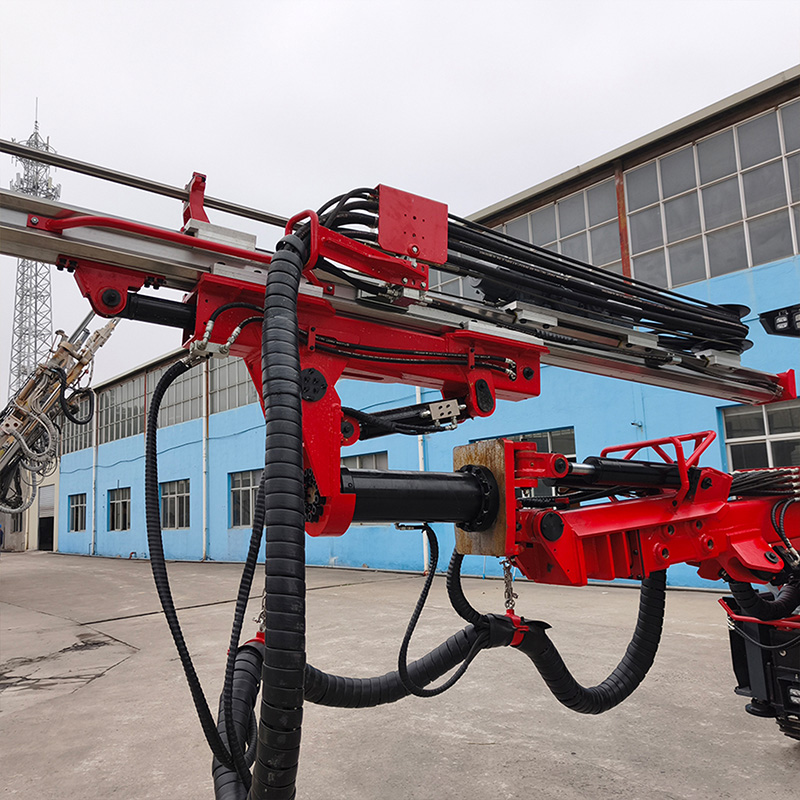
Development jumbos are optimized for rapid horizontal tunnel advancement. Equipped with one to three hydraulic booms, these machines drill horizontal rounds (typically 3.0 m to 5.5 m in depth) using high-frequency top hammers. Precision parallelism systems minimize overbreak and underbreak, maintaining exact drift profiles.
2. Longhole Production Rigs (Stoping Units)
Used primarily in sublevel stoping and VCR (Vertical Crater Retreat) methods, these rigs drill radial fan patterns or parallel rings spanning 10 m to over 40 m. They require high-torque rotary actuators, rigid feed channels, and automated rod-handling systems (RHS) to prevent borehole deviation across long distances.
3. Down-The-Hole (DTH) and In-The-Hole (ITH) Rigs
In extremely hard rock formations (Uniaxial Compressive Strength > 200 MPa), top hammer energy attenuates significantly across multiple drill steel couplings. DTH and ITH systems place the pneumatic or hydraulic hammer directly behind the drill bit. This layout ensures constant impact energy transfer regardless of hole depth, resulting in superior hole straightness for service holes, drain holes, and drop raises.
4. Secondary Support and Bolting Rigs
Dedicated bolting rigs automate the insertion of resin, cement-grouted, or friction bolts into the drift back and sidewalls, removing personnel from the unsupported rock envelope.
Technical Criteria for Rig Selection
Selecting subterranean drilling assets requires matching geotechnical conditions to machine specifications:
- Rock Mass Rating (RMR) and UCS: Formations with UCS exceeding 180 MPa require heavy-duty DTH platforms or high-frequency top hammers with dampening systems to protect internal components from destructive recoil shocks. Equipment engineered by Aivyter incorporates robust hydraulic shock-absorption mechanisms designed to maintain penetration rates in abrasive, high-UCS rock.
- Drift Dimensions and Turning Radii: Match outer rig transport dimensions (width, travel height, and ground clearance) to the minimum cross-cut dimensions. Articulated chassis design and oscillation angles dictate navigation through tight 90-degree intersections.
- Power Supply Availability: Assess mine electrical infrastructure (typically 400V to 1000V at 50/60 Hz). Ensure the carrier’s electro-hydraulic power pack matches mine substation step-down capacities.
- Hole Deviation Thresholds: For longhole stoping exceeding 25 meters, a deviation exceeding 2% can lead to poor fragmentation, ore dilution, or frozen stopes. Rigs with stiff guide feeds, precise angle indicators, and tube drilling systems are essential.
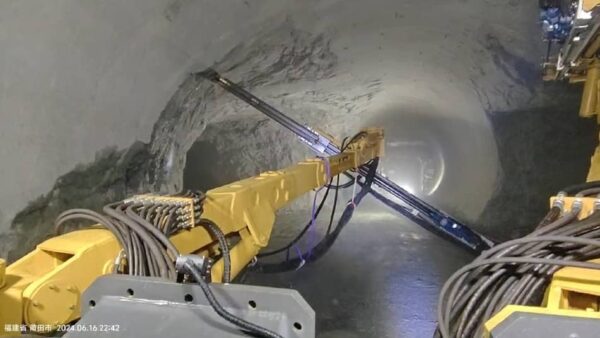
Cost per Meter Analysis and Maintenance Protocols
The capital purchase price of an underground drill rig represents only a fraction of its total lifecycle cost. Calculating the true cost per drilled meter requires evaluating consumables, hydraulic maintenance, and downtime metrics:
- Consumable Wear Rates: Shank adaptors, couplings, drill tubes, and carbide button bits require monitoring against rock abrasiveness (Cerchar Abrasivity Index).
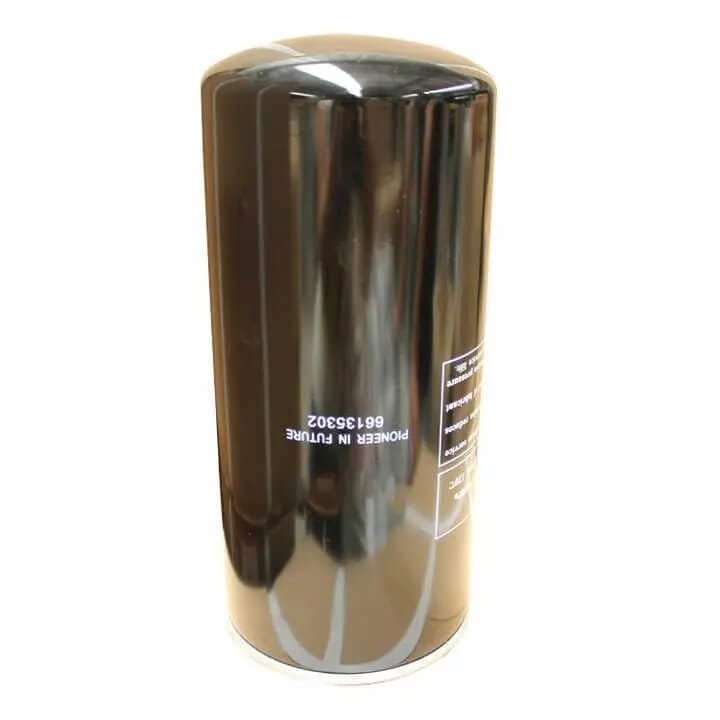
- Hydraulic Contamination Control: High-pressure hydraulic circuits (200–250 bar) operating in humid, dust-laden underground environments require strict filtration (3-micron absolute) to prevent proportional valve failure and drifter piston scoring.
- Drifter Rebuild Cycles: Top hammer percussion units require scheduled preventative seal and diaphragm replacements every 400 to 600 impact hours to avoid catastrophic housing damage.
Heavy-duty machines from manufacturers like Aivyter are built with centralized diagnostic points and modular component architectures, reducing Mean Time to Repair (MTTR) during routine underground overhauls.
Frequently Asked Questions (FAQ)
What is the primary difference between top hammer and DTH drilling in underground mining?
Top hammer rigs deliver impact and rotational energy from an external drifter mounted on the feed, transferring energy through the drill string to the bit. DTH rigs place the percussive hammer directly behind the bit down the hole. Top hammer systems offer faster penetration rates in shallow-to-medium holes (up to 15–20 m), whereas DTH provides superior hole straightness and consistent penetration in deep holes (20–50+ m) in hard rock.
How does drift size dictate underground drill rig chassis design?
The drift cross-section limits machine width, boom swing clearance, and tramming height. Compact underground rigs utilize low-profile, articulated chassis with tight turning radii and four-wheel drive to navigate narrow development headings without contacting ground support or ventilation ducting.
Why are electro-hydraulic systems preferred over diesel engines during drilling?
Underground mine ventilation networks must remove diesel particulate matter, carbon monoxide, and ambient heat. Electro-hydraulic systems run via trailing cables connected to the mine electrical grid, delivering zero operating emissions, lower noise profiles, and reduced thermal output compared to continuous diesel engine operation.
How can drilling deviation be controlled during longhole stoping?
Minimizing deviation involves using rigid guide tubes instead of flexible standard rods, optimizing feed thrust to prevent bit deflection, maintaining proper feed alignment with automated inclinometers, and selecting DTH/ITH mechanics for long-distance holes.
What flushing medium should be used in underground drilling operations?
Water flushing with high flow and pressure is standard in underground operations to suppress airborne respirable crystalline silica dust. When compressed air is required for downhole hammers, mist flushing (air combined with water injection) is implemented to suppress dust while clearing cuttings efficiently from the borehole annulus.
Request an Underground Drilling Equipment Consultation
Optimizing production rates while controlling cost per meter requires equipment matched to your mine plan, rock geomechanics, and drift geometries. Contact the technical team at Aivyter to review equipment specifications, calculate operating metrics, and configure custom machinery for your mining and tunneling projects.
about
Aivyter
We provides trusted air compressors and mining equipment, engineered for durability, efficiency, and demanding industrial applications.