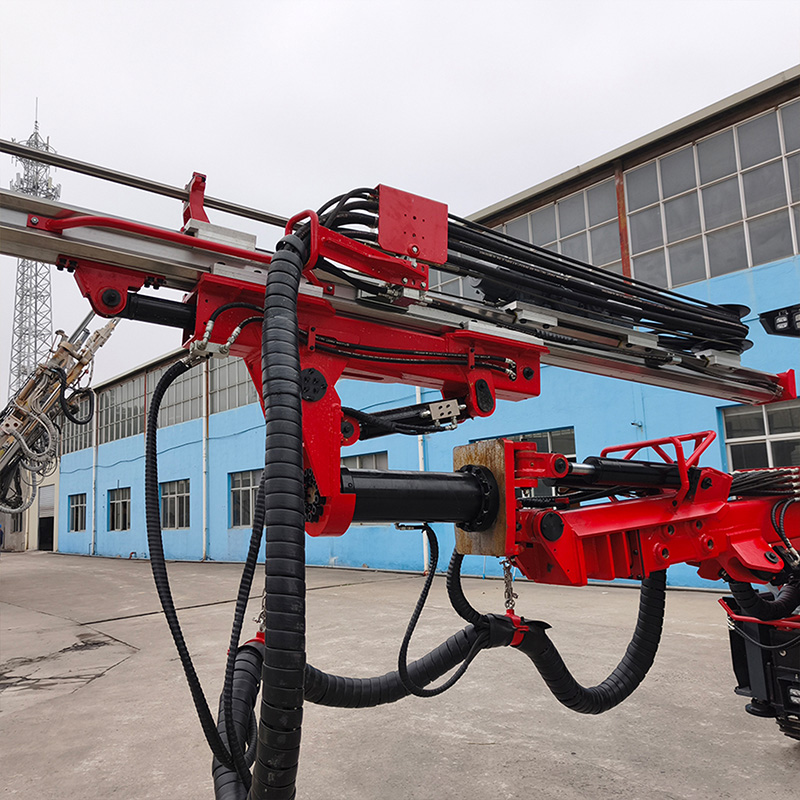
Underground mining operations face some of the most demanding engineering challenges in the world: confined drift spaces, unpredictable rock mechanics, extreme humidity, and strict safety regulations. In this environment, selecting the right underground mining drilling machines directly determines your excavation advance rates, cycle times, and operational cost per meter.
Whether you are developing new haulage drifts, executing sub-level stoping, or installing ground reinforcement, matching machine capabilities with geological conditions is critical. This comprehensive engineering guide explores the main types of underground mining drilling machines, essential technical specifications, and key selection criteria to optimize your mining fleet, featuring industry insights from Aivyter.
1. Primary Types of Underground Mining Drilling Machines
Modern underground drilling equipment is engineered for specialized tasks within the mining excavation cycle. The three core categories include:
1.1 Face Drilling Rigs (Mining Jumbos)
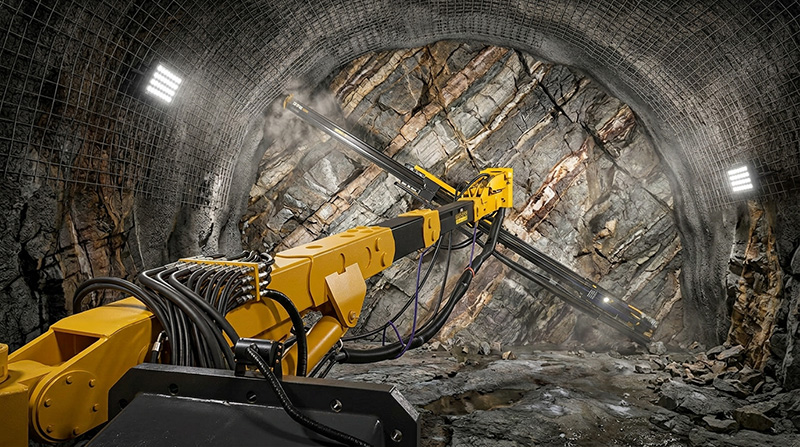
Face drilling jumbos are designed for rapid horizontal and inclined drilling in tunneling, drifting, and cross-cutting. Equipped with one, two, or three heavy-duty hydraulic booms, these machines drill precise blast holes and cut holes to form clean tunnel profiles. Key characteristics include multi-directional boom articulation, anti-jamming automation, and high-frequency hydraulic drifters.
1.2 Long-Hole Production Drilling Rigs
Used primarily in sub-level stoping, VCR (Vertical Crater Retreat), and open stoping methods, production rigs drill radial or parallel fans of long blast holes (typically 15 to 40+ meters). High hole straightness is critical here; hole deviation can lead to poor rock fragmentation, excessive dilution, or secondary blasting costs. Advanced models feature modular rod handling systems and automated rod add/breakout mechanisms.
1.3 Roof Bolting & Ground Support Rigs
Safety and ground stability depend on immediate rock reinforcement. Dedicated bolting rigs mechanize the installation of friction bolts, resin rebar, and cable anchors, keeping operators safely under FOPS/ROPS certified canopies away from unsupported rock faces.
2. Key Technical Specifications: Engineering Evaluation Matrix
When evaluating underground mining drilling machines, reviewing surface dimensions alone is insufficient. Mining engineers and fleet managers must assess internal component capacities against rock mass ratings (RMR) and tunnel cross-sections.
| Engineering Parameter | Standard Operating Range | Operational Impact on Mine Production |
|---|---|---|
| Hole Diameter Range | 38 mm – 127 mm (Up to 254 mm for ITH/DTH) | Determines explosive distribution, powder factor, and final fragmentation size. |
| Drilling Coverage Area | 6 m² – 65 m² | Must match tunnel drift cross-sections (width x height) without requiring multiple repositioning moves. |
| Hydraulic Rock Drill Power | 15 kW – 32 kW (Impact Frequency: 40–70 Hz) | Dictates penetration rates in hard rock formations (UCS > 160 MPa). |
| Tramming Drive System | Diesel-Hydraulic 4WD / Electric-Battery | Impacts underground ventilation requirements, emission levels, and ramp climbing capability (gradeability up to 14°–18°). |
| Feed Beam Length & Rod System | Single/Telescopic feeds (1.8 m – 5.5 m) | Governs maximum single-pass drilling depth in restricted back heights. |
3. Step-by-Step Selection Guide: Matching Machines to Mine Conditions
To avoid costly equipment mismatch, follow a systematic four-step selection process:
Step 1: Analyze Rock Mechanics and Hardness
Assess rock strength using Uniaxial Compressive Strength (UCS) and the Protodyakonov hardness scale. In softer formations, standard percussion frequency with higher rotation torque prevents stuck tooling. In extremely hard, abrasive quartz or basalt veins, prioritize high-frequency hydraulic drifters with independent dampening systems to protect internal components.
Step 2: Calculate Drift Geometry and Turning Radii
Measure minimum clearance, overhead utilities (ventilation ducts, dewatering pipes, power cables), and tramming curve radii. Articulated carrier chassis with oscillating axles ensure stability on uneven tracks, while compact overall dimensions prevent sidewall collisions in tight headings.
Step 3: Evaluate Mine Ventilation & Power Infrastructure
Operating diesel equipment requires adequate ventilation air volume (typically 0.04 to 0.06 m³/s per engine kW) to dilute exhaust gases. Dual-power machines—using a clean Tier 3 / Stage V diesel engine for tramming and an electric motor for stationary drilling—significantly lower underground ventilation costs and heat load.
4. Best Practices for Maximizing Equipment Lifespan
Unplanned downtime in underground operations creates production bottlenecks across the entire haulage line. Implement the following preventive maintenance routines:
- Hydraulic Fluid Hygiene: Underground airborne dust is abrasive. Utilize high-efficiency filtration (beta ratio ≥ 200) and perform periodic oil sampling to prevent proportional valve failures.
- Shank Adapter & Bushing Alignment: Inspect drill steel alignment daily. Misaligned drill strings induce excessive bending stress, causing premature drifter front-end wear and reduced penetration speed.
- Centralized Automatic Lubrication: Ensure all boom pivot joints, carrier pins, and feed track ways receive consistent greasing to resist corrosive mine water and slurry.
5. Why Choose Aivyter for Your Underground Drilling Fleet?
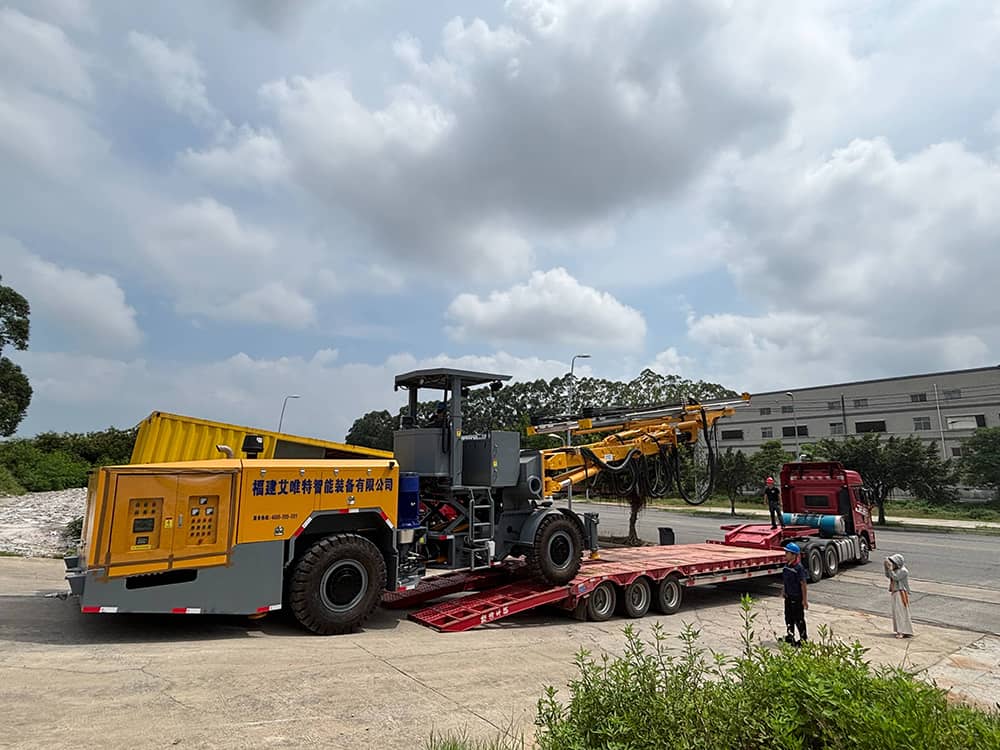
At Aivyter, we engineer and manufacture robust underground mining drilling machines tailored to extreme tunneling and mining conditions. Our focus is on delivering high-availability machinery that combines structural strength with operational simplicity.
- Engineered for Tough Environments: Heavy-duty articulated chassis, proven hydraulic control systems, and high-efficiency rock drills built for uninterrupted shifts.
- Customizable Configurations: Multiple boom layouts, customizable power units (diesel, electric, or hybrid), and variable feed lengths to suit diverse drift profiles.
- Comprehensive Lifecycle Support: Fast delivery of genuine spare parts, hydraulic drifter overhaul kits, and on-site commissioning support to keep your operations running on schedule.
Frequently Asked Questions (FAQ)
Q1: What is the difference between a face drilling jumbo and a production drill rig?
A1: Face drilling jumbos are primarily engineered for rapid excavation, drifting, and tunneling. They drill horizontal or slightly angled blast holes across the tunnel face to advance the heading. In contrast, production drill rigs (long-hole rigs) are designed for stoping and ore extraction. They drill longer, multi-directional radial or parallel fans (often 15 to 40+ meters deep) where high hole straightness and precision are critical to ensure optimal rock fragmentation and minimal ore dilution.
Q2: How do rock hardness and geological conditions affect the choice of underground mining drilling machines?
A2: Rock properties—such as Uniaxial Compressive Strength (UCS), abrasive quartz content, and fracturing—dictate the required hydraulic drifter impact energy, rotation torque, and feed thrust. Extremely hard formations (UCS > 160 MPa) require high-frequency hydraulic rock drills with dual dampening systems to absorb destructive shock waves. Fractured or softer rock masses require high rotational torque, precise anti-jamming controls, and optimized flushing pressure to prevent drill steel entrapment.
Q3: What power systems are available for underground mining drilling machines, and which is best?
A3: Modern rigs typically utilize either diesel-hydraulic, pure electric, or electro-hydraulic hybrid systems. The best choice depends on mine ventilation and infrastructure. Electro-hydraulic configurations are industry favorites: they use an onboard diesel engine for flexible tramming between headings and plug into the mine’s electric grid during stationary drilling. This eliminates underground exhaust emissions, reduces heat output, and significantly lowers ventilation operating costs.
Q4: How do drift cross-sections determine the specifications of an underground drill rig?
A4: Drift dimensions (width, back height, and turning radii) define the physical carrier size, chassis articulation angle, and boom coverage required. The selected drill must navigate restricted tunnel geometries and access narrow cross-cuts without risking sidewall collisions. Additionally, the boom reach must cover the entire excavation profile from a single setup to maintain cycle efficiency, while telescopic feeds are often required in low-height headings.
Q5: How can mining operations reduce drill hole deviation in long-hole drilling?
A5: Minimizing hole deviation requires a combination of rigid machine design, quality consumables, and automated positioning systems. Key measures include: utilizing rigid guide tubes and heavy-duty feed beams, maintaining correct feed thrust to avoid rod bending, deploying high-precision angle sensors and computerized boom positioning, and matching drifter percussion power to the specific drill tube diameter.
Q6: What customized underground drilling solutions and support does Aivyter provide?
A6: Aivyter designs and manufactures adaptable underground mining drilling machines tailored to your specific mine profile and rock conditions. We offer customizable carrier dimensions, variable boom layouts, dual-power configurations, and specialized hydraulic drifters. Furthermore, Aivyter provides global technical support, comprehensive drifter overhaul kits, operator training, and rapid spare parts dispatch to guarantee maximum fleet uptime.
Conclusion & Technical Consultation
Investing in the correct underground mining drilling machines is a strategic decision that affects overall excavation efficiency, operator safety, and production cost per ton. By aligning rock mechanics, tunnel dimensions, and machine specifications, mining operators can achieve predictable, high-yield drill-and-blast cycles.
Ready to optimize your underground drilling operations? Contact the engineering team at Aivyter today to request detailed equipment catalogs, technical drawings, or a customized project quotation.
about
Aivyter
We provides trusted air compressors and mining equipment, engineered for durability, efficiency, and demanding industrial applications.