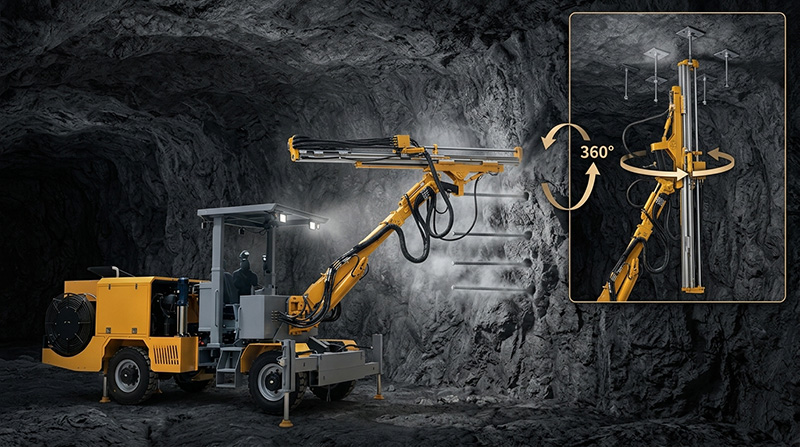
Extracting ore from deep underground places extreme stress on machinery. Tight cross-sections, abrasive dust, high ambient moisture, and massive rock stresses create an unforgiving environment. In these conditions, mechanical failure stops production fast.
Mining engineers and project directors face a persistent challenge: balancing rapid excavation rates with operational safety and machinery uptime. The equipment working at the heading dictates the tempo of the entire mine cycle.
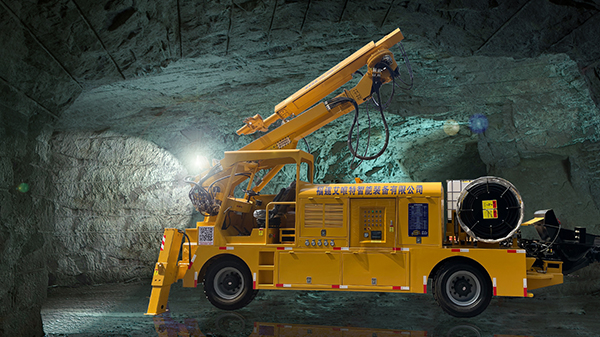
Selecting an industrial-grade underground mining drilling rig directly determines your cost per ton. Companies like Aivyter engineer heavy equipment designed to tackle hard rock headings while keeping unplanned downtime to a minimum.
Core Evaluation Criteria for Heavy-Duty Underground Rigs
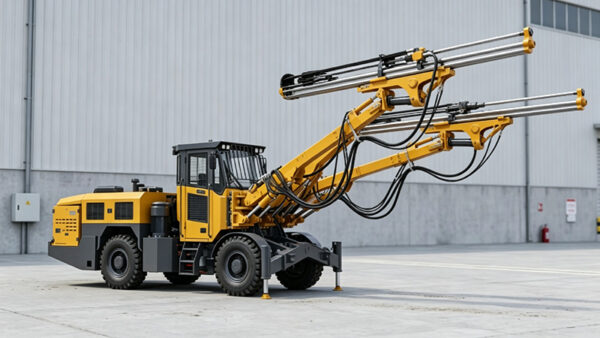
Specifying a drilling jumbo requires a methodical look at mechanical, hydraulic, and structural systems. A failure in any one of these components stalls heading development. Here are the core factors procurement teams evaluate before issuing a purchase order.
1. High-Frequency Hydraulic Rock Drills (Drifters)
The hydraulic drifter serves as the beating heart of any underground mining drilling rig. It converts hydraulic pressure into percussion, rotation, and feed force to fracture hard rock faces.
- Impact Energy and Frequency: High percussion frequency combined with controlled stroke energy shatters dense ore bodies without destroying carbide drill bits.
- Dual-Damping Systems: Advanced rock drills incorporate reflex dampening. This absorbs shockwaves bouncing back from fractured rock faces, saving drifter seals and boom structures from early fatigue.
- Torque Output: Constant-torque rotation motors stop drill rods from jamming in broken or fractured strata.
2. Carrier Mobility and Articulated Chassis Design
Underground passageways leave very little margin for error. A heavy-duty rock drilling equipment carrier must negotiate tight crosscuts, steep declines, and uneven floor conditions.
Articulated, four-wheel-drive carriers provide the turning radii needed for tight 90-degree headings. Oscillation angles on the front axle maintain four-point ground contact over broken rock. Gradeability matters just as much; carriers must walk up 14- to 15-degree ramps under their own power without overheating their power units.
3. High-Pressure Air Flushing Systems
Fast drilling requires clear holes. When drill bits pound into rock, cuttings must exit the bore path immediately. If cuttings remain, the bit regrinds the same debris, dropping penetration rates and overheating carbide inserts.
Compressed air clears these cuttings and cools internal drill components during operation. A weak air supply creates jammed steel, mudded bits, and fractured rods. Connecting an efficient air compressor to the drilling circuit guarantees pristine hole bottoms and longer tool life.
4. Boom Rigidity and Structural Fatigue Resistance
Hydraulic booms withstand enormous bending moments during collar placement and deep percussion. Weldments must resist dynamic flex cycles while keeping the feed rail true to line.
Look for box-section construction, heavy bronze wear pads, and oversized pivot pins. Anti-parallel holding features on the hydraulic tunneling jumbo keep feed beams steady, helping operators drill clean parallel cuts that optimize blast damage profiles.
Top-Tier Mining Drill Rig Solutions: The Aivyter Advantage
Standard machines struggle when formations reach rock hardness levels between f=8 and f=16 on the Protodyakonov scale. Quartzite, basalt, and dense granite demand integrated hydraulic and pneumatic synergy.
Aivyter targets this engineering hurdle directly. By pairing modern underground drill jumbo designs with proprietary air systems, they provide integrated mining drilling solutions that resist harsh underground wear.
Proprietary Air Power Integration
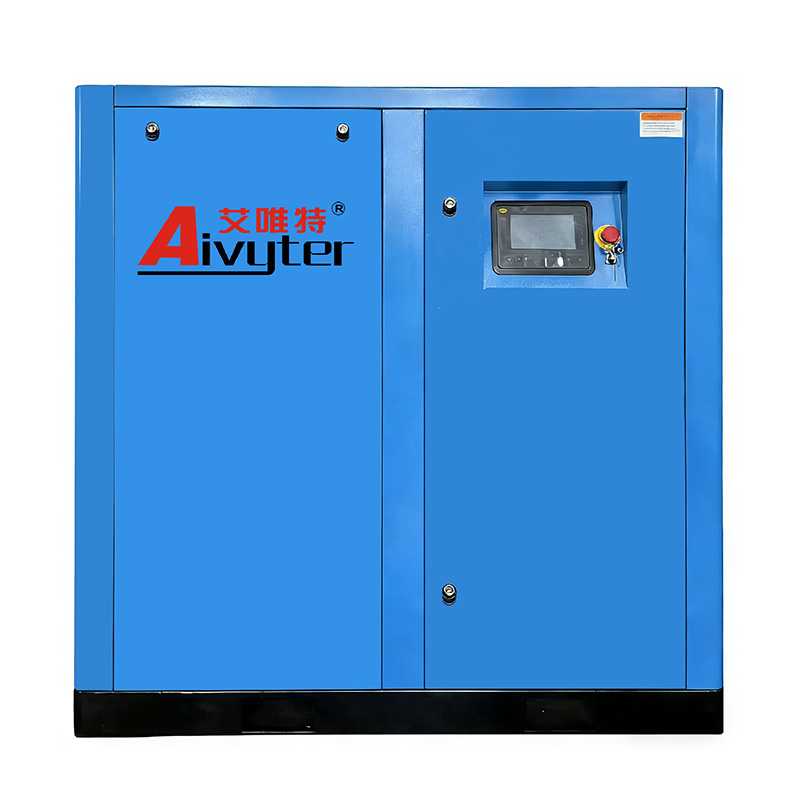
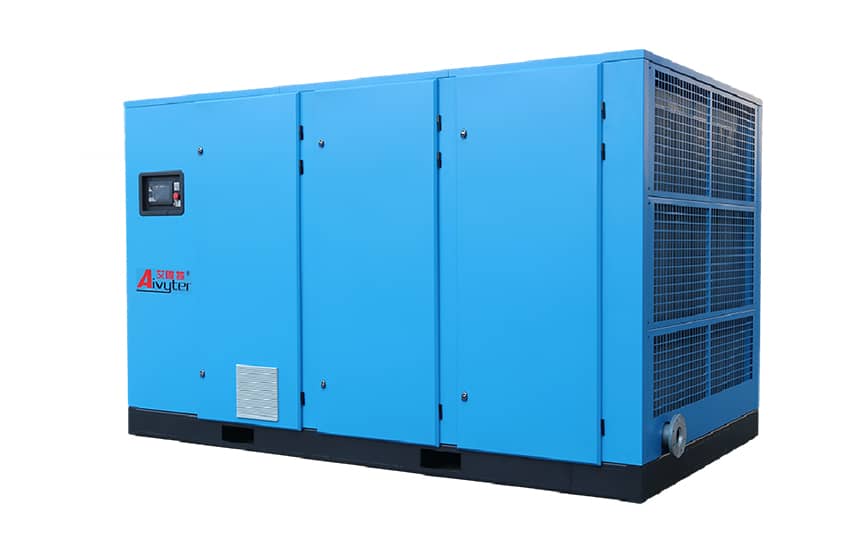
Most drill rigs treat air compressors as simple bolt-on utilities. Aivyter pairs their drill rigs with their own high-efficiency screw air compressor technology. This pairing delivers key technical advantages:
- Continuous High-Pressure Air Volume: Air flows at stable CFM ratings to flush deep blastholes clean, even in wet ground.
- Up to 20% Higher Penetration: Bits contact fresh rock faces on every stroke instead of chewing through damp sludge pockets.
- Lower System Temperatures: Continuous, cooled air circulation protects drifter striking bars and front-head seals from thermal breakdown.
Build Quality and Regulatory Compliance
Deep mines enforce stringent safety guidelines. Every Aivyter underground mining drilling rig meets international quality and safety benchmarks, carrying ISO 9001, CE, and TUV certifications.
Operator canopies and enclosed cabins follow strict FOPS and ROPS guidelines to guard against falling rock. Hydraulic lines run inside protective steel troughs along the booms, preventing burst hazards and keeping crews safe during high-pressure operations.
Selection Matrix: Matching Rigs to Mining Methods
Choosing the right machine layout requires matching the rig’s physical envelope and feed style to your extraction approach. Tunnel profiles determine boom counts, carrier dimensions, and feed rail lengths.
Face Drilling (Jumbos) vs. Production Drilling (Long-Hole Rigs)
Drilling machines perform different tasks based on the mining stage. Picking the wrong configuration wastes capital and delays production targets.
Face Drilling Rigs: These machines focus on rapid advance development. They drill horizontal or slightly angled blast holes across heading faces, cut cut-holes for burn cuts, and drill roof holes for ground support. They feature quick parallel positioning, rapid feed rates, and single or twin-boom layouts.
Production Drilling Rigs: Built for extraction methods like sub-level stoping or bench mining. These rigs drill radial fan patterns or deep parallel down-holes up to 30 meters or more. They use rod-handling carousels and mechanized breakout systems rather than rapid boom positioning.
Cross-Sectional Coverage Considerations
Never size an underground mining drilling rig based purely on tunnel width. You must account for ground clearance, piping drops, ventilation tubing, and cross-cut angles.
- Narrow Vein Workings (2m x 2m to 3.5m x 3.5m): Require compact, single-boom units with tight articulation angles and narrow tires.
- Medium Headings (3.5m x 3.5m to 5.5m x 5.5m): Single or double-boom jumbos with extendable feeds handle both blast patterns and bolt installations.
- Large Intersections and Haulageways (Over 6m x 6m): Twin or triple-boom jumbos equipped with operator baskets ensure complete face and shoulder coverage without remounting.
Maintenance Realities and Total Cost of Ownership (TCO)
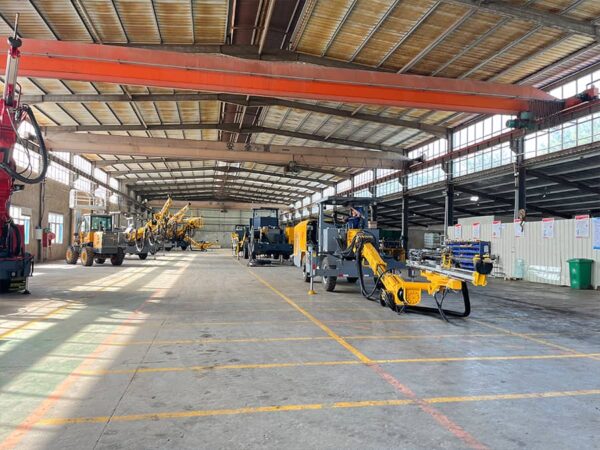
A rig with a lower purchase price can quickly become an operational burden if it demands constant spare parts. Procurement decisions require a full view of Total Cost of Ownership across thousands of engine and percussion hours.
Wear Part Access and Component Life
High-wear consumables dictate daily production rhythms. Mechanics must change drifter seals, striking bars, feed pads, and hydraulic hoses quickly without stripping the chassis down.
Rigs built with central lubrication banks and grouped test ports cut pre-shift inspection times. Fast-turnaround coupling designs on feed rails and rod carousels save precious wrench time, returning the machine to production faces faster.
Modular Architecture Minimizes Spares Footprint
Stocking underground tool sets and replacement units presents serious supply-chain hurdles. Component standardization across equipment lines reduces these parts-inventory burdens.
Aivyter relies on modular hydraulic valves, interchangeable feed slides, and standardized air management components across its mining products. This modular design helps mine warehouses support a fleet with fewer stock lines, slashing emergency air-freight costs and simplifying mechanical training.
Frequently Asked Questions
Q1: What rock hardness can a modern underground mining drilling rig handle?
A1: High-specification rigs easily drill rock formations rating up to 16 to 18 on the Protodyakonov hardness scale (over 180-200 MPa unconfined compressive strength). Paired with adequate flushing air pressure, specialized drifters slice through tough quartzite, granite, and chert formations with low bit slippage.
Q2: Why is compressed air volume so critical on an underground drill jumbo?
A2: Percussive drilling produces dense cuttings quickly. An undersized air supply lets debris pack tightly around the drill steel, slowing penetration, causing collar binding, and baking the drifter’s front head seals. Clean air flow protects consumables and keeps holes clear for explosive loading.
Q3: What is the main difference between face jumbos and long-hole production rigs?
A3: A face drilling rig drills short, parallel holes (typically 3 to 5 meters deep) across a drift face to blast heading advances. A production rig uses automated rod changers to drill long, deep holes (up to 40 meters) in radial patterns for mass-tonnage stoping.
Q4: How does a hydraulic-pneumatic system improve penetration rates?
A4: Hydraulics drive high-frequency percussive impact and rotary torque, while clean compressed air instantly clears rock powder from the impact point. When bit carbide impacts pristine rock rather than trapped cuttings, net drilling speeds jump by 15% to 20%.
Q5: How can operations lower maintenance costs on heavy-duty rock drilling equipment?
A5: Focus on grease discipline, hydraulic fluid cleanliness, and prompt replacement of brass feed slides. Choosing equipment that uses modular hydraulic valves and accessible diagnostics drastically cuts troubleshooting hours and preserves costly drifters.
Secure Your Heavy-Duty Mining Equipment Solution
Hitting ambitious monthly advance targets requires dependable machinery matched to your exact geological conditions. Downtime deep underground is too expensive to gamble on light-duty equipment.
Aivyter builds reliable, heavy-duty mining drilling solutions supported by integrated, industrial-grade screw air compressors, strict CE/ISO-certified manufacturing, and rugged structural designs.
Ready to upgrade your underground advance rates and lower operating costs? Contact the Aivyter engineering team today to request machine specification sheets, review structural layouts, or receive an operational quote customized for your mine.
about
Aivyter
We provides trusted air compressors and mining equipment, engineered for durability, efficiency, and demanding industrial applications.