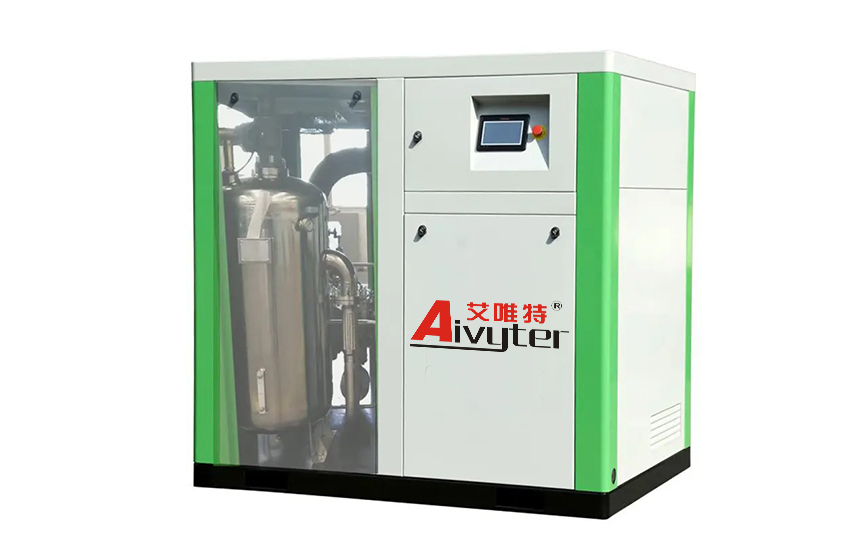
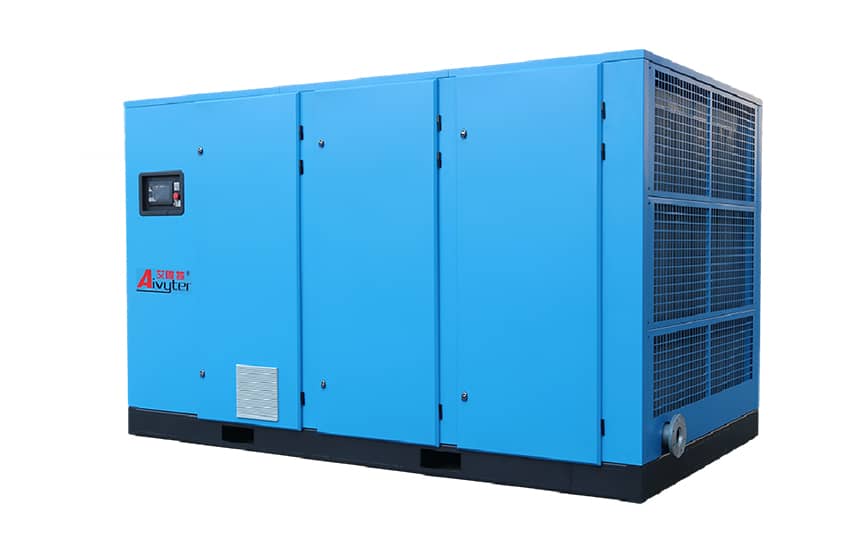
Pneumatic energy serves as a fundamental utility across heavy manufacturing, mining, and structural engineering projects. Unlike light-duty manufacturing operations that rely on intermittent air usage, heavy industries demand continuous, high-volume air delivery. Selecting and integrating a heavy-duty industrial screw air compressor into the facility design dictates not only operational reliability but also overall system efficiency.
To support high-demand applications, reputable manufacturers like Aivyter build systems designed to withstand continuous operating schedules. This analysis provides plant managers, system engineers, and utility operators with the objective information needed to make informed system decisions and secure long-term performance.
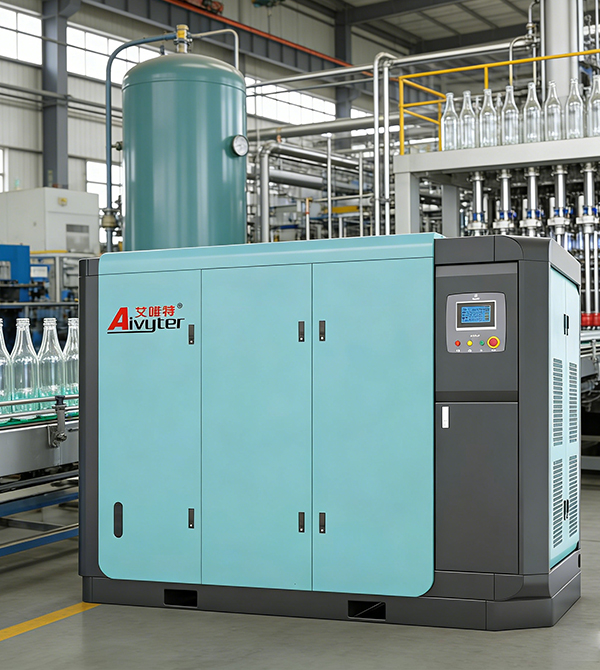
Key 1: Master the Mechanical Principles of the Rotary Airend
At the center of any modern pneumatic system is the rotary compression mechanism. Understanding how this unit manages air compression is vital for proper system integration and output prediction.
Rotor Geometry and Profile Ratios
The core mechanism is the rotary airend, which houses two intermeshing helical rotors: the male and female rotors. The male rotor typically features four lobes that drive the female rotor, which commonly has five or six flutes. The volumetric compression of an industrial screw air compressor occurs as the air travels along the rotor profile, decreasing axially from the intake port to the discharge port.
This progressive reduction in volume compresses the trapped air. The efficiency of this process depends heavily on the rotor profile design. Modern asymmetric profiles minimize blowby (the backflow of compressed air to the low-pressure side), ensuring high volumetric efficiency. Because there are no reciprocating pistons or valves to create friction or mechanical shock, this rotary design can run at high rotational speeds with minimal vibration.
Thermodynamic Control and Lubrication Dynamics
In oil-flooded configurations, lubricating fluid is injected into the compression chamber. This fluid serves three distinct functions:
- Sealing: It fills the micro-clearances between the rotors and the stator casing, preventing internal air leakage.
- Cooling: It absorbs the heat generated during the compression process, maintaining discharge temperatures well below the thermal limits of the system components.
- Lubrication: It prevents metal-to-metal contact between the mating rotor lobes and lubricates the support bearings.
This direct cooling mechanism allows the compression process to approach an isothermal profile rather than an adiabatic one, reducing the specific energy consumption of the unit.
Key 2: Select the Appropriate Lubrication Configuration
The choice between oil-flooded and oil-free rotary screw designs is dictated by the requirements of the downstream applications and the specific contaminants allowed in the process air.
| Feature | Oil-Flooded Screw | Oil-Free (Dry) Screw |
|---|---|---|
| Lubrication in Chamber | Direct injection into compression space | No oil in compression space (geared timing) |
| Discharge Temperature | Low (typically 80°C – 100°C) | High (often exceeding 150°C per stage) |
| Air Purity Class (ISO 8573-1) | Class 2 to Class 4 (requires filtration) | Class 0 (oil-free by design) |
| Capital Investment | Standard | Higher due to complex rotor coatings and cooling jackets |
For heavy industrial applications like rock drilling, steel manufacturing, and pneumatic conveying of abrasive bulk materials, oil-flooded systems are preferred. They offer high structural durability and longer maintenance intervals. For pharmaceutical, food processing, or precision electronics assembly, oil-free systems are required to eliminate the risk of lubricant contamination, though they require sophisticated dry coatings and secondary cooling stages to handle the higher operating temperatures.
Key 3: Implement Variable Speed Capacity Control
Industrial operations rarely maintain a constant demand for compressed air. Matching output with fluctuating plant demand requires robust capacity control mechanisms.
Load/Unload and Modulation Control
Standard fixed-speed units utilize load/unload control. When downstream pressure reaches the high-pressure setpoint, an inlet butterfly valve closes, and the internal sump pressure is vented to the atmosphere. The motor continues to run at full speed but draws significantly less power because it is not compressing air. While robust, this method consumes substantial idle energy (often 25% to 40% of full-load power) during periods of low demand.
Modulation control restricts the inlet valve based on pressure changes, throttling the intake to match the demand. While simple, this throttling creates a vacuum at the inlet, increasing the compression ratio and reducing the aerodynamic efficiency of the machine under partial load conditions.
Variable Speed Drive (VSD) Integration
By modulating motor speed, integrating a modern industrial screw air compressor with variable speed drive matches output to real-time plant requirements. A variable frequency drive (VFD) alters the frequency and voltage supplied to the drive motor, adjusting the rotational speed of the rotors.
- Specific Power Optimization: VSD units maintain a flat specific power curve across a wide operating range (typically 30% to 100% capacity), preventing energy waste from frequent load/unload cycling.
- Reduced Mechanical Stress: Eliminating the rapid pressure swings associated with load/unload control reduces mechanical fatigue on the separator elements, seals, and piping connections.
- Soft Starting: The VFD gently accelerates the motor, eliminating current spikes during startup and protecting the plant electrical grid from voltage drops.
Key 4: Optimize Downstream Treatment and Moisture Separation
Ambient air contains moisture, particulates, and gaseous hydrocarbons. When compressed, these elements concentrate, posing a risk of oxidation and valve wear in downstream tooling. Proper design of the downstream air processing for an industrial screw air compressor installation is required to protect downstream processes.
ISO 8573-1 Air Quality Classes
To specify the required purity level, engineers refer to the international standard ISO 8573-1. This standard categorizes air quality based on solid particles, water content, and total oil content. Heavy-duty construction equipment may operate reliably on Class 4 air, whereas automated manufacturing machinery often requires Class 1 or Class 2 filtration levels.
Drying Technologies and Condensation Control
As hot compressed air cools, water vapor condenses into liquid water. To prevent this moisture from reaching downstream equipment, two primary drying technologies are utilized:
- Refrigerated Dryers: These units cool the compressed air to approximately 3°C (37°F). This thermal drop forces water vapor to condense, allowing it to be separated and discharged via an automatic drain valve. This is sufficient for indoor manufacturing facilities with controlled ambient temperatures.
- Desiccant Dryers: Utilizing adsorption materials like activated alumina or molecular sieves, desiccant dryers achieve pressure dew points of -40°C or -70°C. This level of moisture removal is necessary for outdoor mining operations or high-pressure pipelines exposed to sub-zero temperatures.
Key 5: Establish Proactive Preventative Maintenance Routines
Running an industrial screw air compressor in highly abrasive mining environments or dusty chemical facilities requires rigorous maintenance protocols to prevent premature component failure.
Mitigating High Discharge Temperatures
The most common cause of automated shutdowns in rotary screw systems is high discharge temperature, often exceeding the standard limit of 110°C. This issue typically stems from fouled oil coolers, restricted air intake filters, or thermal bypass valve malfunction. The thermal bypass valve regulates oil routing: when cold, oil bypasses the cooler to reach operating temperature quickly; when hot, it is routed through the heat exchanger. Regular inspection of the radiator fins and testing of the thermal element are crucial steps in preventative maintenance programs.
Managing Lubricant Quality and Separation
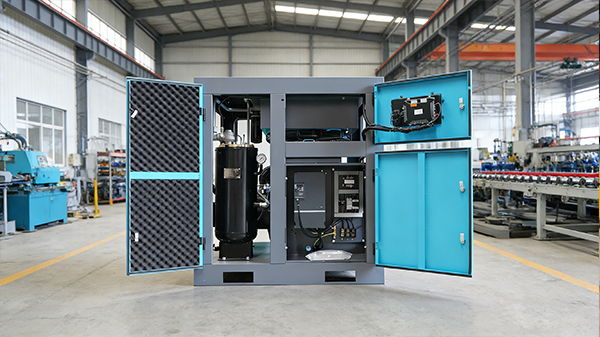
In oil-flooded systems, the air-oil separator element is a key maintenance component. This element utilizes mechanical coalescing filters to remove oil droplets from the compressed air stream before it enters the discharge line. If the separator element becomes clogged, pressure drop across the vessel rises, increasing the energy consumption of the compressor. Furthermore, poor oil quality can lead to varnish accumulation on the rotor surfaces, leading to increased friction, elevated bearing temperatures, and eventually, mechanical seize.
System Sizing and Engineering Integration
Proper integration of a compressed air system extends beyond selecting the compressor unit. It involves auditing the entire pneumatic infrastructure, including receiver tank sizing, main distribution header routing, and drop-point piping configurations. Over-sizing an air system leads to cycling inefficiencies, while under-sizing causes pressure drops that impair production equipment performance.
Partnering with an experienced system designer is beneficial to ensure the equipment matches your exact operating profile. Consulting with engineering experts at Aivyter can help you configure a balanced system that optimizes compressor performance, downstream drying, and filtration systems to meet your specific operational demands.
Frequently Asked Questions
Q1: What is the primary difference between a rotary screw compressor and a reciprocating piston compressor?
A1: A rotary screw compressor uses two continuous, intermeshing helical rotors to compress air without valves or reciprocating motion, allowing for a 100% duty cycle and low vibration. A reciprocating compressor uses pistons, cylinders, and one-way valves, which generate significant heat and vibration, typically requiring a duty cycle of 50% to 75% to prevent overheating.
Q2: Why is the pressure dew point (PDP) important in outdoor industrial air systems?
A2: The pressure dew point indicates the temperature at which water vapor in compressed air will condense into liquid water at a given pressure. In outdoor systems, if the ambient temperature drops below the pressure dew point, liquid water will form in the pipes, leading to freezing, corrosion, and valve blockages. A low pressure dew point, achieved by a desiccant dryer, prevents these issues.
Q3: How often should the air-oil separator element be replaced in an oil-flooded compressor?
A3: Generally, the air-oil separator element should be replaced every 4,000 to 8,000 operating hours, or when the pressure differential across the separator exceeds 0.8 to 1.0 bar (12 to 15 psi). Operating with a fouled separator forces the compressor to work harder, reducing efficiency and increasing oil carryover into the downstream pipeline.
Q4: Can a Variable Speed Drive (VSD) compressor operate efficiently in highly dusty environments?
A4: Yes, but VSD units require specific engineering considerations for dusty environments. The frequency inverter and the electric motor must have appropriate ingress protection ratings (such as IP55 or IP66), and the cooling air intake for both the inverter and the compressor enclosure must utilize high-efficiency pre-filtration to prevent particulate accumulation on internal electronic components.
Q5: What is the purpose of an air receiver tank in a rotary screw air compressor installation?
A5: An air receiver tank acts as a buffer store for compressed air, dampening pressure pulsations from the compressor, cooling the compressed air to help separate liquid water, and providing a storage reservoir to handle transient peak demands without forcing the compressor to load and unload excessively.
Get Expert Assistance on Your Project
Determining the correct pneumatic architecture requires careful analysis of air consumption, duty cycles, and environmental parameters. To ensure your compressed air system runs reliably and efficiently under all operating conditions, contact the team at Aivyter today to submit an engineering inquiry.
about
Aivyter
We provides trusted air compressors and mining equipment, engineered for durability, efficiency, and demanding industrial applications.