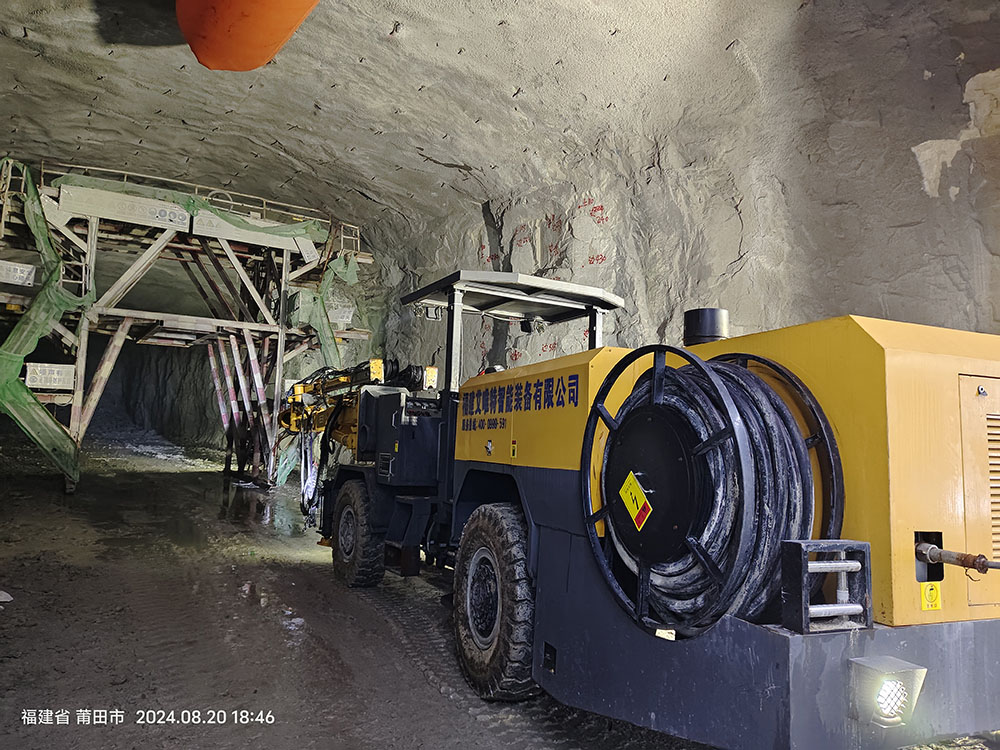
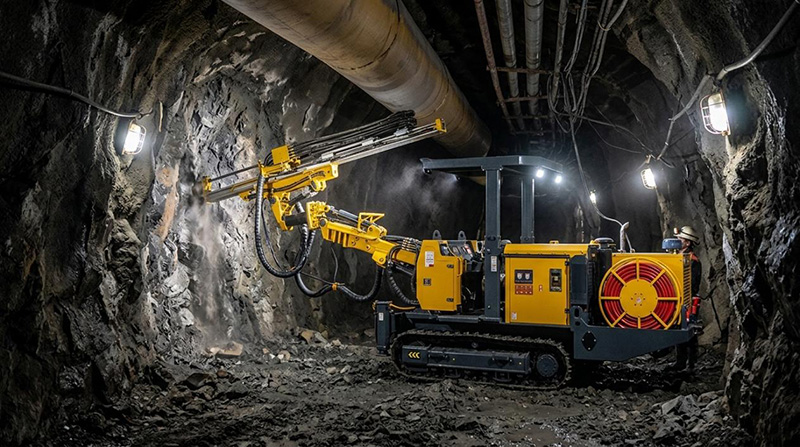
Mining operators face tighter environmental rules, deeper ore deposits, and persistent labor shortages. Buying heavy equipment without evaluating how technologies have shifted will hurt productivity and blow operating budgets. An underground rock drilling machine represents a major capital investment, and settling for legacy platforms cuts into margins across multi-year extraction contracts.
Whether expanding a sublevel stoping fleet or driving tunnels through fractured basalt, equipment buyers must weigh automation, new powertrains, and lifecycle costs. Manufacturers like Aivyter build underground drill rigs to meet strict emission standards and optimize cycle times. Contact our technical team today to discuss rig specifications or request an itemized machinery quote for your upcoming project.
Defining Your Operational Baseline: Matching Rig Type to Mine Conditions
Before reviewing component specs, verify that the drill matches your actual mine plan. Purchasing an oversized rig restricts tramming in narrow veins. Under-specifying drifter output slows advance rates in hard rock formations.
Face Drilling Jumbos vs. Production and Long-Hole Drills
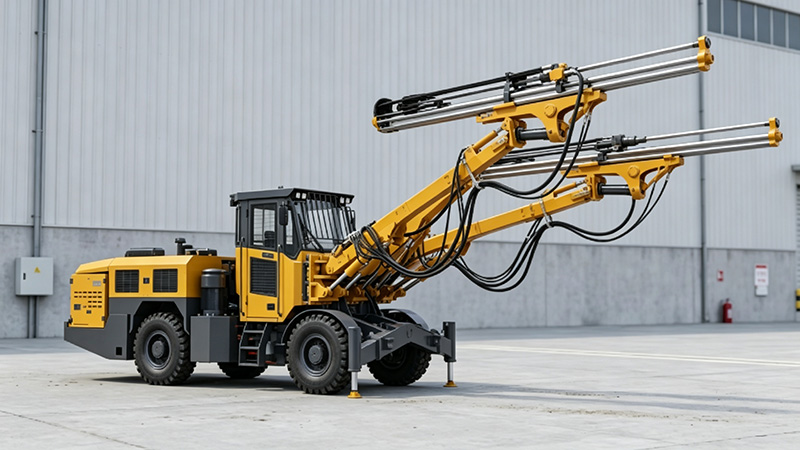
Determine your primary production task. Face drilling jumbos cut blast holes, install ground support, and drive headings. These machines require high-dexterity boom assemblies and automated parallel holding.
Production drill rigs focus on ring drilling and long-hole stoping. They require high-torque rotary heads, rigid feed beams, and mechanized rod handlers capable of drilling straight holes beyond 25 meters. Selecting an underground drill jumbo for production duties leads to hole deviation, poor fragmentation, and wasted blast energy.
Drift Dimensions and Chassis Maneuverability
Measure minimum drift widths, heights, and turning radii along your haulage routes. Low-profile mines need compact carrier frames with articulated steering and oscillating axles to maintain tire contact on rough surfaces.
Ensure the machine navigates sharp corners without scrubbing sidewalls. Check the tramming envelope and outer turning radius against your narrowest crosscuts, water piping, and ventilation ducts.
Rock Mechanics and Hardness Ratings
Assess your rock mass rating (RMR), unconfined compressive strength (UCS), and quartz content. Rock with a UCS above 180 MPa requires high-frequency hydraulic drifters and robust dampening systems to protect drill steel.
If you encounter fractured or swelling ground, you will need specialized boom geometry capable of rapid bolting and screen installation. Matching the drifter’s impact power to rock hardness stops premature tool wear and prevents shank failures.
Power Source Selection: Diesel vs. Battery Electric (BEV)
Powertrain decisions dictate mine infrastructure costs for years. In 2026, ventilation capacity and carbon penalties carry equal weight alongside raw horsepower.
Tighter Emissions and Ventilation Constraints
Environmental regulations and deep-mine heat loads force operations to reduce underground diesel emissions. Particulate filters and Tier 4 Final or Stage V engines scrub exhaust, but they still produce heat that ventilation systems must clear.
For operations extending below 1,000 meters, installing extra ventilation shafts to clear diesel fumes is often far more expensive than upgrading to electric underground machinery.
The Case for Battery-Electric Mining Equipment
Adopting battery-electric mining equipment removes diesel particulate matter (DPM) and nitrogen oxides at the working face. Electric drivetrains deliver high wheel torque instantly, improving ramp-tramming speeds.
Electric underground drilling rigs produce far less heat and noise than internal combustion engines. This drop in heat lowers refrigeration and airflow requirements, generating major operational savings over the machine’s service life.
Where Diesel and Hybrid Systems Still Win
Standard diesel or diesel-electric hybrids remain practical for remote exploration projects and mines with unstable surface power grids. Diesel gives carriers complete autonomy during long cross-mine moves between levels.
Review the charging infrastructure at your mine before choosing battery rigs. If electrical substations cannot support rapid megawatt charging without voltage drops, high-efficiency diesel carriers paired with electric drilling packs remain the safer choice.
Automation Levels and Tele-Remote Capabilities
Labor shortages and deeper, hazardous working conditions make automated drilling a necessity. Today’s modern underground drill rigs operate with higher autonomy and precision than older machinery.
Automated Drilling Cycles and Hole Accuracy
Manual lever controls allow human error, which causes uneven blast profiles and excess overbreak. Modern drills run semi-automated cycles based on digital drill patterns loaded directly into the rig’s control system.
The control system monitors penetration rates, adjusts feed pressure, and detects rock voids automatically to prevent rod jamming. Consistent hole alignment cuts explosive costs and keeps tunnel profiles true to engineering drawings.
Teleremote Operations for High-Risk Headings
Tele-remote systems allow an operator on the surface or in a safe underground cubicle to run multiple machines across shift changes and blast-clearance windows. Operating an underground rock drilling machine remotely removes personnel from seismically active areas and unsupported brows.
Teleremote capability also turns unproductive shift changes into active drilling hours, adding three to four extra operating hours each day.
Telemetry, IoT, and Fleet Management
Choose drills with open-architecture telemetry systems. Onboard sensors should stream data points including percussion hours, hydraulic oil temperatures, anti-jamming activations, and fuel or power usage.
Open CAN-bus architecture allows maintenance managers to integrate the drill into broader mining management platforms, making predictive maintenance possible before hydraulic pumps fail.
Drilling Performance, Rock Drill Reliability, and Wear Parts
A drill carrier is only as productive as its rock drill (drifter). Fast tramming does not help if the drifter sits idle waiting for repairs.
Penetration Rate and Drifter Durability
Inspect the drifter’s impact frequency, stroke adjustments, and dual-damping design. Dual damping absorbs reflected shockwaves from the rock face, protecting internal drifter components and drill threads.
Brands like Aivyter supply high-frequency hydraulic drifters built to sustain high drilling penetration rate numbers in abrasive ground while extending component overhaul cycles beyond 800 percussion hours.
Drill String and Consumable Life
Evaluate shank adapter, coupling, and rod consumption metrics. A rigid, well-engineered feed beam limits flex, which keeps blast holes straight and extends thread life on drill strings.
- Choose aluminum feeds lined with stainless steel wear strips to cut boom weight while preserving straightness.
- Ensure the rig accommodates various bit types, including ballistic and spherical carbide inserts.
- Confirm the feed package includes automated bit-greasing systems to extend thread life.
Hydraulic System Stability and Energy Efficiency
Hydraulic heat degrades seals and breaks down oil, driving up maintenance costs underground. Prioritize rigs fitted with load-sensing variable displacement pumps that route hydraulic pressure only when the feed or percussion circuits call for it.
Proportional valves offer smooth boom movement and fast anti-jam responses. Well-placed hydraulic oil coolers keep working temperatures stable during long multi-ring production shifts.
Safety Engineering and Operator Ergonomics
Mining safety regulations require equipment to protect operators from rockfalls while reducing physical fatigue during long underground shifts.
Cabin Certifications: ROPS and FOPS Compliance
Never buy an underground production or face rig without verifying structural safety ratings. Cabins must meet ISO 3471 for Roll-Over Protective Structures (ROPS) and ISO 3449 for Falling-Object Protective Structures (FOPS) Level II.
For open-canopy rigs, verify that safety posts provide unblocked sightlines while withstanding falling rock strikes.
Ground-Level Serviceability
Mechanics should not climb onto slippery booms or greasy frames for daily fluid checks. Modern machines place primary service checkpoints within arm’s reach of the ground.
- Centralized grease manifolds speed up regular maintenance routines.
- Sight glasses for hydraulic and compressor oil must sit at eye level.
- Grouped diagnostic test ports allow quick pressure checks without opening high-pressure lines.
Vibration Dampening and Noise Abatement
Vibration and noise harm operator health and safety. Sealed, air-conditioned cabins should keep noise levels below 75 dB(A) during drilling.
Air-ride seats, ergonomic joysticks integrated into armrests, and intuitive touchscreens reduce physical strain, helping operators stay focused throughout their shifts.
Calculating True Total Cost of Ownership (Mining TCO)
Purchase price represents only 20 to 30 percent of the total cash spent on an underground drill over its working life. Fuel, power, consumables, rebuilds, and unscheduled downtime account for the rest.
CAPEX vs. OPEX: The Real Cost Spread
A lower sticker price often masks high hydraulic hose consumption, inefficient drifters, and scarce replacement parts. Balance initial equipment costs against five-year operating expenses.
Spending more up front for better build quality, smart controls, or efficient powertrains pays off through lower cost-per-meter rates over hundreds of thousands of drilled meters.
Spare Parts Availability and Supply Chain Resilience
A drill stuck underground waiting on a proprietary solenoid valve costs thousands of dollars an hour in lost production. Review the manufacturer’s regional parts distribution networks before signing purchase orders.
Check if the rig uses standard hydraulic fittings, global electrical components, and standard seal kits, or if it relies entirely on proprietary components with long factory lead times.
Vendor Field Support and Operator Training
Advanced automated features depend on proper operator training. Choose equipment partners that provide field commissioning, underground operator coaching, and hydraulic diagnostic training for your site mechanics.
2026 Underground Rock Drilling Machine Checklist
| Assessment Area | Specific Requirements | Operational Target |
|---|---|---|
| Application Fit | Face Jumbo vs. Long-hole rig; turning radius; drift height | Zero clearance issues; fast cycle setup |
| Powertrain | Battery-Electric (BEV) vs. Stage V / Tier 4F Diesel | Meets ventilation rules; cuts underground heat |
| Drifter Performance | High-frequency hydraulic percussive system; dual damping | Fast penetration; long shank and bit life |
| Automation Level | Digital drill plans; anti-jamming; tele-remote support | Straight holes; minimal overbreak; safer crews |
| Cabin & Safety | Certified ROPS/FOPS; air filtration; sub-75 dB(A) cabin | Compliance with safety rules; less operator fatigue |
| Maintenance Access | Ground-level grease lines, fluid checks, and test points | Faster shift inspections; safer repair access |
| Parts Support | Guaranteed component lead times; regional field support | Maximum rig availability; reduced unscheduled stops |
Frequently Asked Questions
Q1: What is the main difference between a face drilling jumbo and a long-hole mining drill rig?
A1: A face drilling jumbo uses flexible, multi-joint booms to drill horizontal and angled patterns into heading faces for blasting and bolting. A long-hole rig utilizes rigid feed beams and automated rod changers to drill straight, deep production holes—often 20 to 40 meters long—for stope extraction.
Q2: When should I choose a battery-electric underground rock drilling machine over a diesel unit?
A2: Choose a battery-electric rig if your mine has ventilation limits, works at deep levels with high heat loads, or faces strict carbon-reduction mandates. Battery rigs eliminate tailpipe emissions at the face, which cuts overall mine ventilation and refrigeration expenses.
Q3: How does drill hole deviation affect underground mining costs?
A3: Hole deviation causes uneven blast energy distribution, leading to poor rock fragmentation, bootlegs, and wall overbreak. Overbreak forces your haulage fleet to move barren waste rock, which raises processing costs and weakens surrounding ground support.
Q4: What certifications should I check for on drill rig cabins?
A4: Check that the cabin carries ISO 3471 (ROPS – Roll-Over Protective Structures) and ISO 3449 (FOPS – Falling-Object Protective Structures Level II) certifications. Verify that the cab includes positive-pressure air filtration and climate controls to protect operators from silica dust.
Q5: What maintenance intervals should I expect for heavy-duty hydraulic drifters?
A5: High-performance drifters typically require intermediate seal and diaphragm replacements every 400 to 500 percussion hours. Major overhauls—including striking bar bushings, bearings, and front-head components—generally run between 800 and 1,200 percussion hours, depending on rock hardness and lubrication quality.
Final Procurement Considerations
Selecting an underground rock drilling machine requires balancing technical specs against actual site conditions. Focus on stable drill feeds, reliable drifters, operator safety, and parts availability rather than marketing claims alone. Modernizing your fleet with dependable machinery protects cash flow and keeps development headings moving on schedule.
At Aivyter, we engineer rugged, high-performance underground drilling solutions designed to tackle demanding mining environments. Contact our engineering sales division today to review your ground conditions, explore equipment options, and receive a competitive quotation built around your production targets.
about
Aivyter
We provides trusted air compressors and mining equipment, engineered for durability, efficiency, and demanding industrial applications.