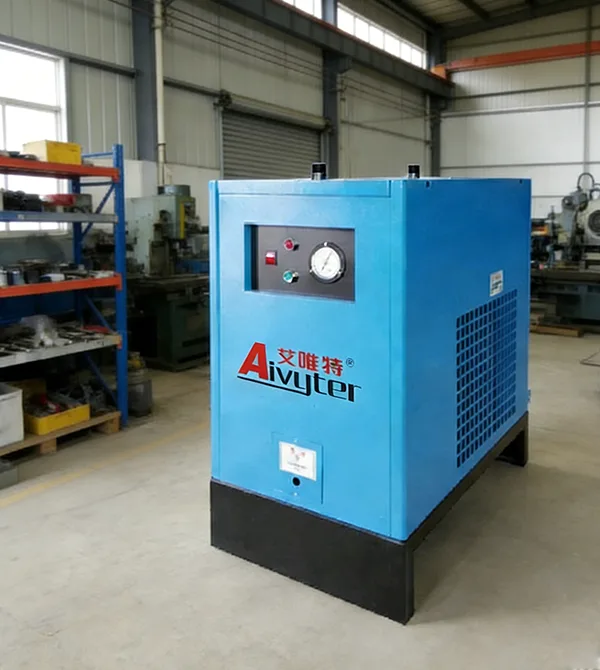
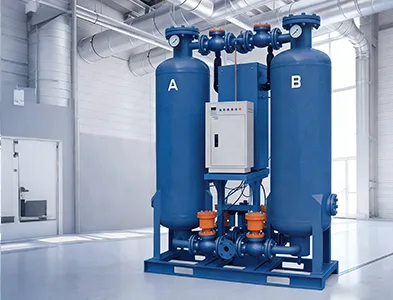
Pneumatic power remains a cornerstone of modern industrial operations, driving everything from automated assembly lines to heavy-duty mining drills. When atmospheric air is drawn into a compressor, it contains varying levels of ambient moisture. The compression process increases the concentration of water vapor per unit volume, which liquefies as the compressed air cools downstream. This liquid water causes corrosion, damages precision pneumatic instruments, and contaminates manufacturing processes. Implementing a high-performance refrigerated air treatment system is a proven method to address this moisture issue. By cooling the compressed air to a precise temperature, these systems condense and remove entrained water before it can enter the distribution network. Manufacturers like Aivyter provide heavy-duty equipment designed to maintain stable pressure dew points under demanding industrial conditions.
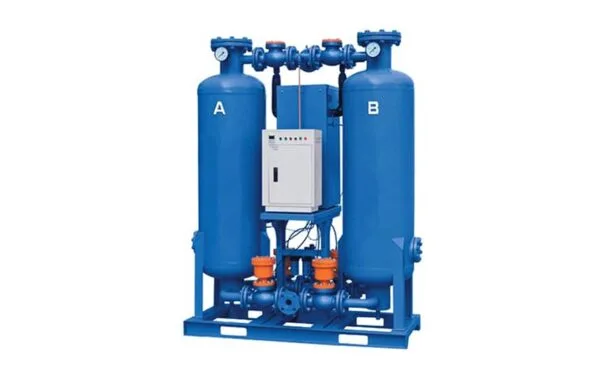
Thermodynamic Foundations of Pressure Dew Point Control
The primary metric for evaluating the dryness of compressed air is the Pressure Dew Point (PDP). Unlike atmospheric dew point, PDP measures the temperature at which water vapor condenses under actual operating pressures. A refrigerated air dryer lowers the temperature of the air stream, reducing its capacity to hold water vapor. When the temperature of saturated compressed air is decreased, water vapor transitions from a gaseous state to a liquid state, allowing mechanical separation to occur.
To understand this mechanism, it is helpful to trace the pathway of compressed air through a standard drying unit:
- Air-to-Air Heat Exchanger: Saturated compressed air enters the system and undergoes pre-cooling by transferring heat to the cold, dry air exiting the dryer. This step improves thermodynamic efficiency and prevents the downstream piping from sweating by reheating the exit air.
- Air-to-Refrigerant Heat Exchanger (Evaporator): The pre-cooled air then passes into the evaporator. Here, the refrigeration circuit absorbs heat from the compressed air, lowering the air temperature to approximately 3°C to 5°C (37°F to 41°F). This is the lowest temperature the air reaches before condensation is separated.
- Moisture Separation: As the temperature drops, water vapor condenses into liquid droplets. The mixture of cold air and liquid droplets enters a mechanical separator, where centrifugal forces or baffle plates isolate the liquid phase from the gaseous phase.
- Condensate Discharge: The separated moisture is discharged through an automatic condensate drain, while the dry, cold air returns through the air-to-air heat exchanger to be reheated before exiting the system.
Core Mechanical Components of Refrigerated Air Drying Units
The reliability of a refrigerated air drying system depends on the coordination of several mechanical sub-assemblies. Each component must be engineered to withstand continuous duty cycles and varying inlet conditions.
The refrigeration compressor circulates the refrigerant through the closed-loop system. Depending on the capacity requirements, manufacturers utilize hermetic scroll or reciprocating compressors designed for high durability. These compressors must maintain consistent pressure differentials to ensure the refrigerant evaporates at the correct temperature.
The Hot Gas Bypass Valve (HGBV) prevents the evaporator from freezing under low-load conditions. By bypassing hot refrigerant gas directly to the suction line or evaporator inlet, the HGBV maintains a constant suction pressure and prevents ice formation on the heat exchanger plates. This mechanical regulation is vital for maintaining a stable pressure dew point during fluctuations in compressed air demand.
The condenser unit, available in air-cooled or water-cooled configurations, rejects the heat absorbed from the compressed air and the electrical energy used by the compressor. Air-cooled units rely on aluminum-finned copper tubes and fans, whereas water-cooled units utilize shell-and-tube or plate heat exchangers, which are common in heavy industrial environments with cooling water loops.
Liquid separation is managed by high-efficiency moisture separators. These components use a combination of centrifugal action and mechanical baffles to capture water droplets down to a few microns in size. Once captured, the liquid accumulates in a sump and is discharged via a zero-loss electronic drain valve, which prevents compressed air loss during discharge cycles.
Direct Comparison: Cycling vs. Non-Cycling Technologies
Industrial facilities must choose between cycling and non-cycling drying systems based on their specific demand profiles and operational patterns.
Non-cycling dryers run the refrigeration compressor continuously. To manage varying thermal loads, the hot gas bypass valve regulates the refrigerant flow. This design provides exceptionally stable dew point control and is suited for operations with constant air demand. The mechanical simplicity of non-cycling systems contributes to their long-term operational reliability.
Cycling dryers utilize a thermal mass, such as a glycol-water mixture or sand, to store cooling capacity. The refrigeration compressor runs to cool the thermal mass and then shuts off, allowing the thermal mass to cool the compressed air. This configuration is advantageous for operations with fluctuating air usage, as it aligns power consumption directly with demand. However, cycling systems require a larger footprint to accommodate the thermal mass storage medium.
Selecting the appropriate configuration requires an assessment of your facility’s air consumption profile, space constraints, and ambient temperature variations. Equipment from Aivyter offers various configurations to match these specific operational requirements, balancing mechanical reliability with performance.
Industrial Applications and Sector-Specific Demands
The integration of refrigerated air dryers is standard practice across diverse industrial sectors where moisture-related equipment downtime must be prevented.
Automated Manufacturing and Assembly Lines
In automated assembly lines, dry air prevents pneumatic valves and cylinders from sticking. Water contamination can wash away internal lubricants, leading to seal failure, slow response times, and unscheduled line stoppages. Additionally, in packaging and pharmaceutical plants, clean, dry air is vital to maintain product quality and prevent microbial growth in sensitive packaging zones.
Mining and Geotechnical Drilling
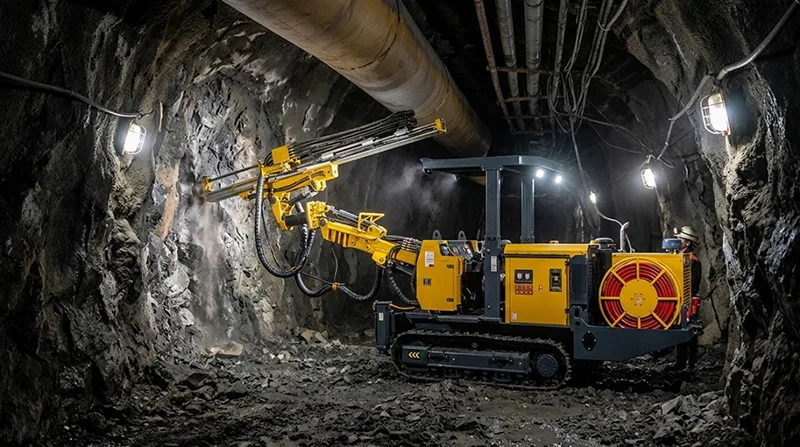
Underground mining relies heavily on pneumatic power for drilling and material transport. High moisture levels in cold underground environments can lead to tool freezing, accelerated wear of internal hammer components, and blockages in pneumatic control lines. Installing heavy-duty dryers near the compressor station ensures that water does not condense in deep drop-pipes, maintaining tool torque and operational efficiency.
Civil Engineering and Infrastructure Construction
Heavy-duty infrastructure projects use compressed air for concrete spraying, sandblasting, and structural painting. Moisture in sandblasting lines causes the abrasive media to clump, clogging nozzles and disrupting surface preparation standards. Similarly, during paint application, water droplets in the air stream cause coating defects such as blistering and poor adhesion, compromising structural integrity.
Implementing a robust refrigerated air system protects these operations from costly mechanical failures and maintains consistent production rates across all pneumatic circuits.
Selection Metrics for Heavy-Duty Drying Installations
Specifying the correct dryer capacity involves analyzing several physical parameters beyond simple volumetric flow rate. A common error is sizing a dryer based solely on the compressor’s nominal output without accounting for environmental and operational variables.
Inlet air temperature is a primary factor. Compressed air leaving a rotary screw compressor can reach temperatures well above ambient levels. Because hot air holds exponentially more moisture than cold air, a high inlet temperature significantly increases the thermal load on the dryer’s heat exchanger. Dryers must be sized using correction factors supplied by the manufacturer if the inlet temperature exceeds standard ratings (typically 35°C or 100°F).
Operating pressure also affects dryer sizing. Higher operating pressures compress the air volume, which reduces the moisture-carrying capacity per unit of volume. Conversely, lower operating pressures require larger dryer capacities to handle the expanded air volume and maintain velocity limits within the heat exchanger tubes.
Ambient air temperature directly influences the heat rejection capacity of air-cooled condensers. In regions with high summer temperatures, the condenser’s efficiency decreases, which can lead to high-pressure trips or elevated dew points. Sizing calculations must account for the maximum seasonal ambient temperatures expected at the installation site.
For challenging environments, sourcing systems from specialized manufacturers such as Aivyter ensures that your compressed air treatment equipment is rated for actual field conditions rather than idealized laboratory settings.
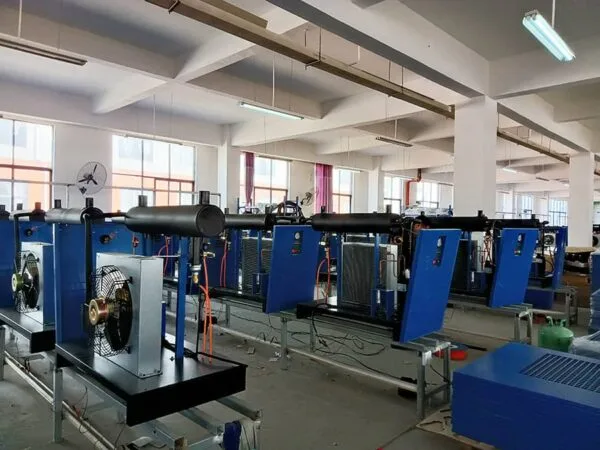
Standard Maintenance Protocols for Prolonged Equipment Life
Preventative maintenance is required to ensure consistent moisture separation and prevent component failure. Regular inspection schedules should focus on key thermal and mechanical areas:
- Condenser Coil Cleaning: Clean the condenser fins weekly in dusty environments. Dust accumulation acts as an insulator, reducing heat transfer and increasing compressor working temperatures.
- Drain Valve Verification: Check the function of automatic drain valves daily. If a drain becomes blocked, water will accumulate in the separator and carry over into the distribution piping.
- Pre-Filter Inspection: Inspect and replace pre-filter elements regularly. These filters protect the dryer’s heat exchanger from oil carryover and solid particulates, which can foul heat transfer surfaces and cause permanent efficiency losses.
- Refrigerant Pressure Monitoring: Monitor the suction and discharge pressures of the refrigeration circuit. Low refrigerant levels indicate a leak that must be identified and repaired to prevent compressor damage.
B2B Project Inquiry and Engineering Consultation
Selecting the appropriate moisture control configuration requires detailed engineering analysis of your flow rates, pressure requirements, and environmental variables. Our engineering division is available to assist you in designing a compressed air treatment system tailored to your specific application requirements. Contact us today to submit your project specifications, request comprehensive product catalogs, or schedule a design consultation with our support team.
Frequently Asked Questions
Q1: What is the standard pressure dew point achieved by a refrigerated air dryer?
A1: Most standard industrial systems achieve a pressure dew point of 3°C to 10°C (37°F to 50°F). This range is sufficient to prevent condensation in indoor piping networks where ambient temperatures remain above freezing.
Q2: Can a refrigerated dryer be installed outdoors?
A2: Generally, these units are designed for indoor installation within a temperature-controlled compressor room. If installed outdoors, they must be protected from freezing temperatures, direct sunlight, rain, and excessive dust, as freezing temperatures can cause the collected condensate to freeze and rupture the heat exchangers.
Q3: How does a refrigerated air dryer differ from a desiccant dryer?
A3: A refrigerated dryer cools the air to condense moisture out of it, achieving dew points down to approximately 3°C. A desiccant dryer uses chemical adsorbents to extract moisture, achieving much lower dew points down to -40°C or -70°C, which is necessary for sub-zero environments or sensitive chemical processes.
Q4: What causes a refrigerated dryer to fail to maintain its target dew point?
A4: Common causes include overloaded inlet air temperatures, high ambient temperatures around the condenser, dirty condenser coils, refrigerant leaks, or a malfunctioning automatic drain valve that allows accumulated water to carry over into the output air stream.
Q5: Why is pre-filtration necessary before the compressed air enters the dryer?
A5: Pre-filtration removes liquid water droplets, bulk oils, and solid particulate matter from the incoming stream. This prevents oil and dust from coating the heat exchanger surfaces, which would otherwise insulate the heat transfer paths and significantly reduce drying efficiency.
about
Aivyter
We provides trusted air compressors and mining equipment, engineered for durability, efficiency, and demanding industrial applications.