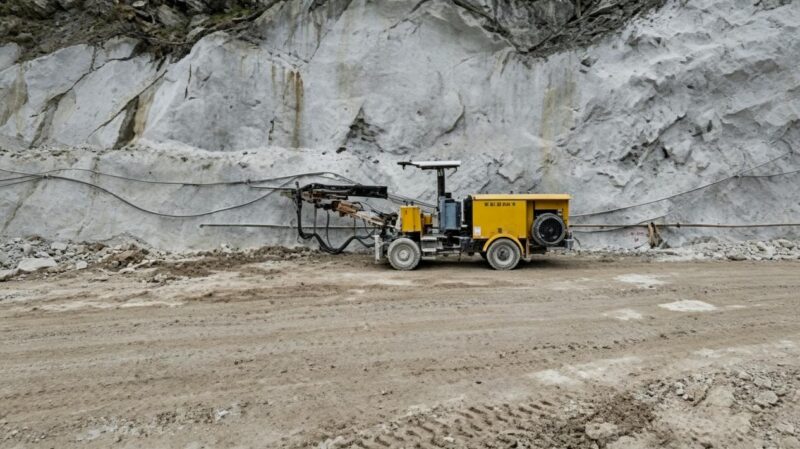
Hard rock mining places extreme mechanical demands on your equipment. When tunneling through massive granite, basalt, or quartz veins, rock formations with an Unconfined Compressive Strength (UCS) exceeding 150 MPa quickly expose any weak link in your machinery.
Selecting the wrong rig leads to rapid bit degradation, cracked drill steels, high energy consumption, and catastrophic cycle delays. Every lost hour at the face inflates your cost per ton and stalls downstream hauling schedules.
Mining contractors and site managers must balance penetration speed, drift geometry, air utility requirements, and operational safety. A proper machine does not merely punch holes; it protects structural margins across every shift.
At Aivyter, we engineer specialized heavy equipment designed to handle these demanding conditions. If your current fleet struggles with low penetration rates or frequent downtime, consult our engineering team today for an equipment assessment and a tailored quotation for your project.
This technical guide examines the core engineering variables you must weigh before purchasing an underground rock drilling machine for abrasive, high-strength rock formations.
1. Analyze Rock Geotechnical Properties and Drillability
Your rock mass dictates your drill specifications. Before reviewing equipment catalogs, compile an accurate geotechnical profile of your orebody and host rock.
Compressive strength, abrasiveness, and rock structural continuity represent the primary criteria determining machine requirements.
Unconfined Compressive Strength (UCS) and Hardness
Rock hardness directly controls the required impact energy per blow. Formations with UCS ratings below 80 MPa behave predictably under standard hydraulic drifters. Once rock strength exceeds 120 to 200 MPa, standard drifter energy dissipates into the drill string rather than shattering the rock face.
- Medium-hard rock (80 to 120 MPa): Standard percussion drills with moderate impact energy deliver reliable advance rates.
- Hard rock (120 to 180 MPa): High-frequency hydraulic rock drills are essential to generate sufficient micro-fracturing at the bit face.
- Extremely hard rock (> 180 MPa): Requires heavy-duty drifters equipped with dual-damping systems to absorb destructive shock waves reflected back into the feed boom.
Abrasiveness and Quartz Content
Abrasive wear degrades button bits and shank adapters faster than pure compressive strength. High silica or quartz content grinds down tungsten carbide inserts rapidly. This wear causes gauge loss, hole deviation, and bit binding.
When selecting an underground rock drilling machine for high-silica ground, prioritize machines with precise feed force controls. Proper feed force maintains constant bit-rock contact, preventing the destructive bouncing that accelerates carbide fracture.
Joints, Fractures, and Ground Voids
Fractured rock masses present different hazards than monolithic ground. Fractures vent flushing air and water, allowing rock chips to jam behind the bit. A machine without rapid anti-jamming safeguards will frequently lose drill strings in broken zones.
2. Match Drift Dimensions with Boom Reach and Carrier Footprint
An underground rock drilling machine must maneuver cleanly within the tunnel envelope without risking carrier collisions against the rib or back.
Tunnel height, profile curvature, and turning crosscuts dictate the chassis style, boom configuration, and feed length you require.
Single-Boom vs. Multi-Boom Configurations
The choice between single, twin, or triple-boom rigs depends on drift cross-section and daily advance targets:
- Single-Boom Drill Jumbos: Ideal for narrow-vein mining, development headings, and small drifts ranging from 4 m² to 18 m². They offer unmatched maneuverability through tight switchbacks and low-profile declines.
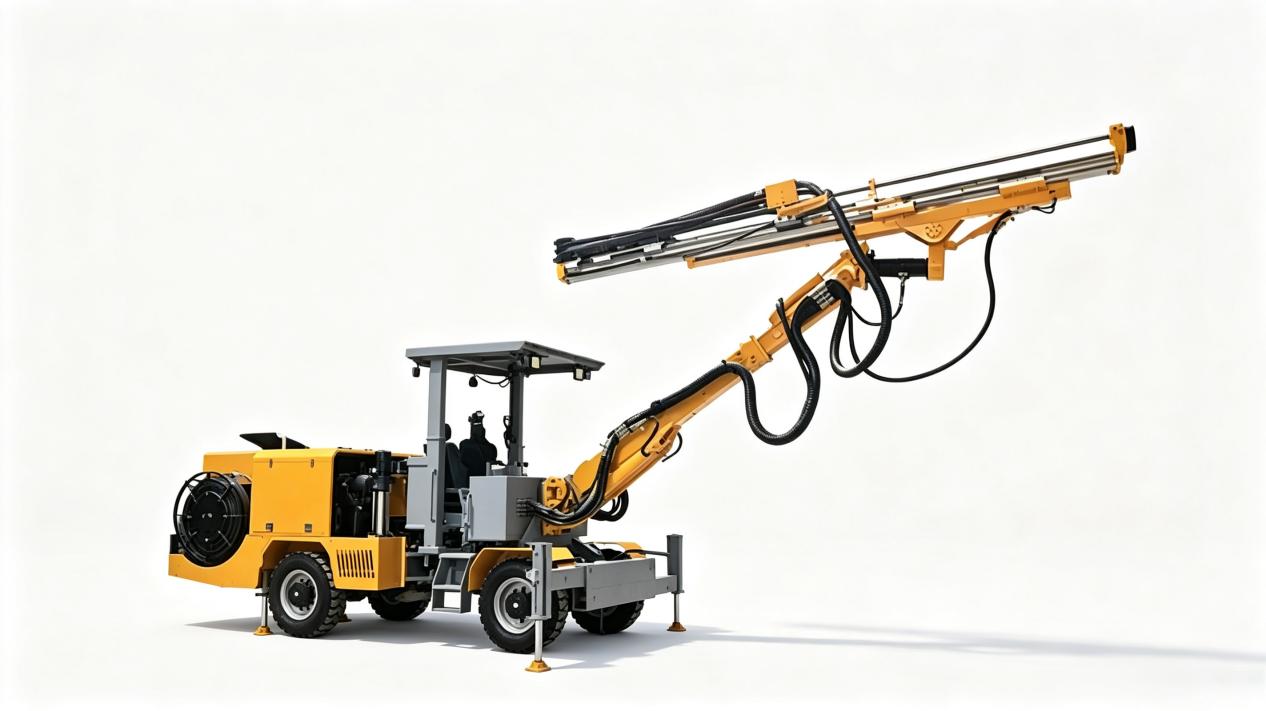
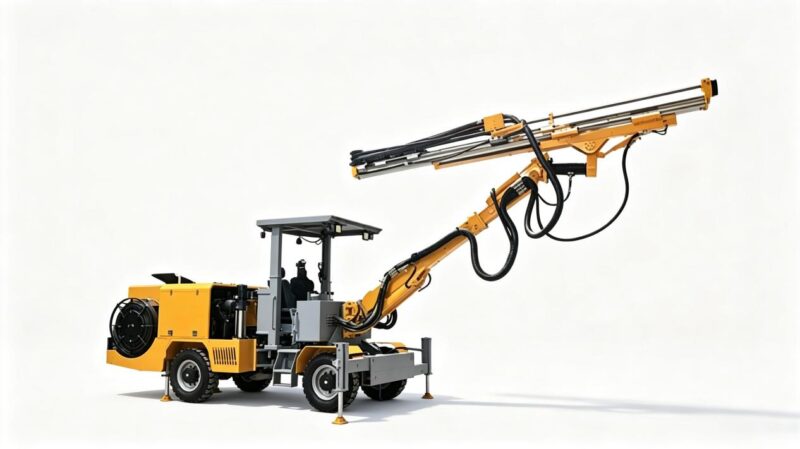
- Twin-Boom Drill Jumbos: The industry standard for medium-to-large production headings from 15 m² to 45 m². A twin-boom underground jumbo drill for mining cuts drilling cycle times in half by sinking perimeter, cut, and lifter holes concurrently.
- Triple-Boom Rigs: Built for large infrastructure caverns and major production tunnels exceeding 45 m², frequently equipped with integrated basket booms for charging explosives.
Carrier Dimensions, Tramming, and Turning Radius
Verify that the overall length, width, and outside turning radius match your crosscut junctions. A long carrier creates operational bottlenecks if your mine features tight 90-degree breakthroughs.
Inspect gradeability ratings carefully. Steep access declines require articulated four-wheel-drive carriers with reliable hydrostatic transmissions and fail-safe multi-disc brakes to operate on 14- to 20-degree ramps.
3. Power Transmission: Hydraulic Rock Drill vs Pneumatic Drill Jumbo
The debate between hydraulic and pneumatic drilling rigs continues in specific mining operations. However, hard rock conditions require clear mechanical priorities.
Evaluating a hydraulic rock drill vs pneumatic drill jumbo reveals significant differences in operational output and energy consumption.
Penetration Rates and Drilling Speed
Drilling speed in hard rock mining determines your overall advance rate per shift. Pneumatic rock drills rely on compressed air to drive the piston, limiting their working pressure to roughly 6 to 8 bar.
Hydraulic drifters operate at hydraulic pressures between 150 and 230 bar. This massive hydraulic energy transfers directly to the drill bit, yielding drilling speeds up to three times faster than pneumatic alternatives in identical 160 MPa rock.
Energy Efficiency and Power Consumption
Pneumatic drilling systems suffer severe transmission losses across underground airline networks. Compression, line friction, and minor air leaks degrade system efficiency rapidly.
A modern hydraulic underground rock drilling machine draws electrical power via a trailing cable directly to an onboard electric-hydraulic power pack. This direct power conversion slashes primary energy consumption per meter drilled by up to 60% compared to pneumatic jumbos.
Noise, Mist, and Tunnel Working Conditions
Pneumatic drills discharge expanding air directly into the heading. This creates deafening exhaust noise and oil-laden air mist that impairs visibility. Hydraulic rigs produce less mechanical exhaust noise and eliminate oil mist, helping underground operators maintain cleaner and safer drift conditions.
4. The Critical Role of Compressed Air and Flushing Capacity
While hydraulic systems power modern drifters, compressed air remains vital for underground drilling operations. Operators sometimes overlook air requirements when evaluating an underground rock drilling machine, leading to compromised drilling performance.
Flushing air carries pulverized rock away from the hole bottom instantly. If flushing volume drops, cuttings regrind into powder, blunting the bit and causing severe thermal stress on the carbide inserts.
Air also powers the shank lubrication system. High-performance rock drifters use a continuous oil-air mist to lubricate internal striking faces, bearings, and bushings. Insufficient air volume or low delivery pressure leads to dry metal-on-metal friction and premature drifter failure.
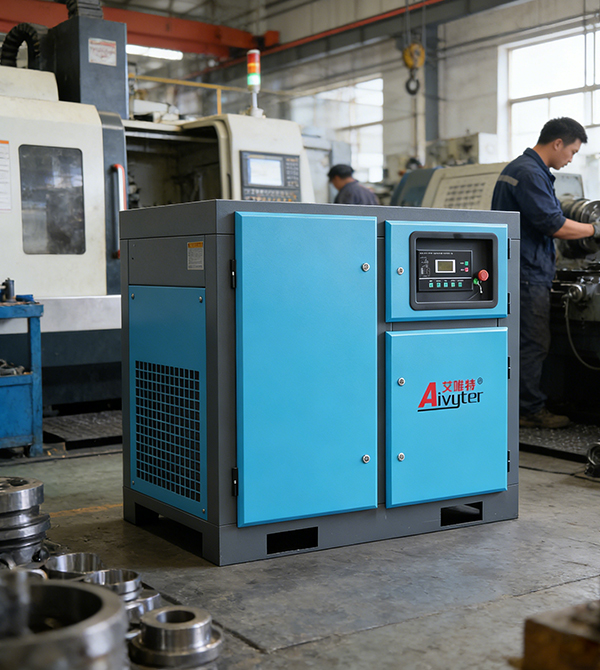
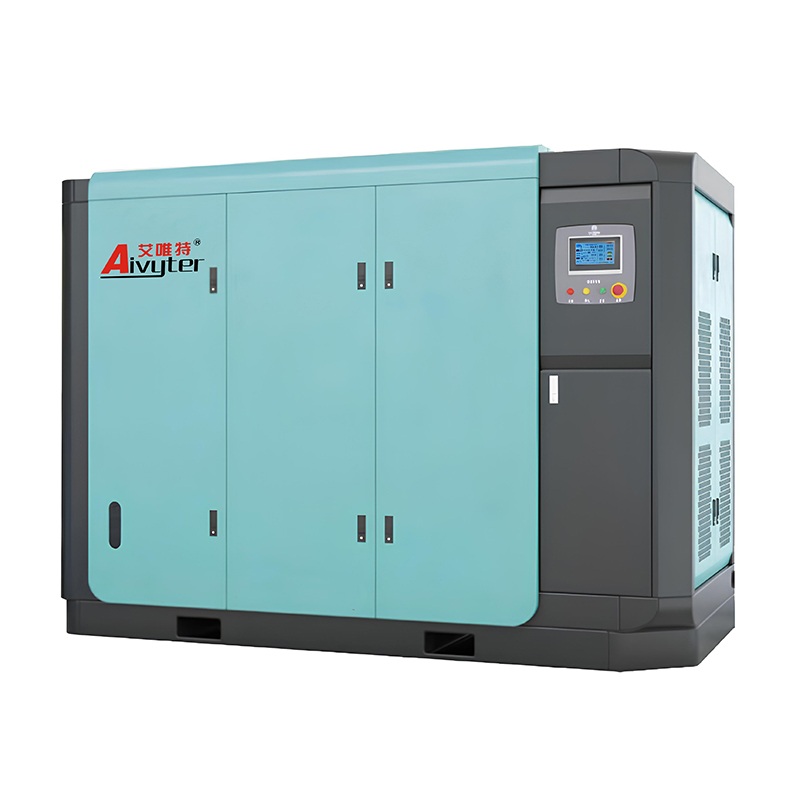
Ensure your equipment matches reliable air supply systems. Sinking holes in deep headings requires constant volume and pressure, which can be delivered by high-output onboard compressors or dedicated stationary units positioned in service bays.
5. Automation, Hole Accuracy, and Operator Safety
Modern mining relies on automated precision to lower costs. Choosing a rig with intelligent control features prevents costly human errors and protects the drift structure.
Automated Anti-Jamming Systems
When the drill bit encounters mud seams, voids, or broken ground, rotation pressure spikes while feed pressure surges. An advanced underground rock drilling machine senses these hydraulic pressure changes within milliseconds.
The anti-jamming system automatically reverses feed direction, increases rotation torque, and adjusts percussion power to clear the bit before the drill string locks in the hole.
Parallel Boom Positioning and Overbreak Control
Manual boom positioning often introduces hole angle errors. Divergent blast holes create irregular tunnel walls, excessive rock throw, and dangerous blast damage to host walls.
Modern jumbos integrate electronic parallel-holding systems. The boom feed stays strictly parallel to the tunnel axis regardless of boom arm movement. This parallel accuracy minimizes overbreak and cuts the cost of downstream mucking, hauling, and shotcrete support.
Cabin Ergonomics and Structural Safety
Safety regulations mandate certified ROPS (Roll-Over Protective Structure) and FOPS (Falling Object Protective Structure) operator stations. Hard rock mining involves falling debris and high vibration hazards.
Enclosed, air-conditioned, sound-dampened cabins protect operators from noise, vibration, and respirable silica dust. Well-designed cabins reduce operator fatigue, sustaining drilling accuracy and productivity through long work shifts.
6. Total Cost of Ownership (TCO) vs. Initial Purchase Price
Capital purchase price accounts for only a fraction of a drill rig’s true operating cost over its operating life. To make a sound investment, focus your rock drill rig selection guide on lifecycle expenses.
- Consumable Consumption Rates: Compare shank adapter, coupling sleeve, and drill rod life across different machine configurations. Smooth drifter damping systems double the service life of drill steel.
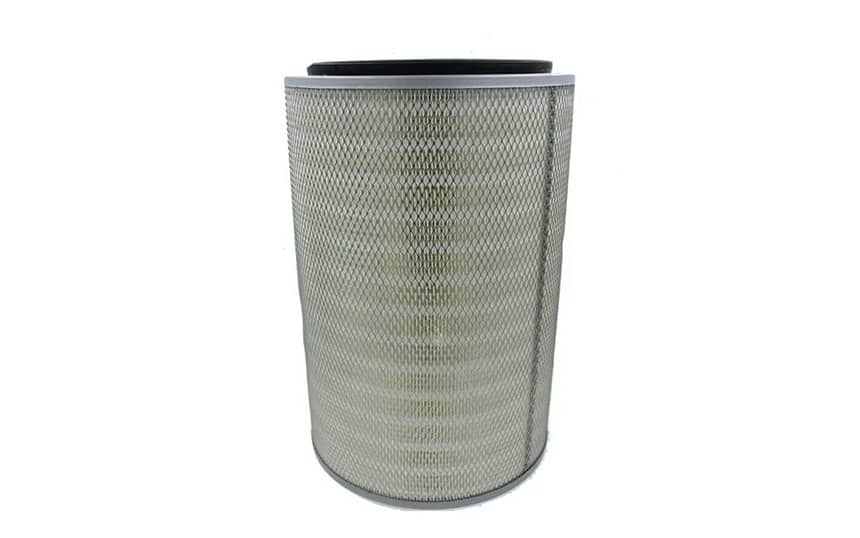
- Maintenance Accessibility: Check filter locations, hydraulic valve blocks, and lubrication points. If daily service points require disassembling protective panels, pre-shift maintenance will be neglected.
- Spare Parts Availability and Interchangeability: A grounded machine costs thousands of dollars each day. Partner with a dependable underground mining equipment supplier that maintains accessible component inventories.
- Power and Fuel Efficiency: Efficient electric motors and variable-displacement hydraulic piston pumps dramatically reduce your operational utility bills over thousands of engine hours.
7. The Aivyter Solution: High-Performance Hard Rock Mining Systems
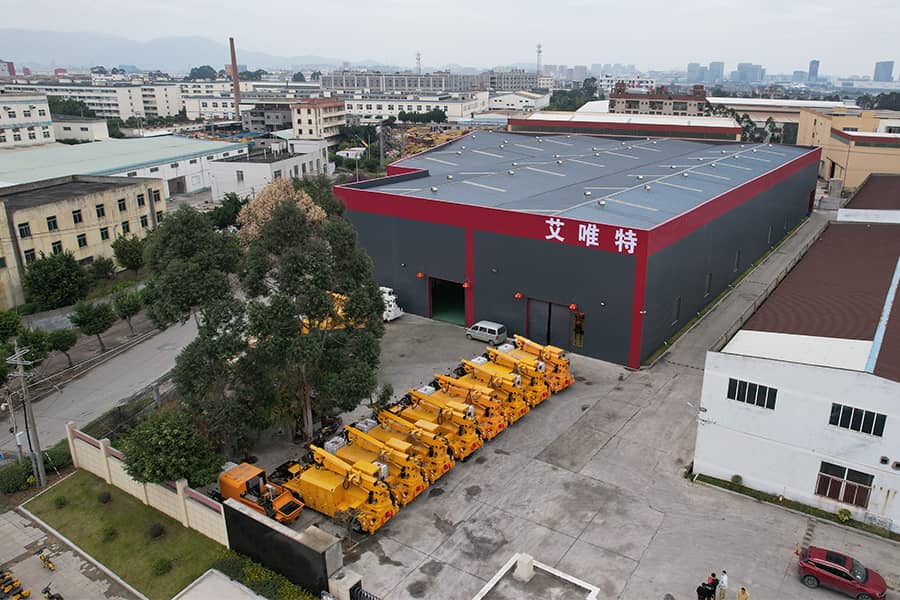
Founded in 2009 in Fuzhou, China, Aivyter operates a modern manufacturing facility covering over 10,000 square meters. Certified under ISO, CE, TUV, and SGS international quality standards, Aivyter designs, manufactures, and exports heavy-duty mining machinery built for difficult geological environments.
Aivyter provides an integrated equipment approach for mining companies, eliminating component mismatches between drilling, air supply, and ground support equipment.
The Aivyter series of underground drill jumbos is engineered specifically for abrasive, high-strength hard rock applications:
- Heavy-Duty High-Frequency Drifters: Engineered to provide rapid penetration rates through quartz, basalt, and granite formations exceeding 180 MPa UCS.
- Intelligent Hydraulic Anti-Jamming: Instant-response sensors reverse and flush drill strings through fractured geological zones, preventing stuck bits and broken steels.
- Compact Articulated Carriers: Excellent turning agility, powerful climbing capacity, and rigid feed beams support precise parallel blasting patterns.
- OEM and ODM Customization: We configure boom lengths, carrier dimensions, and automation options to match your mine’s exact drift profile.
Beyond our drilling rigs, Aivyter manufactures specialized industrial screw air compressors and shotcrete manipulators. This integrated manufacturing model provides complete cycle support: high-velocity drilling, reliable pneumatic flushing, and reliable wet-mix tunnel spraying.
Our global distribution network and dedicated service engineers ensure fast component deliveries, on-site commissioning, and comprehensive technical support wherever you operate.
Frequently Asked Questions
Q1: What is the most effective drill for hard rock underground?
A1: A hydraulic underground drill jumbo is the most effective equipment for hard rock mining. It combines high-frequency percussion with high rotation torque, delivering up to three times faster penetration in high-UCS rock (>120 MPa) than pneumatic drills while consuming less total energy.
Q2: Why is air compressor capacity critical for an underground rock drilling machine?
A2: Flushing air clears crushed rock chips from the bottom of the drill hole. Without sufficient air volume and pressure, cuttings regrind, blunting carbide buttons and binding the drill bit. Compressed air also atomizes lubricants for the rock drifter shank adapter, preventing internal heat buildup and mechanical failure.
Q3: Can Aivyter customize drill jumbos for narrow-vein hard rock mining?
A3: Yes. Aivyter provides OEM and ODM engineering options. We manufacture compact, single-boom drill jumbos with articulated narrow-width chassis, low overall heights, and tight turning radiuses tailored for narrow-vein drifts and exploration headings.
Q4: How does rock drill percussion frequency affect drilling speed in hard rock mining?
A4: High percussion frequency delivers more stress wave pulses per minute to the rock face. In very hard rock, repeated high-frequency impacts fracture rock along natural crystalline boundaries more efficiently than low-frequency, high-impact blows, producing faster penetration with less vibration damage to drill steels.
Q5: How often should drifter shank adapters and drill steel be inspected during hard rock drilling?
A5: Inspect shank adapters, couplings, and drill bits at the start of every shift and after every 15 to 20 drilled holes in hard ground. Check for thread wear, insert flaking, and gauge diameter loss. Regrinding worn carbide buttons early prevents bit binding and protects internal drifter components.
Procure the Right Machine for Your Mine
Selecting an underground rock drilling machine is an important capital choice that defines your development speed, operating safety, and drilling cost per meter for years to come. Do not let difficult rock strata slow your production targets.
Evaluate your rock compressive strength, verify your drift clearances, demand modern hydraulic anti-jamming controls, and confirm your air flushing capacities before purchasing.
The technical team at Aivyter is ready to assist with detailed equipment specifications, mine layout assessments, and complete drilling and air support packages.
Contact Aivyter today to speak directly with an application specialist and receive an equipment quotation for your mining operation.
about
Aivyter
We provides trusted air compressors and mining equipment, engineered for durability, efficiency, and demanding industrial applications.