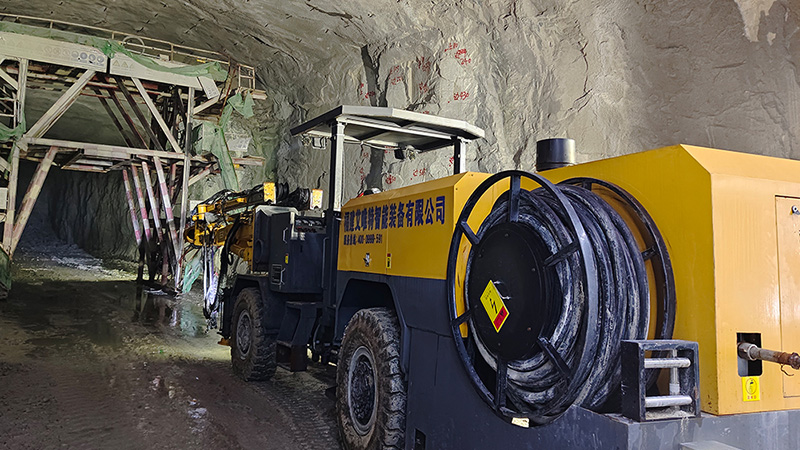
Deep underground mining tests the limits of heavy machinery. Operators face extreme rock pressures, boiling ambient temperatures, acidic water runoff, and narrow drives. In these punishing environments, equipment breakdown does not just slow down progress; it burns through operating capital and jeopardizes miner safety.
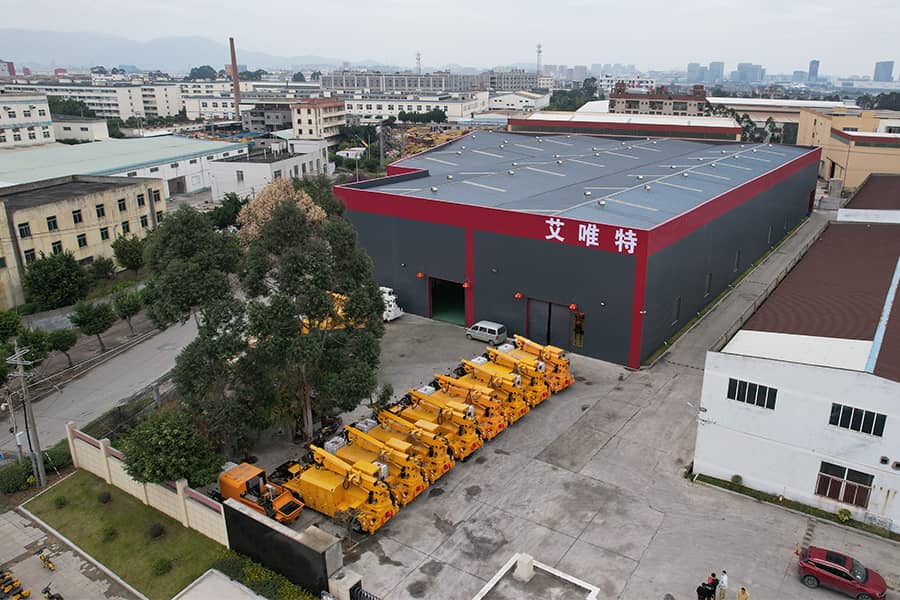
Choosing the correct drill rig machine underground requires a hard look at your mine’s unique geology, drift dimensions, and infrastructure. Whether you run a deep-level block caving operation or extract high-grade narrow veins, reliability matters above all else. At Aivyter, we partner with mining contractors globally to engineer and supply heavy equipment that withstands the most demanding subterranean applications. Contact our engineering team today to review your mine specifications.
1. Four Severe Subsurface Challenges That Break Equipment
Underground mines generate unique operating stresses rarely seen on the surface. Standard industrial designs fail quickly downhole. Identifying these distinct stress points helps engineers filter out frail machinery before making a capital investment.
Abrasive and High-Hardness Formations
Drilling through quartz-rich host rock or dense basalt rapidly destroys drill string components and drifter seals. High Unconfined Compressive Strength (UCS) rock causes intense rebound energy, sending shockwaves through the boom assembly and hydraulic actuators. Without heavy-duty dampening, premature mechanical failure is guaranteed.
Constrained Footprints and Tight Drift Profiles
Heading sizes in narrow-vein extraction frequently dip below 2.5 by 2.5 meters. In these profiles, turning radius, tramming clearance, and boom articulation make the difference between fluid operation and continuous wall strikes. Equipment must combine structural mass with high maneuverability.
Geothermal Heat, Humidity, and Acid Runoff
As mines exceed depths of two kilometers, ambient rock temperatures rise drastically. Combined with drilling flush water and poor natural airflow, this moisture creates a corrosive, high-humidity microclimate. Electrical components corrode, and hydraulic fluids overheat if the thermal management system lacks adequate cooling capacity.
Dynamic Ground Stress and Rockfall Hazards
High in-situ stresses lead to strainbursts, popping ground, and falling rock slabs. Operators require certified survival cells that withstand sudden impacts. Additionally, deep mines demand drilling rigs capable of installing support anchors swiftly to stabilize headings before blast cycles begin. Research shared by the CDC NIOSH Mining Division highlights ground fall as a primary operational risk that mechanized equipment must actively mitigate.
2. Core Selection Criteria for Severe Environments
When reviewing procurement tenders, avoid generic machinery built for light civil tunneling. Prioritize industrial-grade specifications designed specifically for deep extractive mines.
Chassis Integrity and Structural Layout
The chassis serves as the foundation for all drilling accuracy. Look for heavy-duty articulated carriers with heavy steel plating and an oscillating front axle. This layout maintains four-point ground contact across uneven, flooded trackways.
- Choose protected routing where all hydraulic hoses and sensor wiring stay enclosed within the boom structure.
- Select machines equipped with bronze wear plates on the feed beam to simplify shop-floor servicing.
- Verify that hydraulic cylinders feature specialized seal kits capable of resisting mineral-laden drilling flush.
Powertrain Strategy: Diesel vs. Battery Electric (BEV)
Mines today balance mechanical power against mine ventilation limits. The choice between diesel and electrification shapes long-term mine ventilation design.
Clean diesel units complying with Tier 4 Final or Stage V engine norms provide high tramming flexibility over steep ramp grades (up to 14 degrees). They do not strain your electrical distribution network. However, they generate substantial heat loads and particulate emissions that require high-velocity auxiliary fans.
Battery Electric Vehicles (BEVs) remove diesel exhaust completely and reduce heading heat rejection by up to 70%. If your mine operations struggle with thermal cooling limits or high ventilation power bills, BEV platforms offer massive lifecycle returns despite higher upfront machinery costs.
Hydraulic Rock Drifter and Boom Coverage
The hydraulic drifter (rock drill) dictates round completion time. You must balance impact frequency and stroke energy against rock geomechanics. Soft, fractured rock calls for rapid, lower-energy pulses to prevent rod jamming. Dense, monolithic ground demands high-power impact cycles with double-damping dampener pistons to protect the internal drifter mechanics.
Assess boom coverage maps carefully. Ensure the face drill reaches back and cut profiles cleanly without demanding repositioning of the carrier. Every carrier repositioning event costs minutes and increases tire scrub against blasted floor debris.
Operator Safety Systems and Ergonomics
Subterranean safety guidelines require rigorous operator compartment protections. Your chosen carrier must feature safety canopies or enclosed cabins certified under international standards such as ISO 3449 (FOPS) and ISO 3471 (ROPS).
Enclosed cabins should include positive-pressure air filtration, heavy-duty climate control, and noise attenuation bringing interior sound levels under 78 dB(A). Ergonomic multifunction joysticks reduce operator fatigue over ten-hour shifts, directly cutting error rates and drill tool breakages.
3. Selecting Machine Types by Mining Application
Different production cycles demand targeted drilling systems. Selecting an over-dimensioned machine in a production heading chokes logistics, while an undersized machine creates production bottlenecks.
Face Drilling Jumbos
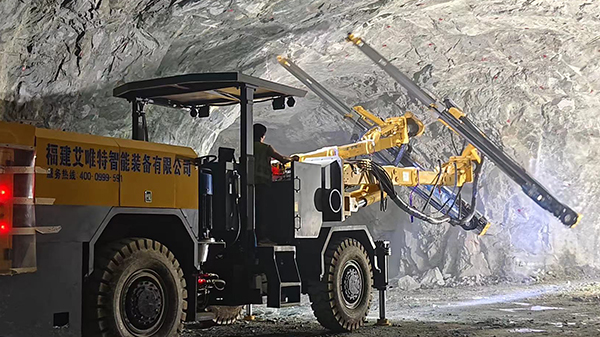
Underground face drilling rigs form the tip of rapid tunneling and development cycles. Available in single, twin, or triple-boom setups, these machines drill horizontal blast holes, cut holes, and lifters. In harsh conditions, opt for automated feed-parallelism mechanisms so operators maintain blast alignment without manual sighting errors.
Long-Hole Production Drill Rigs
Sublevel stoping, VCR, and block caving operations depend entirely on accurate long-hole production drill rigs. Deviation over a 30-meter production hole ruins stope recovery, leading to poor fragmentation and ore dilution. Look for machines with rigid aluminum or steel feeds, hydraulic centralizers, and modular rod carousels that automate rod handling in tight drift footprints.
Mechanized Rock Bolting Rigs
In bursting or fractured rock conditions, roof support must proceed immediately following muck-out. Bolting rigs perform mechanized screen installation, hole boring, resin injection, and bolt setting from inside a protected cab. This eliminates manual handling of heavy rebar and mesh under unbonded rock faces.
Narrow-Vein Drill Rigs
Narrow deposits force operations to control dilution strictly. Narrow-vein drill rigs utilize ultra-compact chassis configurations (some measuring under 1.3 meters wide) while maintaining industrial penetration rates. These specialized units allow selective extraction, directly reducing hauling and downstream milling expenses.
Aivyter supplies mining teams with purpose-built rigs across these critical categories, tailoring boom dimensions, drifter power, and carrier dimensions to match individual mine development plans.
4. Automation and Digital Controls in Deep Mines
Automation serves a functional role underground: it increases equipment longevity and removes workers from high-risk active headings. Subsurface operations increasingly mandate smart operational controls on production equipment.
Teleremote and Autonomous Tramming
Automated navigation and teleremote capabilities let operators manage drilling operations from surface control centers or safe, climate-controlled underground rooms. Surface-to-underground tele-operation allows drilling through shift changeovers and ventilation clearing windows, adding three to four extra drilling hours each operational day.
Automated Anti-Jamming Systems
Fault zones, clay seams, and fractured strata frequently trap drill bits. Modern electronic anti-jamming controls monitor feed pressure, rotation torque, and percussion backpressure simultaneously. The moment rotation torque surges, the control system instantly reverses feed direction, raises flushing flow, and modifies percussion settings to free the drill string before steel seizure occurs.
Fleet Telematics and Sensor Diagnostics
Deep mines make mobile equipment hard to access for quick mechanical troubleshooting. Modern telemetry systems log hydraulic temperatures, oil contamination flags, motor load, and mechanical vibration patterns. Transmitted across underground leaky-feeder or Wi-Fi systems, this data lets maintenance planners order replacement subassemblies long before catastrophic failures take place. For engineering methods on rock mass classification and support mechanics, the Society for Mining, Metallurgy & Exploration (SME) offers detailed mechanical guidelines.
5. Total Cost of Ownership (TCO) and Lifecycle Support
Purchase price represents only a fraction of a subterranean drilling unit’s total expenditure over a five-to-seven-year run. Consumables, unscheduled downtime, hydraulic repairs, and drill steel make up the balance.
Prioritize manufacturers who construct machines using standardized hydraulic and electrical architectures. Proprietary, black-box systems complicate field servicing when technicians work in isolated headings miles away from surface logistics hubs. Access to field-swappable valve blocks and accessible grease points saves hundreds of maintenance hours annually.
Ensure your supplier maintains reliable supply chains for critical wear parts:
- Hydraulic drifter seal and diaphragm repair kits
- Feed guide pads, rollers, and wire ropes
- Axle components and heavy planetary drives
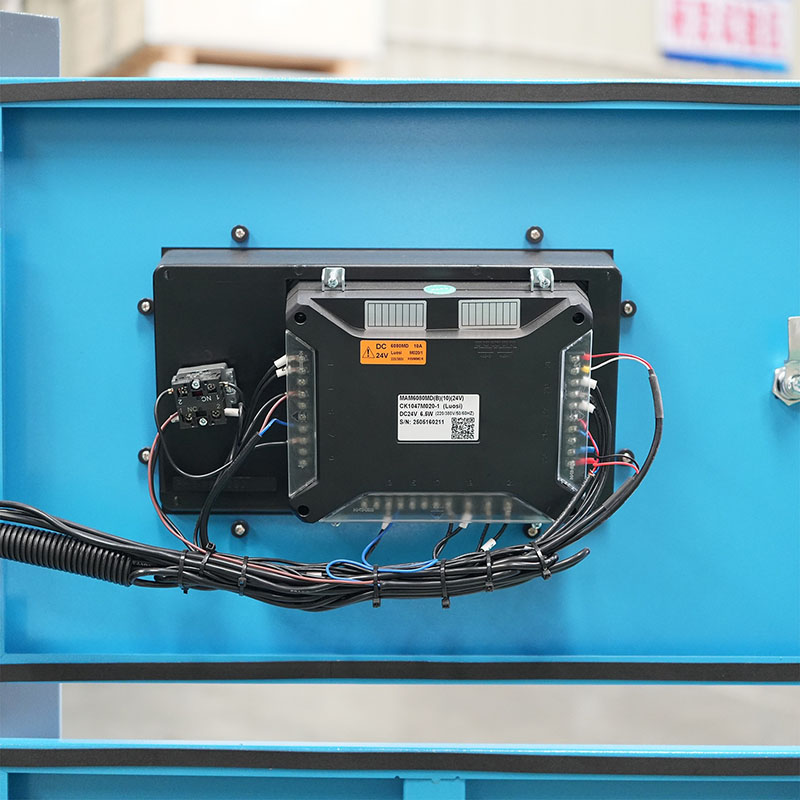
- Electronic controller sensors and display panels
When mining in tough geographies, dependable parts delivery and responsive field support prevent short equipment outages from turning into week-long mine stoppages.
Frequently Asked Questions (FAQ)
Q1: How does rock hardness impact drifter selection on an underground drill rig?
A1: Rock hardness, measured by Unconfined Compressive Strength (UCS), dictates the required impact energy and frequency. For dense, hard formations (UCS above 180 MPa), operators need high-frequency rock drills equipped with dual-damping pistons to absorb shockwaves. Matching drifter power correctly to rock hardness stops drill strings from shearing and prevents premature cracking inside the drifter housing.
Q2: What ventilation advantages do battery-electric drill rigs provide in deep mines?
A2: Battery-electric drill rigs produce zero exhaust emissions, removing nitrogen dioxide, carbon monoxide, and diesel particulate matter from enclosed headings. They also produce roughly a third of the heat generated by combustion engines. This significantly lowers the electrical demands placed on auxiliary fans and underground chiller networks.
Q3: How do automated anti-jamming systems protect underground drilling tools?
A3: Automated anti-jamming systems monitor hydraulic rotation pressures and feed resistance continuously. When the drill bit enters fractured rock or soft seams that trigger high torque, the control system reverses the feed stroke automatically and balances water flushing. This clears out drilling debris and prevents bit seizure, cutting drill steel consumption substantially.
Q4: Why are ROPS/FOPS certifications necessary for underground drill rigs?
A4: Subterranean drifts are vulnerable to rock bursts, spalling ground, and machine rollover on slick declines. Roll Over Protective Structures (ROPS) and Falling Object Protective Structures (FOPS) guarantee that the operator cab withstands crushing forces and falling rocks, protecting workers from serious injury.
Q5: What are the main design differences between face jumbos and long-hole production rigs?
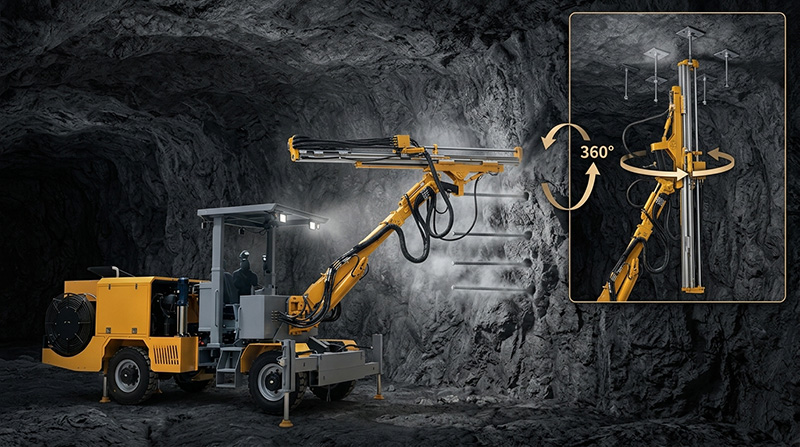
A5: Face jumbos use agile, multi-directional booms to drill horizontal hole arrays across the mine face for advancement blasting. Long-hole production drill rigs use highly rigid, 360-degree rotating feeds to drill deep, parallel, or fan-patterned holes over long distances. Production units focus strictly on straight hole paths to minimize dilution in open stopes.
Secure Reliable Underground Drilling Machinery
Operating in harsh mining conditions demands machinery built without compromises. The right drill rig machine underground balances powerful structural engineering with exact boom control, clean powertrain efficiency, and intuitive operator interfaces. Selecting machines matched to your mining method eliminates unnecessary downtime, protects underground crews, and lowers production cost per ton.
At Aivyter, our technical teams assist mining companies worldwide in configuring underground equipment ready to tackle demanding operational limits. Contact our technical team today to discuss your drift sizes, rock mechanics, and drilling requirements, or request a detailed machinery quote tailored to your mining project.
about
Aivyter
We provides trusted air compressors and mining equipment, engineered for durability, efficiency, and demanding industrial applications.