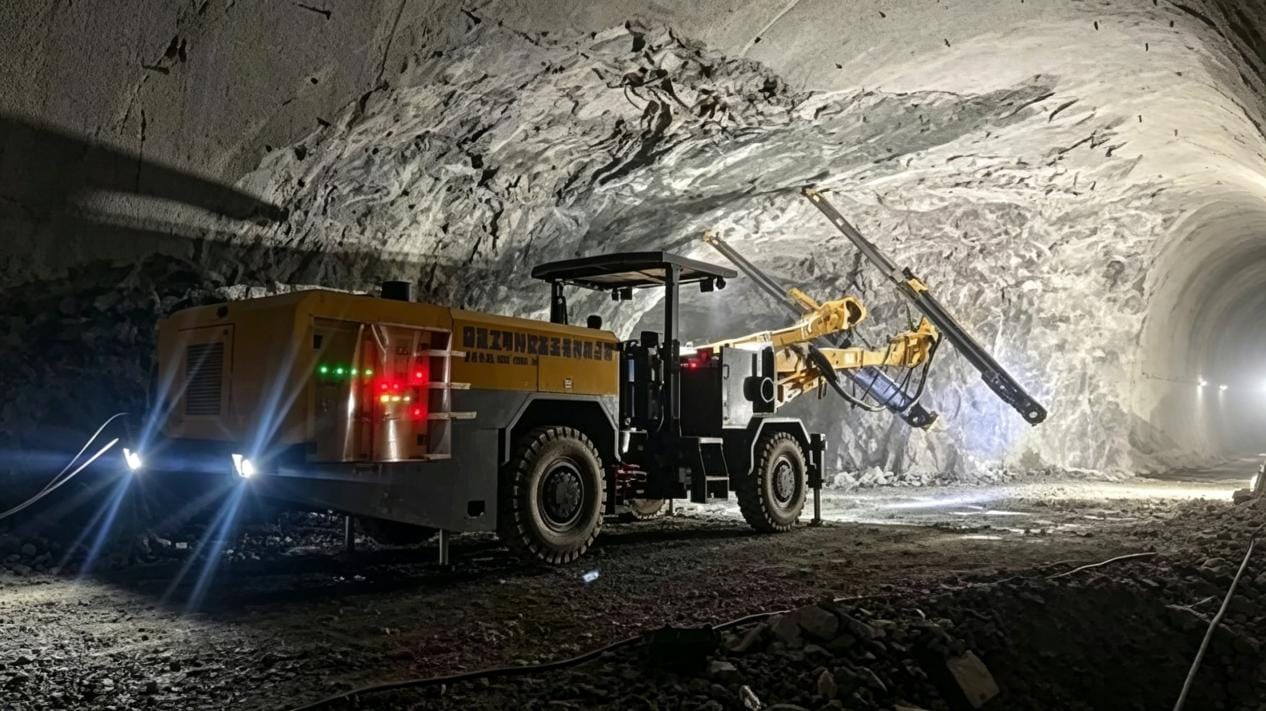
Underground mining and tunneling projects involve a series of connected operations rather than a single machine completing the entire excavation process. During the drilling and blasting cycle, different equipment works at different stages to prepare the working face, complete rock drilling, support excavation areas, and maintain a continuous development process.
Machines such as drill jumbo, shotcrete spraying machine, and screw air compressor are commonly used in underground mining and tunneling applications. Their roles are different, but their operation is connected throughout the excavation sequence.
Understanding how these underground mining machines work together can help contractors evaluate equipment combinations based on project requirements, geological conditions, and working environments.
How Does the Drilling and Blasting Cycle Work Underground?
The drilling and blasting cycle is widely used in underground mining and tunneling projects where rock needs to be broken to create tunnels, chambers, or excavation areas.
Although the exact workflow may vary depending on the project, the cycle usually includes several connected stages:
- Preparing the excavation face
- Drilling blast holes
- Carrying out blasting operations
- Inspecting the excavated area
- Providing ground support before the next cycle
The drilling stage is an important part of this process because the location, depth, and arrangement of blast holes influence how the following blasting operation is carried out.
For this reason, underground projects often use specialized drilling equipment that can adapt to limited working spaces and changing rock conditions.
The equipment selected for each stage needs to match the overall excavation plan because the performance of one process can influence the next step.
What Role Does a Drill Jumbo Play in Underground Excavation?
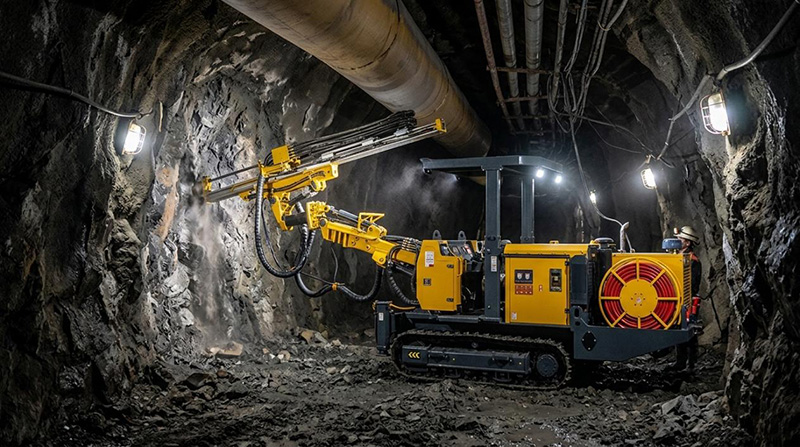
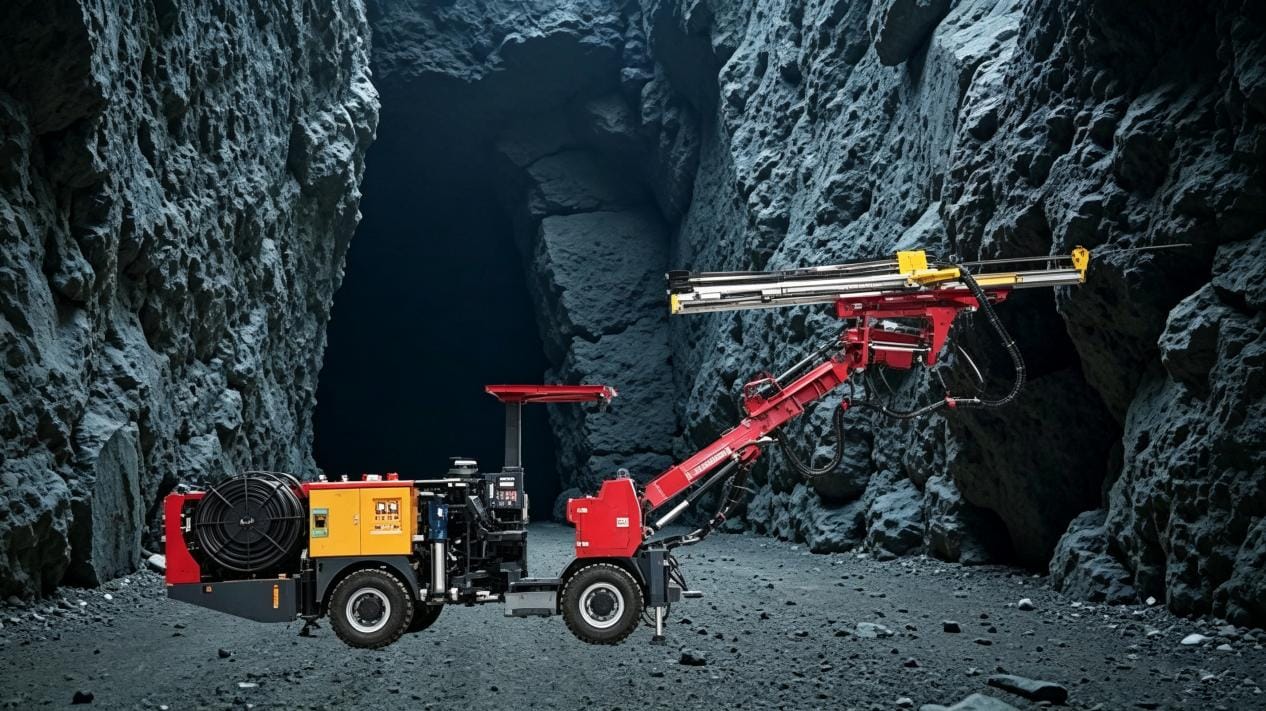
A drill jumbo is mainly used for preparing blast holes during underground excavation. It moves to the working face and performs drilling according to the planned hole pattern.
Compared with manual drilling methods, a modern underground drilling rig combines a carrier system, boom structure, and hydraulic drilling components to support repeated drilling operations in mining and tunneling environments.
During the drilling stage, the drill jumbo usually performs several tasks:
- Positioning at the excavation face
- Adjusting drilling direction and location
- Creating blast holes according to project requirements
Different underground projects may require different drill jumbo configurations. Single-boom and double-boom models are commonly selected according to tunnel size, drilling coverage requirements, and available working space.
However, the drill jumbo is only the beginning of the excavation cycle. After drilling is completed, other equipment and processes are required to continue the underground development workflow.
How Do Compressed Air Systems Support Underground Drilling Operations?
In many industrial and construction applications, compressed air systems provide support for equipment that requires a stable air supply.
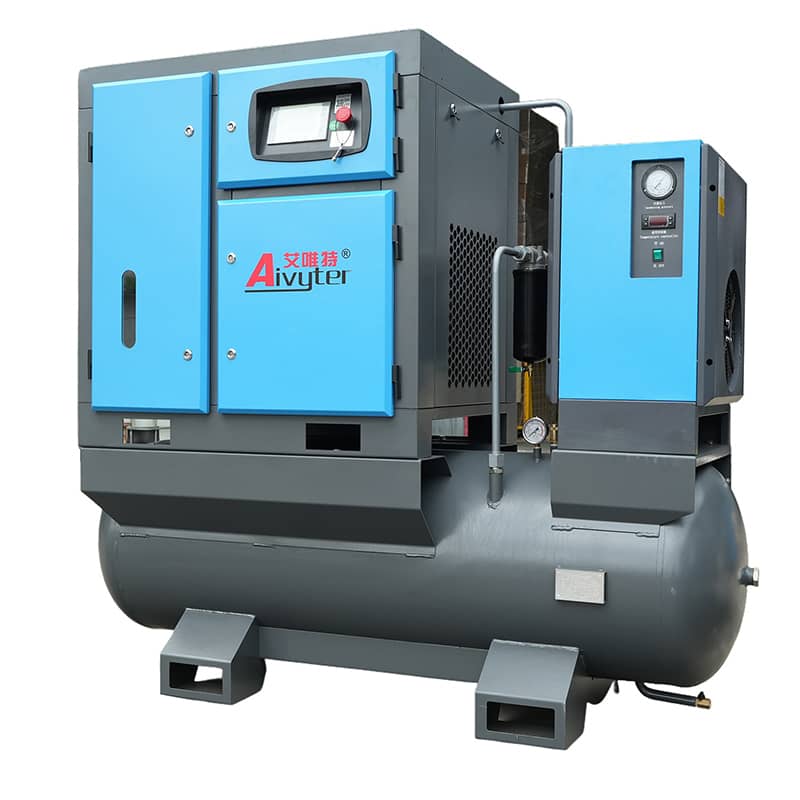
A screw air compressor is commonly used where continuous compressed air is needed. For underground mining and tunneling environments, compressor selection often depends on factors such as airflow demand, working pressure, operating conditions, and maintenance requirements.
A suitable industrial air compressor configuration can support stable operation for applications that require compressed air.
When matching a compressor system with underground equipment, contractors may consider:
- Required air capacity
- Pressure requirements
- Operating duration
- Environmental conditions
The connection between the compressor and drilling operation is important because supporting systems need to match the working requirements of the main equipment.
For example, if supporting systems cannot meet operational demands, the overall excavation sequence may require additional adjustments.
How Does Shotcrete Equipment Continue the Excavation Process?
After blasting, the newly exposed rock surface may need additional support before the next excavation stage begins.
A shotcrete spraying machine is used to apply concrete material onto underground surfaces, helping provide support for excavation areas.
Within the drilling and blasting cycle, the relationship between drilling equipment and shotcrete equipment can be understood as a continuous sequence:
- The drill jumbo prepares blast holes.
- The blasting process breaks the rock.
- The excavated area is inspected.
- Shotcrete spraying equipment applies support material when required.
- The next drilling cycle begins.
This connection allows underground projects to organize different operations in a planned order.
The required shotcrete equipment configuration may vary depending on tunnel conditions, spraying requirements, and project scale.
How Do Different Mining Machines Connect During Underground Development?
The value of underground mining machines is not only determined by the capability of individual equipment but also by how well different machines fit into the complete excavation process.
A typical workflow can be organized as:
Drilling Stage
The drill jumbo prepares the working face by creating blast holes according to the excavation design.
↓
Blasting Stage
The prepared holes are used for controlled rock breaking.
↓
Support Stage
After excavation, shotcrete spraying equipment can be used to support exposed surfaces.
↓
Next Development Cycle
Once the working area is ready, drilling operations continue for the next excavation section.
This sequence shows that underground equipment functions as a connected system. The coordination between drilling equipment, support equipment, and related systems can influence project organization and operational continuity.
Why Should Mining Equipment Selection Consider the Entire Workflow?
Choosing equipment for underground projects requires more than evaluating individual machine specifications. The relationship between different machines, site conditions, and operational requirements also needs to be considered.
Several factors may influence equipment selection:
Geological Conditions
Rock structure, hardness, and underground conditions can affect drilling methods and equipment requirements.
Different formations may require different drilling approaches and operational adjustments.
Excavation Space
Underground tunnels often have limited working areas. Equipment dimensions, mobility, and operating range need to match the available space.
Project Requirements
The scale of excavation, drilling frequency, and expected working schedule can influence suitable equipment configurations.
Maintenance Considerations
Long-term operation also depends on maintenance planning, spare parts availability, and equipment support requirements.
Considering these factors helps contractors develop a more suitable equipment combination for underground mining and tunneling applications.
FAQ
What machine is commonly used for underground blast hole drilling?
A drill jumbo is commonly used to create blast holes during underground mining and tunneling operations.
Why does drilling equipment affect the blasting process?
The position and arrangement of blast holes can influence how the blasting plan is carried out.
What is the function of a screw air compressor in mining applications?
A screw air compressor provides compressed air support for industrial and construction-related applications.
Why is shotcrete equipment used after blasting?
Shotcrete spraying machines are used to apply support material to underground surfaces after excavation.
How should underground mining machines be matched?
Equipment selection should consider geological conditions, tunnel space, project requirements, and maintenance needs
about
Aivyter
We provides trusted air compressors and mining equipment, engineered for durability, efficiency, and demanding industrial applications.