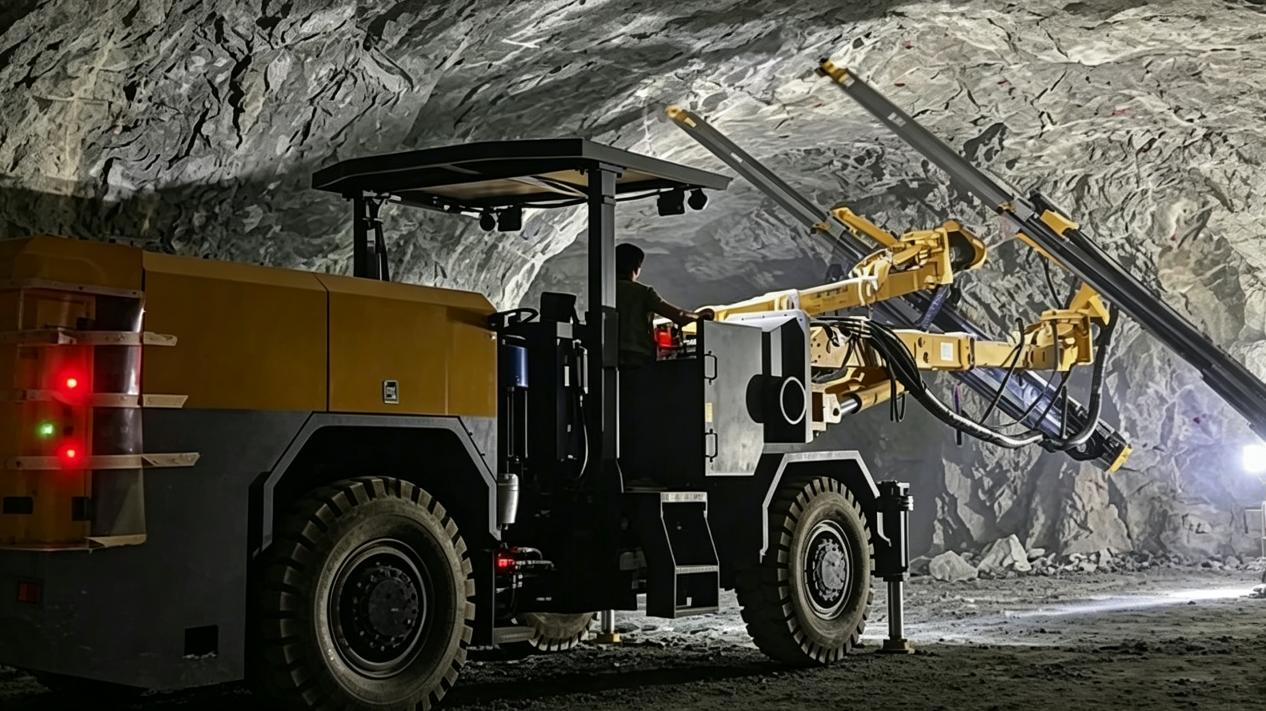
Underground excavation projects vary in working-section size, access space, drilling requirements, and machine movement. These differences affect how equipment reaches the working face and performs its assigned task. Mining companies therefore need to compare machinery against actual site conditions rather than apply the same configuration to every excavation area.
For drilling work, the main considerations include excavation dimensions, hole patterns, drilling range, boom arrangement, machine size, and mobility. Other machinery has different requirements and should be assessed according to its intended application.
What Conditions Affect Equipment Choice?
Before comparing models, companies need to define the conditions in which the machinery will operate.
Key factors include:
- Working-section dimensions
- Available access and turning space
- Required hole diameter and depth
- Drilling pattern and face coverage
- Distance between working areas
- Frequency of relocation
- Type of excavation or supporting work
These factors are closely related. A drilling machine may meet the required hole specifications but still be difficult to use if its dimensions or working range do not fit the excavation.
For this reason, underground mining equipment should be evaluated against the physical and operational requirements of the site.
How Does Excavation Size Affect Equipment Choice?
The size of the excavation provides an important reference when selecting drilling machinery. The carrier needs enough room to enter the working area, establish a suitable position, and move the boom across the face.
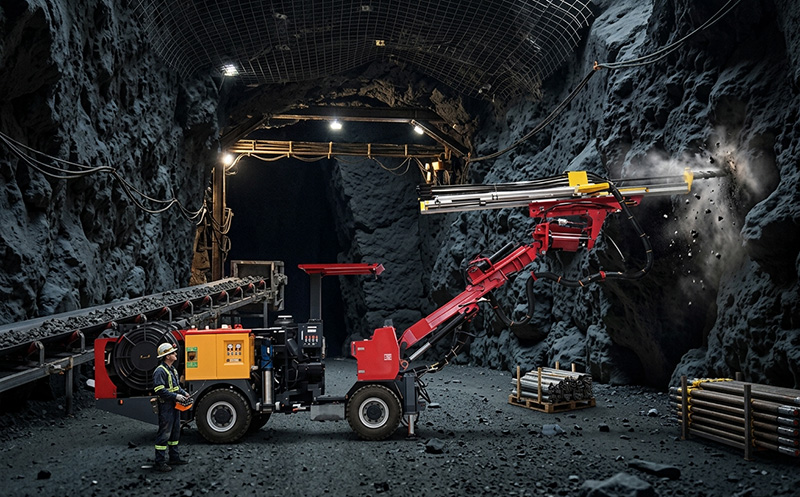
The underground drill jumbo range includes machines designed for different cross-section requirements. The AZT-125 is listed for cross sections from 2 × 2 m to 5 × 4 m, while the AZT1-6500 is listed for approximately 3 × 3 m to 5 × 6.5 m.
These dimensions can be compared with the planned excavation profile.
A smaller section can place greater importance on machine dimensions and maneuverability. A larger face may require a configuration with broader drilling coverage. The choice depends on the relationship between the excavation profile and the machine’s working range.
How Does the Drilling Layout Affect Configuration?
The arrangement of holes across the working face also influences the equipment configuration. A wider drilling pattern may require greater boom coverage or a configuration capable of reaching multiple drilling positions.
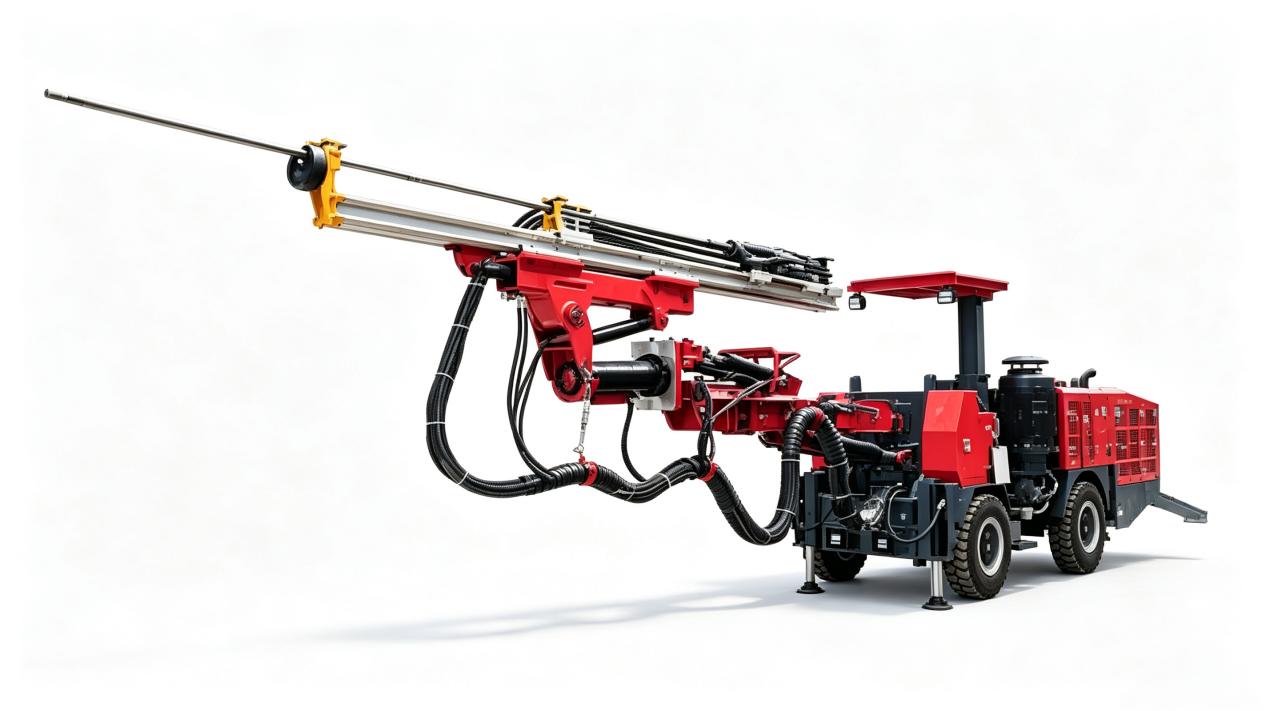
A single-boom drill jumbo uses one drilling assembly, while a double-boom configuration provides two drilling assemblies. The product range includes models such as the AZT-125 and AZT2-9700 for underground drilling applications.
The number of booms should not be considered separately from the excavation profile. Hole arrangement, available operating space, and required face coverage also need to be checked before selecting a configuration.
How Do Hole Specifications Influence the Choice?
After defining the excavation profile, the required hole dimensions can be compared with the specifications of an underground drilling rig.
Hole diameter is one factor. The AZT-125 is listed with a drilling diameter of 45–115 mm, while the AZT1-6500 is specified at 43–102 mm.
Drill rod length and hole depth provide additional points of comparison. The AZT1-6500 lists drill rod lengths of 4,300/3,700 mm and hole depths of 4,000/3,400 mm.
These specifications should correspond with the planned drilling work. Instead of focusing on one number, companies can compare the complete drilling range with the required hole pattern and depth.
Why Does Underground Access Matter?
Underground access can place practical limits on machinery. Tunnel entrances, ramps, corners, and narrow sections affect how a drilling rig machine reaches the working face and establishes its drilling position.
Turning radius and ground clearance are therefore useful specifications to review.
The AZT1-6500, for example, lists a minimum turning radius of 3,450 mm inside and 5,510 mm outside, together with 330 mm ground clearance.
These figures can be checked against the dimensions of the existing underground route. Drilling capability alone does not determine whether a machine can be used effectively; access and positioning also matter.
How Does Mobility Affect Equipment Selection?
Mobility becomes particularly relevant when a machine needs to travel between different working areas.
The listed underground drill jumbo models use diesel-powered carriers, with hydrostatic transmission specified for relevant configurations. The AZT1-6500 has a listed running speed of up to 7.2 km/h and a climbing ability of 15°.
The practical relevance of these specifications depends on the site’s routes, gradients, and relocation requirements.
For projects involving several drilling faces, carrier characteristics should be considered alongside turning space and drilling capability. A machine that fits the working face also needs to suit the route between operating areas.
How Should Equipment Match Different Excavation Tasks?
Different underground tasks call for different types of machinery.
A drill jumbo or underground drill rig is intended for face drilling. Its relevant characteristics include drilling range, boom configuration, face coverage, and mobility.
A shotcrete spraying machine serves a different purpose and should be evaluated according to the requirements of concrete spraying.
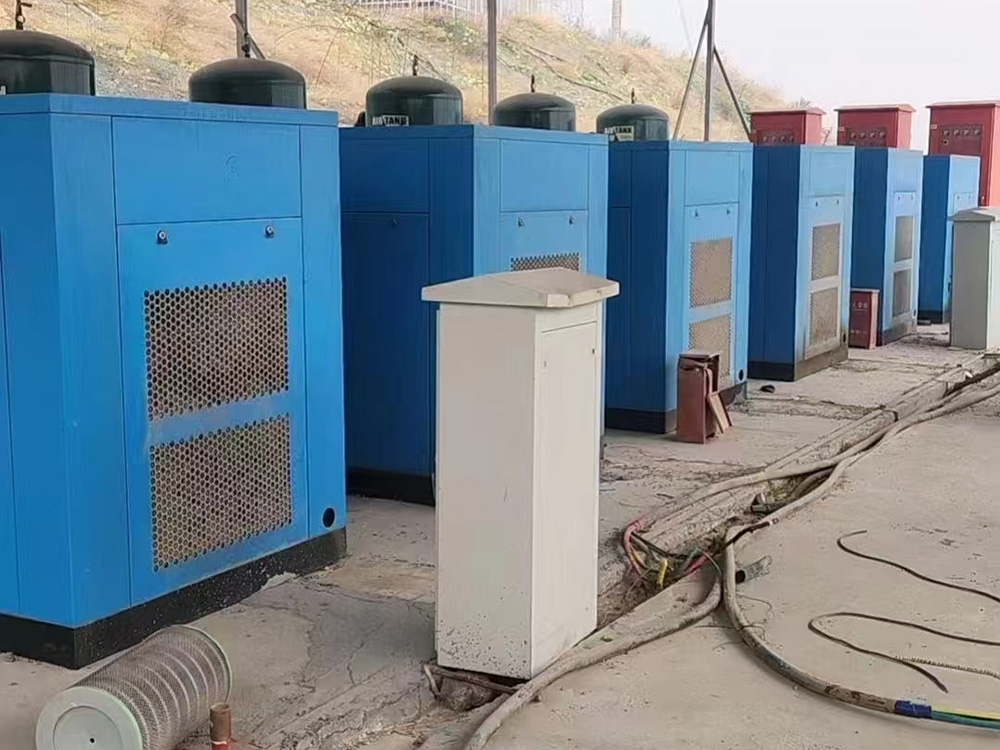
Compressed-air applications may involve an industrial air compressor or screw air compressor. These machines should be assessed according to the air requirements of their application rather than by drilling-related specifications.
Keeping these equipment categories separate makes comparison more useful because each machine is evaluated against the work it is expected to perform.
How Can Site Conditions Be Matched With Equipment?
A condition-based comparison can help narrow down suitable configurations.
| Underground condition | Equipment factor to review |
| Small working section | Machine dimensions and turning radius |
| Larger excavation face | Boom arrangement and drilling coverage |
| Specific hole diameter | Drilling diameter range |
| Greater hole depth | Rod length and drilling capability |
| Restricted access | Turning radius and ground clearance |
| Frequent relocation | Carrier and transmission |
| Face drilling | Drill jumbo configuration |
| Supporting construction work | Equipment designed for the relevant task |
This comparison connects measurable site conditions with relevant machine specifications. It also keeps the evaluation focused on how the equipment will actually be used underground.
What Is a Practical Equipment Selection Process?
A practical selection process can be organized into several steps.
First, define the excavation profile. Measure the working-section dimensions and review the available access space.
Second, identify the task. Determine whether the machine will be used for face drilling, shotcrete application, compressed-air supply, or another operation.
Third, establish the operating requirements. For drilling applications, this may include hole diameter, depth, drilling coverage, and boom arrangement.
Fourth, check machine dimensions and mobility. Compare turning radius, ground clearance, carrier dimensions, gradients, and travel requirements with the underground route.
Finally, compare suitable configurations. Review individual models according to how their specifications correspond with the working conditions.
This sequence keeps the decision tied to the excavation environment instead of starting with a particular machine model and adapting the project around it.
What Should Mining Companies Prioritize?
Selecting underground mining equipment for different excavation conditions requires a comparison between site requirements and machine characteristics.
For face drilling, companies can review the excavation profile, hole pattern, drilling range, boom arrangement, machine dimensions, and mobility requirements. Supporting machinery should then be considered according to its own operating function.
A useful selection sequence is to define the excavation conditions, identify the task, establish the operating requirements, and compare suitable configurations. This gives mining companies a practical basis for evaluating equipment across different underground working areas.
FAQ
What affects underground equipment selection?
Excavation size, access space, drilling requirements, mobility, and the intended task all affect the choice.
Why does tunnel size affect equipment choice?
It affects machine access, boom movement, turning space, and the available drilling coverage.
When can a double-boom drill jumbo be considered?
It may suit faces where two drilling assemblies or broader drilling coverage are required.
Which drilling specifications should be checked?
Drilling diameter, hole depth, rod length, boom arrangement, and face coverage should be reviewed.
Should supporting equipment be selected separately?
Yes. Each machine should be assessed according to its specific underground application.
about
Aivyter
We provides trusted air compressors and mining equipment, engineered for durability, efficiency, and demanding industrial applications.