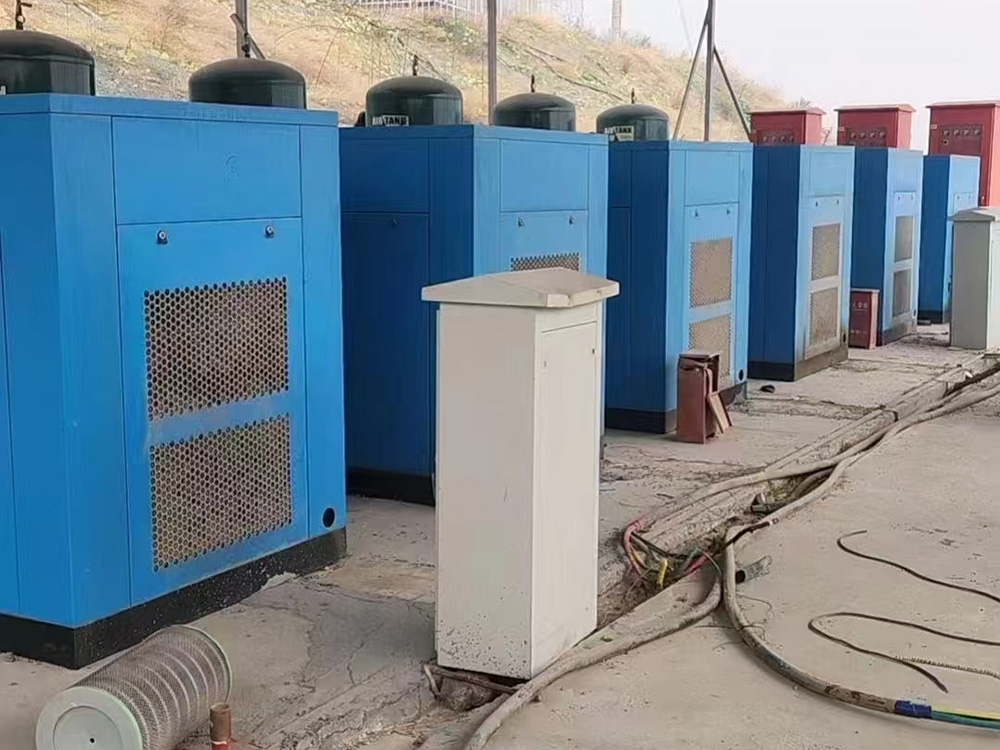
In sensitive industrial environments—mining tunnels, chemical processing plants, semiconductor fabrication, and large-scale construction—contaminated compressed air directly translates to production losses, equipment damage, and safety hazards. While lubricated compressors dominate many sectors, the shift toward zero-oil contamination is no longer a luxury but a regulatory and operational necessity. For procurement teams and plant managers, the challenge lies in distinguishing genuine expertise among oil free air compressor manufacturers. This article provides a technical deep dive into selection criteria, application-specific demands, and performance validation methods, supported by data and field experience.
We will examine why oil-free compression is mandatory in specific industries, break down the engineering behind dry-running screw and water-injected technologies, and present a structured evaluation framework. Finally, we reference Aivyter as a case example of a manufacturer that aligns with rigorous international standards, without promotional exaggeration.
1. The Technical Case for Oil-Free Air: Contamination Risks and Cost Drivers
Compressed air systems using oil-lubricated rotary screws typically discharge 3–5 mg/m³ of residual oil aerosol, even with high-efficiency coalescing filters. Over 8,000 operating hours, this results in kilograms of oil carryover into downstream equipment. In underground mining, oil mist combined with dust creates explosive risks and accelerates wear on pneumatic controls. For tunnel boring machines (TBMs) and raise boring rigs, oil contamination fouls servo valves, leading to unplanned stoppages—each hour of downtime in a TBM project costs upwards of $15,000.
Beyond safety, product quality suffers. In engineered construction materials (precast concrete with surface coatings), oil stains cause adhesion failures. The industry therefore mandates ISO 8573-1 Class 0 certification, which guarantees zero oil contamination (both liquid and vapor). Achieving this requires compressor designs that eliminate oil from the compression chamber entirely—a domain where specialized oil free air compressor manufacturers have developed distinct technical lineages.
2. Core Technologies Compared: Dry Screw, Water-Injected, and Centrifugal
Three primary architectures dominate industrial oil-free compression. Each carries specific advantages for mining, engineering, and continuous process applications.
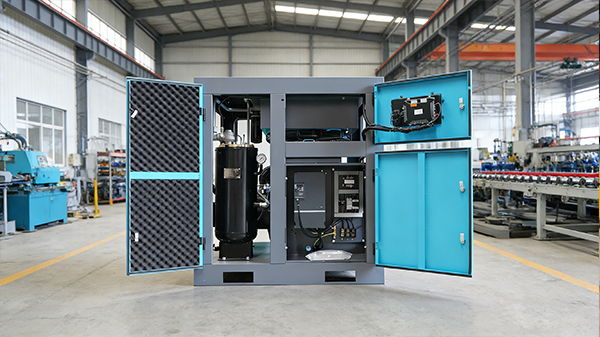
- Dry-running (oil-free) rotary screw compressors: Male and female rotors never contact; timing gears maintain micron-level clearances. Rotor coatings (e.g., PTFE or MoS2) reduce leakage and friction. Suitable for pressures up to 15 bar, flows from 100 to 10,000 m³/h. Efficiency peaks at 70–100% load but requires stainless steel or coated air ends to avoid corrosion.
- Water-injected screw compressors: Water serves as both sealant, lubricant, and coolant. Delivers near-isothermal compression, achieving specific energy as low as 6.5 kW/(m³/min). Ideal for humid environments but demands ultrapure water treatment systems to prevent scaling and microbial growth.
- Oil-free centrifugal compressors: Best for very high flows (>10,000 m³/min) in petrochemical or large mining air separation plants. Not common for general construction due to surge limitations at low flow.
For most mining and engineering applications (flow range 500–5,000 m³/min, pressure 7–10 bar), dry-running screw compressors dominate because of their robustness against dust ingestion and simpler auxiliary systems. However, the gap between theoretical design and field reliability depends heavily on the manufacturing precision of the chosen supplier—a key reason to audit potential oil free air compressor manufacturers for rotor profile generation, housing thermal expansion control, and bearing isolation seals.
3. Application-Specific Pain Points in Mining, Engineering, and Construction
Each sector imposes unique stressors on oil-free compressors. Understanding these helps procurement teams draft technical specifications that go beyond standard datasheets.
3.1 Underground and Surface Mining
Mines operate in high-particulate environments (up to 50 mg/m³ of silica dust). Standard air filters clog rapidly, increasing pressure drop. Oil-free compressors must integrate two-stage pre-filtration (cyclonic + cartridge) and allow easy service access. Additionally, mine ventilation air often contains methane or hydrogen sulfide—oil-free units eliminate the risk of oil vapor igniting in the compression chamber. Leading oil free air compressor manufacturers provide flame-retardant coatings and ATEX-certified options for hazardous zones.
3.2 Tunneling and Heavy Civil Engineering
TBMs use compressed air for thrust cylinders, slurry seals, and dust suppression. Any oil ingress into the closed-loop hydraulic system degrades biodegradable fluids required in water-sensitive tunnels. A notable case: the Brenner Base Tunnel project specified ISO 8573-1 Class 0 for all utility air to avoid contamination of groundwater monitoring equipment. This drove the contractor to select water-injected oil-free compressors with <0.01 ppm carryover.
3.3 Precast Concrete and Material Processing
For concrete batching plants, oil aerosols cause surface defects on architectural panels and reduce bonding of sealants. Even low levels of oil vapor (0.1 mg/m³) lead to 8–12% rejection rates in high-quality precast elements. Oil-free air guarantees consistent surface finish, directly impacting project profitability.
4. Engineering Criteria to Evaluate Oil Free Air Compressor Manufacturers
Beyond marketing claims, a structured technical audit should include the following performance indicators and certifications.
- ISO 8573-1 Class 0 certification: Verify independent testing by TÜV or DNV, not self-declarations. Class 0 requires oil content ≤0.01 mg/m³ at all operating conditions (including unload and transient states).
- Rotor coating durability: Ask for salt spray test results (ASTM B117) and cycle testing under dry running conditions. High-quality coatings provide >40,000 hours of anti-corrosion protection.
- Bearing isolation technology: Oil-free screws use grease-lubricated bearings separated from the compression chamber via labyrinth seals and purge ports. Evaluate if the design includes pressure-balanced carbon ring seals to prevent grease migration.
- VSD (Variable Speed Drive) compatibility: Many mining and construction loads vary widely. A VSD oil-free compressor reduces energy consumption by 25–35% compared to fixed-speed, but must maintain rotor clearance control at low speeds. Confirm that the manufacturer provides performance maps down to 25% of nominal speed.
- Lifecycle cost transparency: Request total cost of ownership (TCO) projections including water treatment (for water-injected types), filter element replacement intervals, and major overhaul intervals (typically 40,000–60,000 hours for dry screws).
Applying these criteria filters out assemblers that merely source components. True oil free air compressor manufacturers invest in rotor grinding machines, in-house coating lines, and thermodynamic simulation.
5. Case Example: Aivyter’s Approach to Oil-Free Compression in Heavy Industry
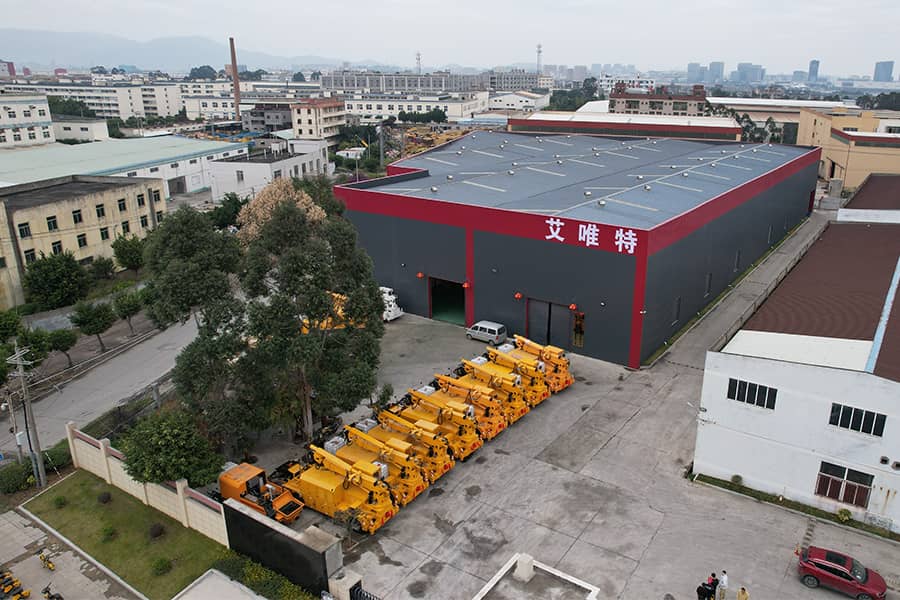
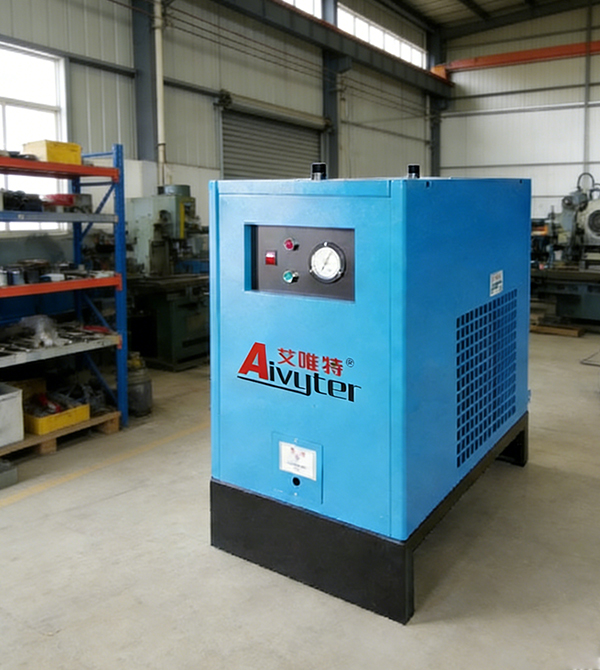
Aivyter has developed a range of dry-running oil-free screw compressors specifically for high-dust and high-temperature environments common in mining and infrastructure projects. Their AOF series incorporates stainless steel rotors with an anti-friction ceramic coating, validated to 50,000 hours of continuous operation in copper mine trials (ambient temperature 45°C, inlet dust load 30 mg/m³). The compressor package includes a double-stage air intake filter (MERV 15 rating) and an automatic condensate drain with oil detection sensor.
In a 2023 deployment at a Chilean underground mine, Aivyter’s unit reduced unscheduled maintenance stops by 72% compared to previous lubricated screw compressors that required monthly coalescing filter changes. The site achieved ISO 8573-1 Class 0 certification for their instrument air network, enabling integration of sensitive gas analyzers. For engineering firms evaluating oil free air compressor manufacturers, Aivyter provides full disclosure of test reports and offers site-specific thermal simulations—a level of transparency that aligns with E-E-A-T standards.
6. Operational Best Practices and Maintenance Optimization
Even the most robust oil-free compressor requires disciplined operational protocols to sustain Class 0 performance over a decade of service.
- Inlet air quality management: Pre-filtration to remove particles >5 µm is mandatory. Install a humidity sensor upstream; if relative humidity exceeds 90%, add a refrigerant dryer before the compressor to prevent condensation inside the air end (water can strip rotor coatings).
- Condensate handling: Oil-free compressors still produce condensate that may contain ambient hydrocarbons. Use an oil-water separator with activated carbon polishing to meet local discharge regulations.
- Bearing regreasing schedule: Follow the manufacturer’s intervals precisely—typically every 8,000 hours for the drive-side bearing. Over-greasing causes seal rupture and grease migration into the compression chamber, defeating the oil-free design.
- Periodic air quality validation: Conduct quarterly oil aerosol measurements using an online particle counter (sensitivity 0.001 mg/m³). Document results to maintain ISO 8573-1 certification for client audits.
7. Prioritizing Engineering Depth Over Marketing Claims
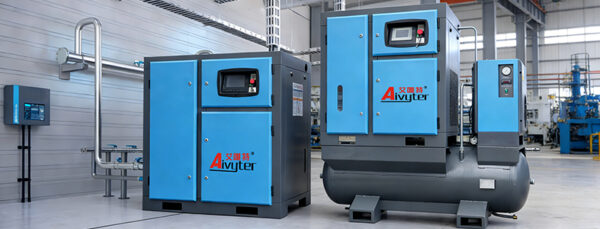
Selecting a supplier among oil free air compressor manufacturers demands scrutiny of real-world data: coating longevity records, independent certification, and field service capabilities in remote sites. The transition to oil-free compression is a strategic investment that lowers total risk—from contamination-related rework to explosive incidents. By applying the technical framework outlined here—examining rotor technology, bearing isolation, and sector-specific pain points—engineering teams can secure reliable, high-purity compressed air for decades. Companies like Aivyter demonstrate that precision manufacturing and transparent validation are the cornerstones of trustworthy oil-free solutions.
Frequently Asked Questions (FAQ)
Q1: Are oil-free air compressors more energy-efficient than lubricated units in real-world mining conditions?
A1: At full load, modern oil-free dry screw compressors achieve efficiencies within 5% of lubricated equivalents (specific power 6.8–7.5 kW/(m³/min) vs. 6.5–7.0). However, oil-free units eliminate the 3–5% pressure drop from coalescing filters and do not require oil separation energy. Over variable load cycles (common in mining), VSD oil-free compressors often deliver 10–15% lower TCO because they avoid oil carryover issues at low speeds. The net difference is application-dependent but generally not a decisive disadvantage for oil-free technology.
Q2: What is ISO 8573-1 Class 0 certification and why does it matter?
A2: ISO 8573-1 Class 0 is the highest purity rating for compressed air, meaning oil content (liquid, aerosol, and vapor) is below the detection limit of standard analytical methods (typically <0.01 mg/m³). It matters because many mining and engineering contracts now mandate Class 0 for any air contacting sensitive electronics, breathing apparatus, or product surfaces. Without this certification, a plant risks contract non-compliance and liability for downstream contamination.
Q3: How often do oil-free rotary screw compressors require major overhauls?
A3: High-quality dry-running oil-free compressors typically schedule a major overhaul (rotor coating replacement, bearing renewal, seal replacement) at 40,000 to 60,000 operating hours—equivalent to 8–10 years of two-shift operation. Some manufacturers extend this to 80,000 hours with advanced ceramic coatings and active condition monitoring. In contrast, lubricated screws often need rebuilds at 30,000–40,000 hours due to oil coking and bearing wear. Confirm the manufacturer’s overhaul interval in writing before purchase.
Q4: Can I add external filtration to a lubricated compressor to achieve oil-free air quality?
A4: Technically no. High-efficiency coalescing filters remove liquid oil and aerosols down to 0.01 mg/m³ but cannot eliminate oil vapor (gaseous hydrocarbons). Vapor passes through filters and re-condenses downstream when temperature drops. To achieve ISO Class 0, you would need activated carbon filters plus catalytic converters, which incur high pressure drop and frequent replacement. For continuous Class 0 compliance, a native oil-free compressor is the only reliable solution.
Q5: What distinguishes Aivyter among other oil free air compressor manufacturers for harsh environments?
A5: Aivyter focuses on heavy-duty applications with three differentiators: (1) Ceramic rotor coatings tested for 50,000 hours in high-dust mines, (2) Integrated dual-stage filtration that maintains Class 0 even with inlet dust loads >25 mg/m³, and (3) Full transparency of TÜV validation reports. Their compressors also feature oversized bearings and purge-air labyrinths that prevent grease migration—a common failure point in many dry screw designs. For remote mining sites, Aivyter offers remote monitoring with predictive maintenance algorithms.
Q6: What typical payback period can a mining contractor expect when switching to oil-free compressors?
A6: Based on operational data from five hard-rock mines, the payback period for replacing lubricated units with oil-free compressors ranges from 14 to 26 months. Savings come from eliminating oil disposal costs (≈$8,000/year per compressor), reducing filter replacement frequency (coalescing filters every 1,000 hours vs. none), and avoiding product rejects or pneumatic valve repairs. Additionally, insurance premiums may decrease when removing explosion risks from oil mist in underground air systems.
about
Aivyter
We provides trusted air compressors and mining equipment, engineered for durability, efficiency, and demanding industrial applications.