Continuous industrial production requires a compressed air system that can match the actual production load. Choosing a rotary screw compressor therefore involves more than comparing motor power or maximum pressure. Air demand, working pressure, load variation, cooling conditions, drive configuration, and air quality all need to be considered together.
For manufacturers selecting an industrial air compressor, the operating pattern of the plant provides the starting point. Once normal and peak demand are understood, different compressor configurations can be compared according to the application.
What Air Demand Should Be Considered?
Air demand is the first factor to establish when selecting a screw air compressor. Manufacturers should identify normal consumption as well as periods when pneumatic equipment requires additional air.
Production lines may run continuously while individual machines operate intermittently. As a result, compressed air demand can change throughout a production cycle.
Selecting capacity based only on the compressor’s maximum output may not reflect actual operating conditions. Normal demand, peak consumption, and possible future changes in production should be reviewed before choosing a model.
How Should Working Pressure Be Matched?
Working pressure should be evaluated together with air flow.
The pressure required at the point of use may differ from the pressure at the compressor outlet because filters, dryers, receivers, and piping can introduce pressure losses.
When selecting a rotary screw air compressor, manufacturers should identify the pressure required by the production equipment and consider the complete distribution system.
A suitable pressure range can help the compressor operate according to the requirements of the application without relying on an unnecessarily high pressure specification.
Is Fixed Speed Suitable for Continuous Operation?
A fixed-speed screw compressor can be considered when compressed air demand remains relatively stable.
This configuration can fit production environments where the compressor operates for extended periods with limited changes in air consumption. The main consideration is the load profile rather than operating hours alone.
A factory may run two or three shifts while maintaining relatively consistent demand. In this situation, fixed-speed equipment can be compared with variable-speed alternatives based on actual operating conditions.
When Should Variable Speed Be Considered?
A variable speed screw compressor can be useful when air demand changes significantly during production.
Variable-speed control allows compressor output to respond to changes in demand rather than maintaining the same motor speed under different load conditions.
This configuration can be evaluated for facilities with fluctuating pneumatic consumption. However, variable speed is not automatically required for every continuous application. The expected load pattern, operating schedule, and system requirements should determine whether it is appropriate.
What Role Does a Permanent Magnet Motor Play?
A permanent magnet screw compressor combines permanent magnet motor technology with variable-speed control in the available configurations.
This type of compressor can be considered where changing air demand makes variable-speed operation relevant. Its operating characteristics should be assessed alongside the plant’s actual load profile.
If demand remains relatively stable, fixed-speed equipment may also be suitable for comparison. Motor technology should therefore be evaluated as part of the complete compressor configuration rather than as an isolated specification.
Why Do Cooling Conditions Matter?
A compressor operating for long periods continuously generates heat, making installation conditions important.
When selecting an industrial screw compressor, manufacturers should consider ambient temperature, ventilation, available installation space, and maintenance access.
Air-cooled configurations are available for industrial applications. The installation area should provide conditions suitable for the selected equipment, particularly where the compressor will operate for extended periods.
Does Air Quality Affect Compressor Selection?
Air quality requirements depend on the production process.
A lubricated rotary compressor can be suitable for many general industrial applications, while processes with tighter requirements for oil contamination may require an oil free air compressor.
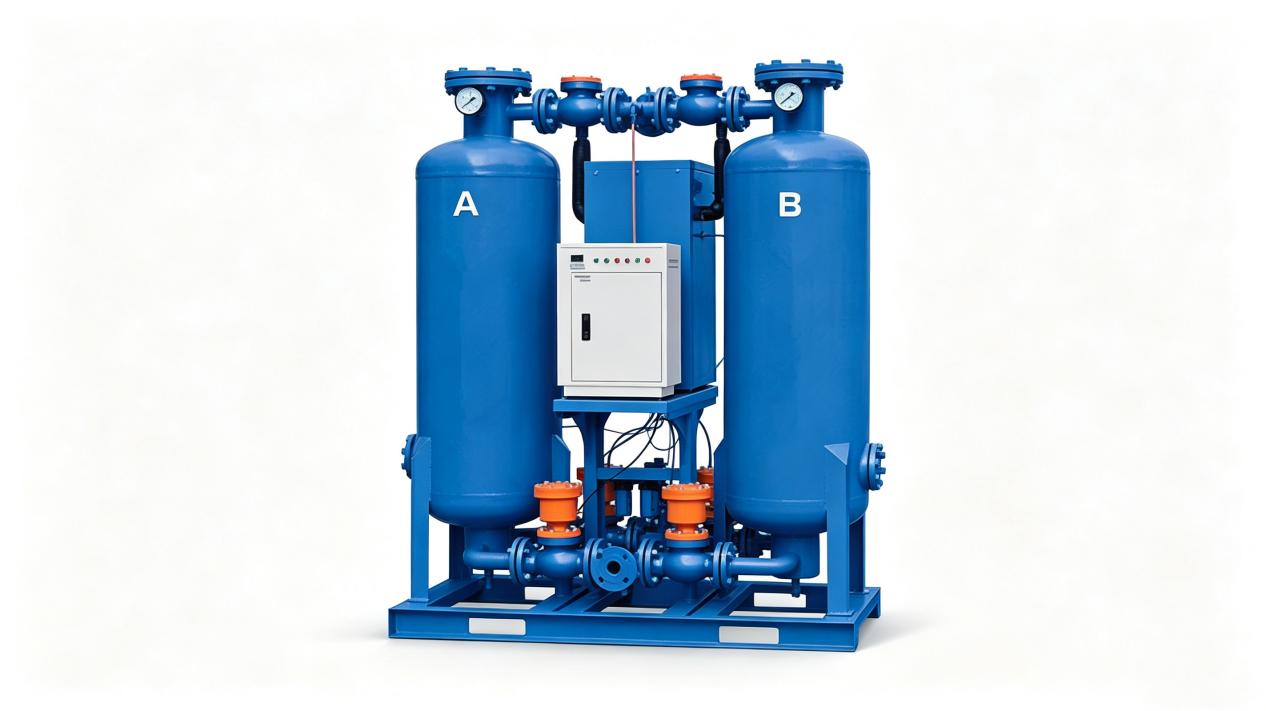
Dryers and filters can also be used as part of the downstream air treatment system where moisture or particulate control is required.
The compressor should therefore be selected together with the air quality required at the point of use.
Should an Integrated Configuration Be Considered?
An integrated screw air compressor can be considered where installation space and equipment arrangement are important.
Combining compression with air treatment components can simplify equipment layout in some applications. A separate compressor and dryer arrangement may provide more flexibility for plants with several compressors or different air quality requirements.
The choice depends on the plant layout, maintenance requirements, air demand, and overall compressed air system.
What Should Be Checked Before Buying?
Before purchasing a screw type compressor, manufacturers should compare the equipment with actual operating conditions:
- Air flow:normal and peak demand
- Pressure:required pressure at the point of use
- Load profile:stable or variable consumption
- Drive:fixed-speed or variable-speed configuration
- Cooling:suitability for the installation environment
- Air quality:lubricated or oil-free compression
- Configuration:integrated or separate equipment
- Maintenance:access and service requirements
These factors provide a more practical basis for equipment selection than motor power alone.
How Can the Right Compressor Be Selected?
The selection process should begin with the production system rather than a specific compressor model. First determine normal and peak air demand, then establish the required working pressure.
After that, manufacturers can compare fixed-speed and variable-speed configurations according to the plant’s load profile. Cooling conditions, air quality, motor and drive configuration, and installation requirements should also be reviewed.
For continuous industrial operation, the most useful approach is to match the rotary screw compressor with the actual requirements of the compressed air system. This keeps capacity and configuration connected to production conditions instead of relying on a single specification.
FAQ
Is a rotary screw compressor suitable for continuous operation?
It can suit continuous industrial applications when capacity matches actual air demand and operating conditions.
Should I choose fixed-speed or variable-speed equipment?
The choice depends mainly on whether compressed air demand remains stable or changes during production.
Does continuous operation require a larger compressor?
Not necessarily. Capacity should be based on normal and peak air consumption.
When is an oil-free air compressor appropriate?
It can be considered for applications with tighter requirements concerning oil contamination.
What should be checked before buying a screw compressor?
Air flow, pressure, load profile, cooling, air quality, drive configuration, and installation conditions should be reviewed.
about
Aivyter
We provides trusted air compressors and mining equipment, engineered for durability, efficiency, and demanding industrial applications.