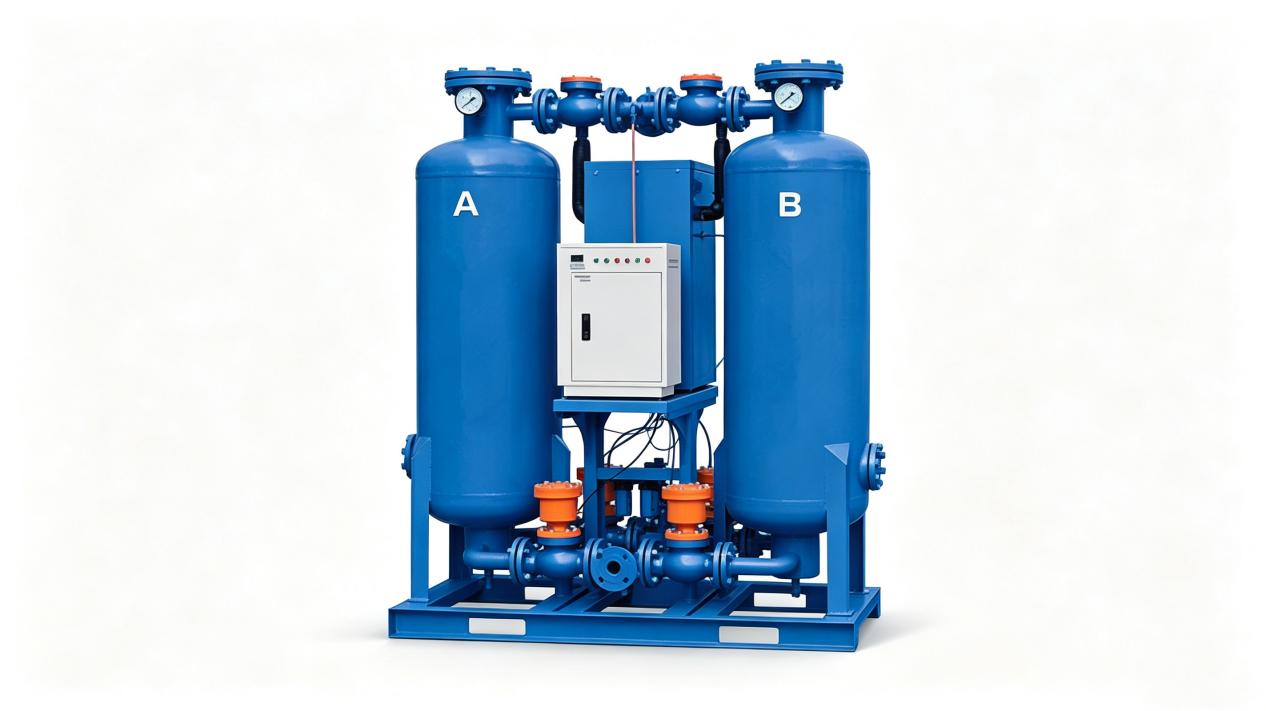
Selecting an air dryer for continuous industrial operation requires more than matching its capacity with the compressor. Air flow, working pressure, inlet conditions, required moisture control, cooling method, and changes in production demand all affect the choice. A dryer that fits the compressor on paper may not be the right match for the actual compressed air system.
For industrial applications, the selection process should start with operating conditions and then move toward dryer type and configuration. This approach helps manufacturers compare compressed air dryers according to how the system actually works.
What Should Be Checked Before Selecting an Air Dryer?
Start by identifying the basic conditions of the compressed air system. These include required air flow, working pressure, inlet air temperature, ambient temperature, and the expected operating load.
The application also determines the required level of moisture control. Pneumatic tools used for general plant operations may have different requirements from production equipment that is more sensitive to moisture.
The compressor’s rated output is useful as a reference, but it should not be the only selection factor. Actual air consumption and the conditions at the dryer inlet provide a more practical basis for choosing an industrial air dryer.
How Does Air Flow Affect Dryer Selection?
Air flow is a key factor when sizing a dryer. The equipment needs enough capacity to handle the compressed air passing through it during normal operation, while periods of higher demand should also be considered.
Production systems rarely operate at exactly the same air consumption throughout the day. Pneumatic equipment may start and stop, production lines may change loads, and additional equipment may be connected later.
The available refrigerated air dryer range covers different capacities, from approximately 1.0 to 150 m³/min, with models designed for different operating requirements. Both air-cooled and water-cooled configurations are available.
For this reason, manufacturers should compare the dryer capacity with actual and peak air demand rather than selecting a model solely from compressor power.
Why Does Working Pressure Matter?
Working pressure needs to be considered alongside flow rate.
Different production equipment can require different operating pressures, and the pressure available at the point of use may differ from the compressor’s maximum rated pressure.
Before selecting an air dryer for compressor systems, manufacturers should confirm the normal operating pressure and check whether the dryer is suited to those conditions.
Flow and pressure should be evaluated together. A suitable flow capacity does not by itself confirm that the dryer configuration matches the complete compressed air system.
How Do Inlet Conditions Affect Dryer Selection?
The conditions entering the dryer can influence the drying process. Inlet air temperature, ambient temperature, and moisture content are relevant when evaluating dryer capacity and configuration.
Compressed air can contain water vapor after compression, while cooling can cause part of that moisture to condense. Upstream equipment such as an aftercooler and condensate drain can therefore affect the conditions reaching the dryer.
This is why dryer selection should consider the complete air treatment arrangement rather than looking at the dryer in isolation.
When Is a Refrigerated Air Dryer Suitable?
A refrigerated air dryer cools compressed air so that moisture can condense and be separated from the air stream.
This type of dryer can be suitable for industrial applications where the required moisture control falls within the range of refrigerated drying. The available configurations include different capacities as well as air-cooled and water-cooled options.
Selection still depends on air flow, working pressure, inlet temperature, and ambient conditions. A refrigerated dryer should be matched to the application instead of being chosen simply because it is commonly used in industrial systems.
When Should a Desiccant Air Dryer Be Considered?
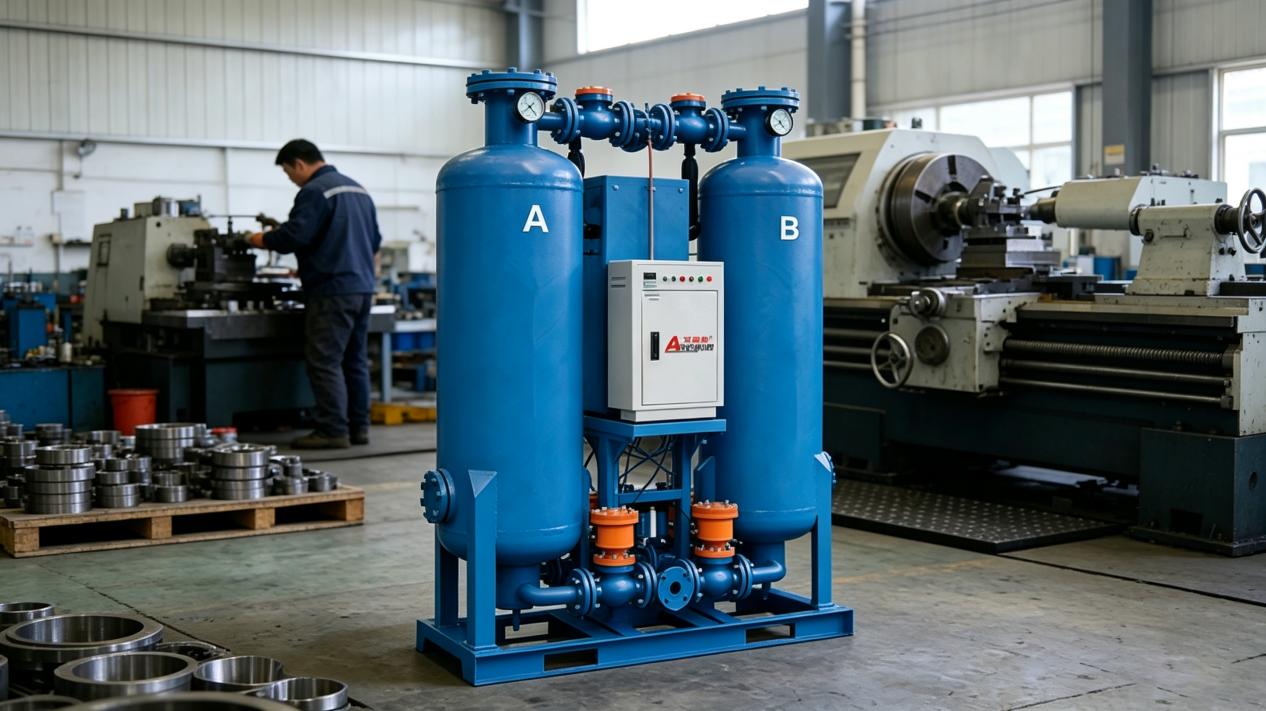
Some applications require a lower moisture level than refrigerated drying can provide. A desiccant air dryer is designed for applications where adsorption is used to remove water vapor from compressed air.
The available configurations include a heated desiccant air dryer and a heatless adsorption air dryer. Their regeneration methods are different.
Heatless systems use a portion of compressed air during regeneration, while heated systems use heat as part of the regeneration process. This difference can affect operating requirements and should be included when comparing dryer configurations.
For continuous industrial systems, the drying method should therefore be considered together with air demand and the overall operating pattern.
How Should Cooling Configuration Be Chosen?
Refrigerated dryers can use air cooling or water cooling.
An air-cooled configuration may fit facilities where sufficient ambient-air cooling conditions are available. A water-cooled configuration can be considered where an appropriate cooling-water system is already available.
The choice should take into account ambient temperature, available utilities, installation space, and maintenance access.
Cooling configuration is therefore a site-related decision as well as an equipment specification.
How Does Continuous Load Affect Dryer Selection?
Continuous operation makes it important to understand how the air demand changes over time.
A factory may operate its compressor for extended periods while actual compressed air consumption varies between production stages. Normal demand, peak demand, shift patterns, and possible future increases should all be reviewed.
Selecting a dryer around the actual operating range provides a closer match between drying capacity and system demand. At the same time, choosing capacity based only on a theoretical maximum may result in equipment that is larger than the application requires.
The goal is to match the dryer with the way the compressed air system actually operates.
Should the Dryer Be Integrated With the Compressor?
An integrated configuration can be useful where installation space and equipment arrangement are important.
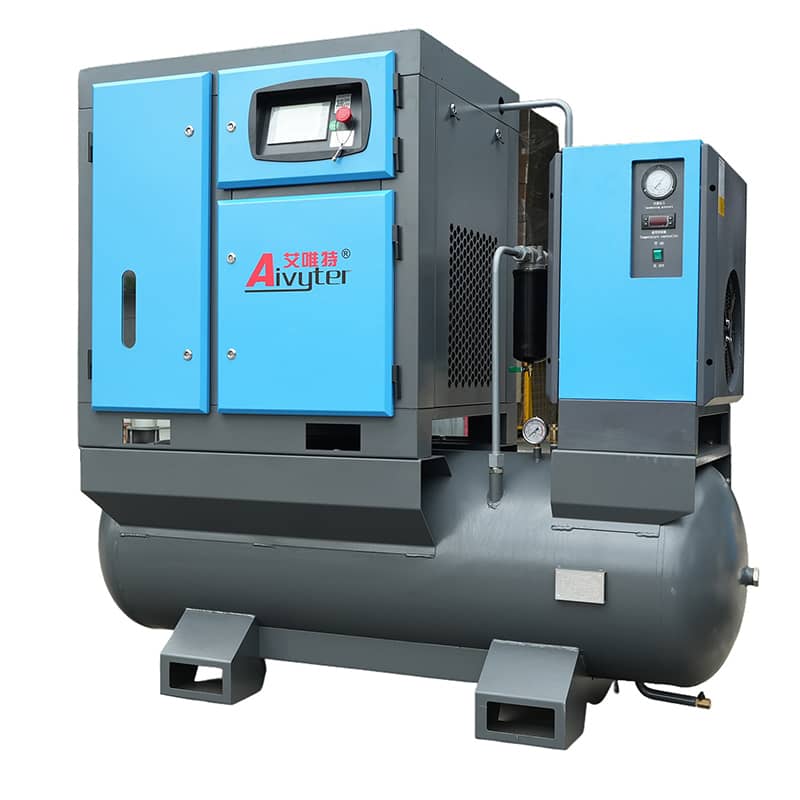
An integrated screw air compressor can combine compression, drying, and filtration within one system. This reduces the number of separate components that need to be arranged during installation.
A separate dryer may make more sense for a facility with several compressors, different air-quality requirements, or a centralized air treatment system.
The choice between integrated and separate equipment should therefore follow the plant layout, air demand, maintenance requirements, and overall system design.
How Should the Dryer Fit Into the Complete Air System?
An air dryer is only one part of the compressed air treatment process:
Compressor → Aftercooler → Air Receiver → Filters → Air Dryer → Piping → Point of Use
The condition of the air at the point of use can be affected by every stage in this path.
Condensate drains, filters, piping arrangement, and maintenance access should therefore be considered during system planning. Installing a dryer does not remove the need to manage moisture and contaminants throughout the rest of the system.
For continuous operation, the dryer should work as part of a coordinated air treatment system rather than as an isolated component.
What Should Manufacturers Compare Before Selection?
Before choosing an industrial air dryer, manufacturers should compare several operating factors:
- Air flow:normal and peak compressed air demand
- Working pressure:actual system operating pressure
- Inlet conditions:temperature and moisture entering the dryer
- Air quality:moisture requirements at the point of use
- Dryer type:refrigerated or desiccant
- Cooling method:air-cooled or water-cooled
- Operating pattern:continuous, intermittent, or variable loads
- System configuration:integrated or separate equipment
Looking at these factors together provides a more practical basis for dryer selection than compressor capacity alone.
How Can the Right Air Dryer Be Selected?
The selection process should begin with the application rather than a specific product model.
First, determine the required air flow and working pressure. Then check inlet and ambient conditions, followed by the required level of moisture control. These factors help narrow the choice between refrigerated and desiccant drying.
A refrigerated air dryer can be evaluated for applications suited to refrigerated moisture removal, while a heated desiccant air dryer or heatless adsorption air dryer can be considered where lower moisture levels are required.
Continuous operation also makes load variation, cooling conditions, and system configuration important. When these factors are considered together, manufacturers can select an air dryer for compressor systems that is better aligned with actual operating requirements.
FAQ
What is the first factor to check when selecting an air dryer?
Start with air flow and working pressure, then evaluate inlet conditions and required air quality.
When should a refrigerated air dryer be considered?
It can suit applications where the required moisture control is compatible with refrigerated drying.
When is a desiccant air dryer more suitable?
It can be considered when the application requires a lower moisture level than refrigerated drying provides.
Should peak air demand be included in dryer sizing?
Yes. Peak demand should be reviewed alongside normal consumption and operating patterns.
Can an air dryer be integrated with a screw compressor?
Yes. An integrated configuration can combine compression, drying, and filtration in one system.
about
Aivyter
We provides trusted air compressors and mining equipment, engineered for durability, efficiency, and demanding industrial applications.