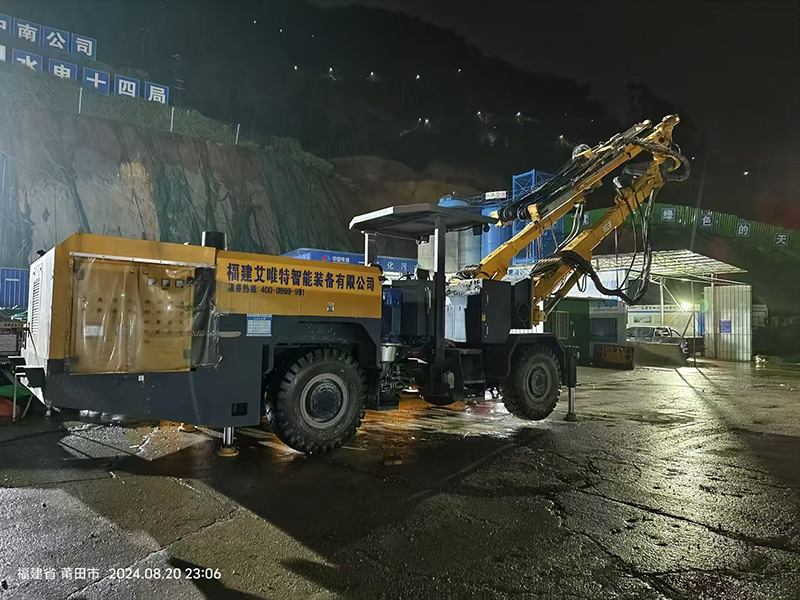
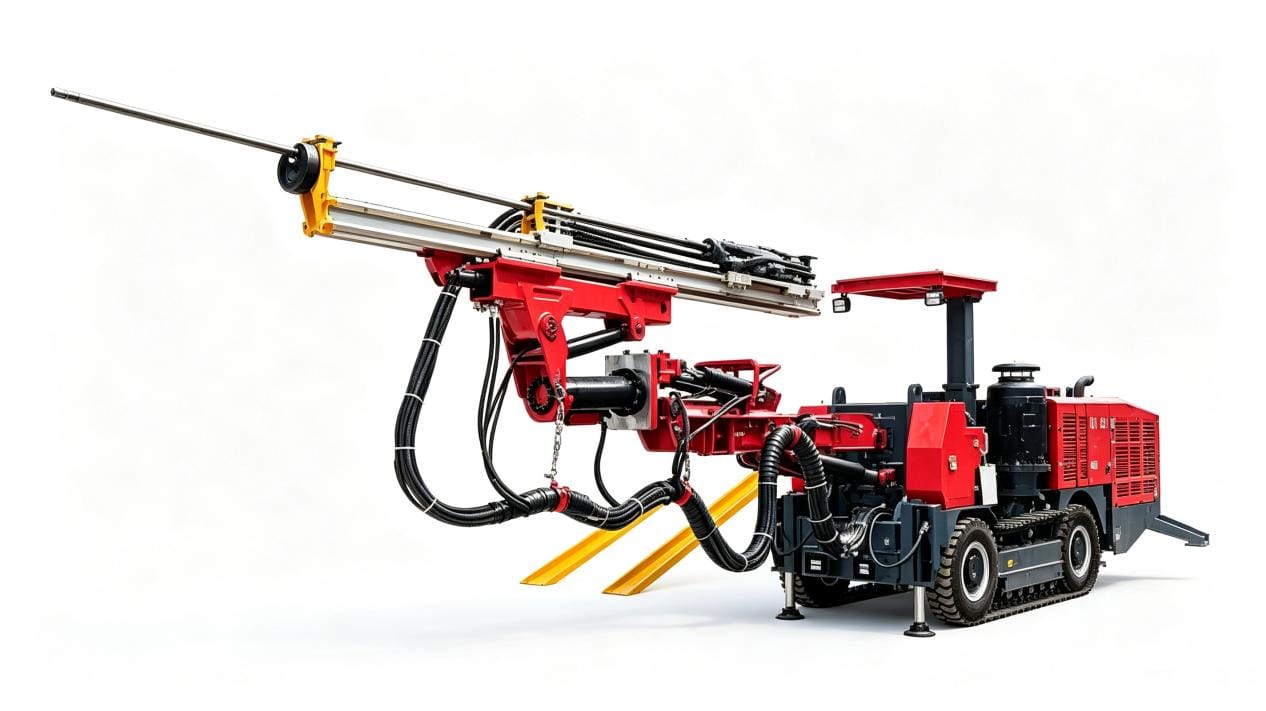
Underground drilling is usually carried out through repeated cycles of positioning, drilling, relocating, and setting up again. As operating hours increase, the condition of the drilling system, hydraulic components, carrier, and drilling tools can influence how the machine performs. For this reason, the long-term operation of an underground drill rig should be assessed through several factors rather than a single performance figure.
Underground drill jumbos are used for drilling work in underground mining and tunneling. Different models are available with variations in boom configuration, working cross section, drilling diameter, carrier design, and mobility. These specifications provide a starting point for considering whether a machine fits the conditions of a particular project.
What Determines Long-Term Drill Rig Performance?
An underground drilling rig works as a combination of several systems. The carrier handles movement, while the boom and feed position the drilling assembly. The rock drill performs the actual drilling, with hydraulic components supporting movement and operation.
During extended use, each system experiences a different type of workload. The drilling system is exposed to repeated impact and rotation, while the carrier and transmission are affected by travel between working areas. Hydraulic components are repeatedly used for boom movement, positioning, and drilling functions.
Long-term operating condition therefore depends on how these systems are used, maintained, and matched with the requirements of the mine.
How Does Repeated Drilling Affect the Machine?
Repeated drilling places operating cycles on the rock drill, feed mechanism, boom, and associated hydraulic components. The workload can vary according to rock conditions, hole dimensions, drilling depth, and the frequency of drilling operations.
The AZK-125, for example, is equipped with a PD380 rock drill and has a listed drilling diameter of 45–115 mm. Its listed working cross section ranges from 2 × 2 m to 5 × 4 m.
These specifications indicate the intended operating range of the machine. During extended use, operators also need to monitor changes in drilling behavior and inspect the components involved in the drilling cycle.
A change in drilling performance does not necessarily mean that the main machine requires major repair. Drill rods, bits, and other drilling tools can also wear during normal use and influence drilling results.
How Does the Carrier Affect Long-Term Operation?
The carrier supports the drilling equipment and moves the machine through underground working areas. Its role becomes particularly important when the rig needs to travel between different faces.
Underground routes may include restricted passages, turning areas, and gradients. Repeated movement places operating cycles on the carrier, transmission, steering system, and other running components.
The AZK-125 lists a minimum turning radius of 2,397 mm inside and 4,280 mm outside, together with a climbing ability of 20°.
These figures can be compared with the actual underground access conditions. If a rig regularly travels through areas that require tight turns or significant gradients, mobility-related components deserve attention during routine inspections.
How Do Hydraulic Systems Influence Continued Operation?
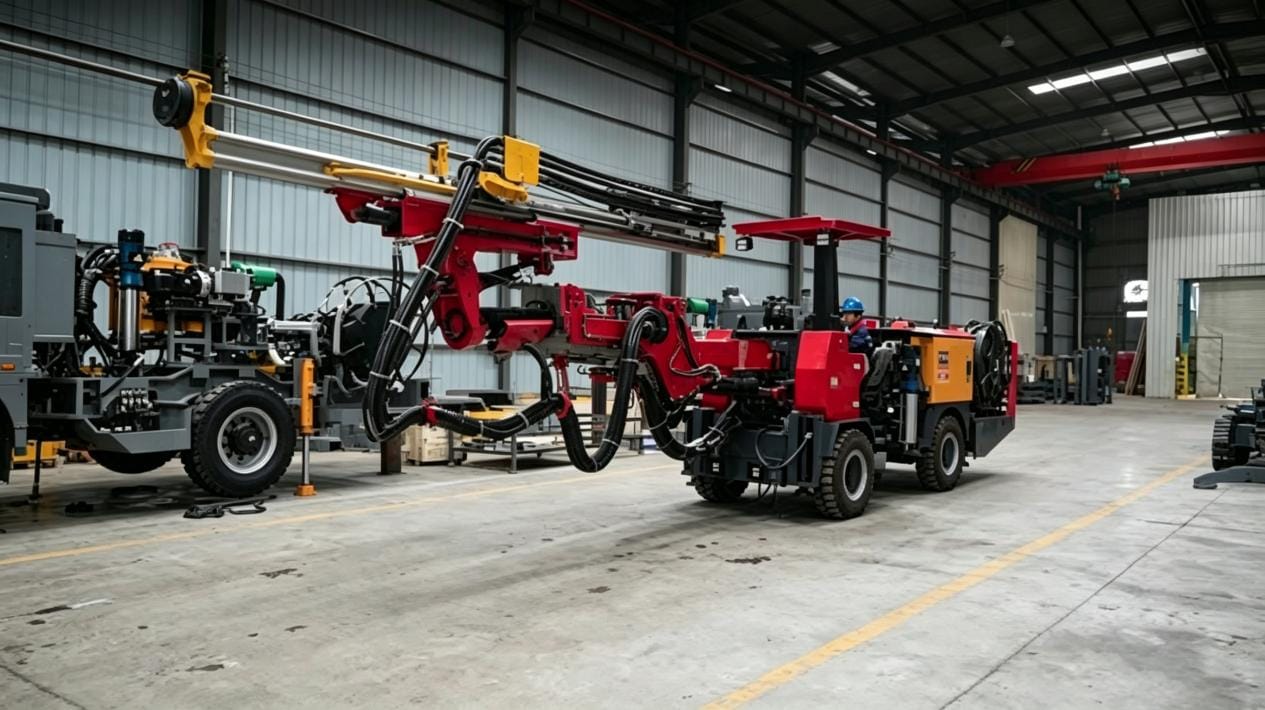
Hydraulic systems support several functions on an underground drill jumbo, including boom movement, feed movement, and drilling positioning. These functions are repeated during normal drilling cycles.
Over time, operators can monitor hydraulic lines, connections, cylinders, and other related components for leakage or unusual movement. Changes in machine response may indicate that further inspection is required.
The hydraulic system should also be considered together with the drilling system. If the boom or feed does not move as expected, the cause may be different from a problem with the rock drill or drilling tools.
This distinction helps maintenance personnel identify the relevant system instead of treating every change in drilling behavior as the same type of fault.
What Role Does Component Wear Play?
Component wear is an important part of long-term drilling equipment operation. However, wear does not occur at the same rate across every component.
Drill rods and bits are directly involved in the drilling process and are subject to normal wear. The rock drill, feed mechanism, boom components, hydraulic seals, and carrier systems have different operating roles and therefore require different inspection approaches.
For this reason, maintenance records can be useful when assessing equipment condition. Recording component replacement and recurring issues can help operators identify patterns rather than responding to every repair separately.
A clear distinction between consumable tool wear and machine-system problems also makes maintenance planning more practical.
How Do Underground Conditions Affect Long-Term Operation?
The underground environment can change the workload placed on a drill rig. Limited space affects machine positioning and movement, while gradients and access routes influence tramming requirements.
Rock conditions are another factor. Different formations can affect drilling resistance and the wear experienced by drilling tools. Hole diameter, depth, and drilling frequency also influence how the drilling system is used.
Dust and moisture are additional operating considerations. Instead of judging a machine only by its accumulated service time, mining companies can consider operating hours, drilling frequency, travel requirements, and the conditions in which the machine has been working.
This gives a more realistic view of the machine’s actual operating history.
How Does Machine Configuration Affect Extended Use?
The initial configuration of an underground drill rig has a direct relationship with its working environment.
The available drill jumbo range includes different boom configurations and working dimensions for underground applications. The AZK-125, for example, is listed for working cross sections between 2 × 2 m and 5 × 4 m.
Other models cover different working requirements, so the relevant specifications need to be compared with the excavation profile before equipment is assigned to a project.
The same principle applies to drilling diameter and machine mobility. A configuration that corresponds with the working section and drilling requirements reduces the need to operate outside its stated specifications.
What Maintenance Supports Long-Term Use?
Maintenance is part of long-term equipment management rather than a separate activity after a problem occurs.
For an underground drilling rig, routine inspection can cover the rock drill, drilling tools, boom, feed mechanism, hydraulic components, carrier, transmission, and other service points.
The actual maintenance schedule should follow the equipment documentation and the conditions in which the machine operates.
It is also useful to distinguish routine service from corrective maintenance. Routine inspection deals with expected service requirements, while corrective work addresses abnormal wear, damage, or changes in machine behavior.
Keeping records for both types of work can help operators understand how the machine’s condition changes as operating hours accumulate.
How Can Long-Term Performance Be Evaluated?
A useful evaluation combines several indicators.
Drilling consistency provides information about the condition of the drilling system and tools. Changes in hole production can prompt inspection of the rock drill, feed system, or drilling tools.
Mobility provides another reference. Changes in travel, steering, or positioning can point toward carrier or transmission-related issues.
Component condition is also important. Wear in drilling tools is different from deterioration in hydraulic or structural components, so each area needs to be assessed separately.
Maintenance history adds another layer of information. Repeated repairs involving the same component may indicate a recurring operating or maintenance issue that deserves closer investigation.
Together, these observations can be used to assess how an underground drill rig is performing over an extended operating period.
What Should Be Considered Over the Equipment Lifecycle?
Long-term equipment performance begins with choosing a configuration that corresponds with the intended application and continues with appropriate operation and maintenance.
Mining companies can review whether the drilling range remains suitable for the work, whether the carrier fits the underground access conditions, and whether the drilling and hydraulic systems remain in appropriate operating condition.
The condition of drilling tools should be assessed separately from the main machine because normal tool wear does not necessarily indicate a problem with the carrier or drilling system.
For operations that rely on repeated underground drilling, reviewing these factors together provides a practical way to monitor equipment condition throughout its operating period.
FAQ
What affects the long-term performance of an underground drill rig?
Workload, drilling frequency, component wear, maintenance, mobility requirements, and underground conditions can all affect operation.
Which components need regular inspection?
Rock drills, drilling tools, feed systems, hydraulic components, booms, carriers, and transmission-related components should be monitored.
Does frequent relocation affect a drill rig?
Frequent relocation adds travel cycles, making carrier, transmission, steering, and mobility-related inspection more relevant.
Can drilling-tool wear affect drilling results?
Yes. Worn rods or bits can influence drilling results without necessarily indicating a fault in the main machine.
How should long-term drill rig condition be assessed?
Review drilling consistency, mobility, component condition, maintenance records, operating hours, and actual site conditions.
about
Aivyter
We provides trusted air compressors and mining equipment, engineered for durability, efficiency, and demanding industrial applications.