1. Core Categories of Underground Mining Drilling Machines
Understanding the specific function of each drill rig type is essential for fleet optimisation. Modern operations typically deploy three main classes of underground mining drilling machines, each engineered for a distinct phase of the mining cycle.
1.1 Development Jumbos – Tunnelling and Access
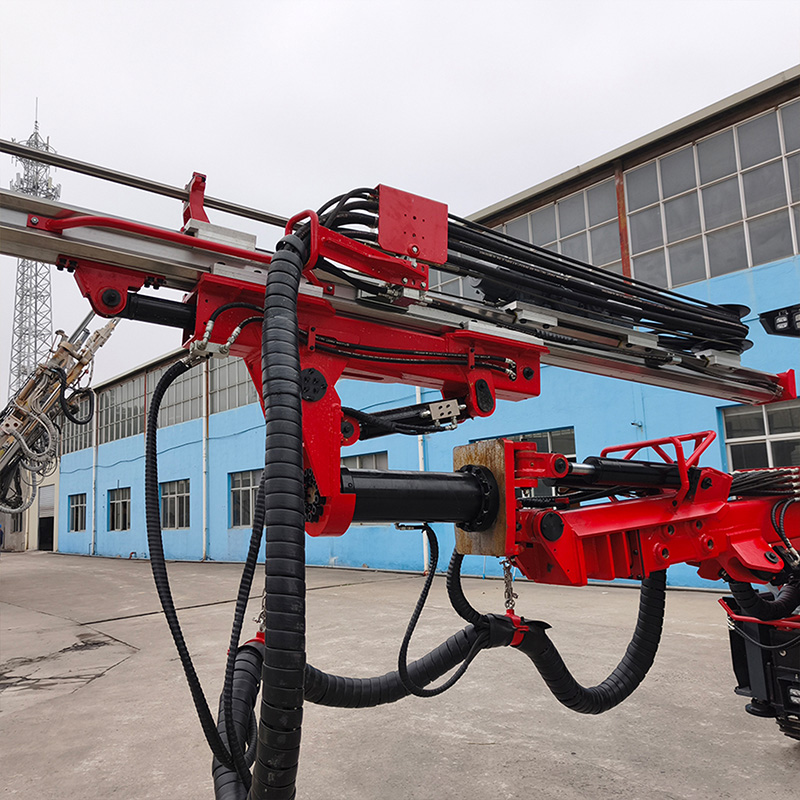
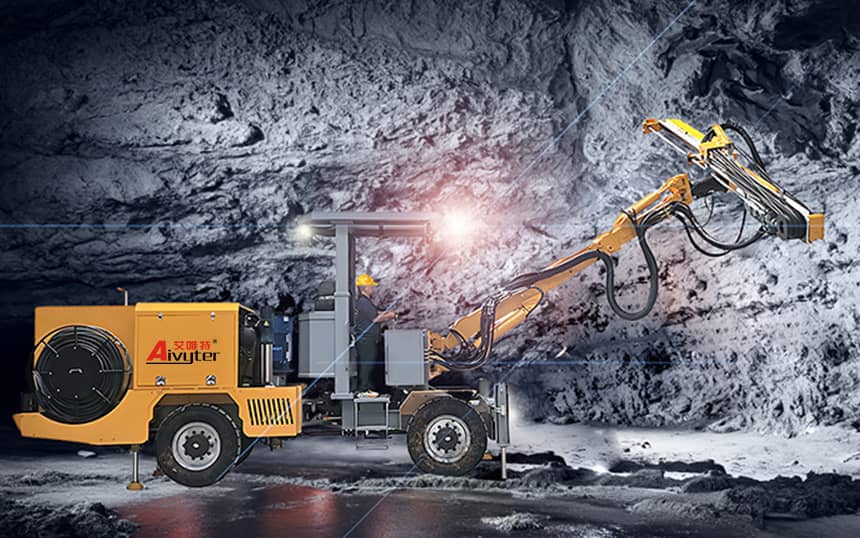
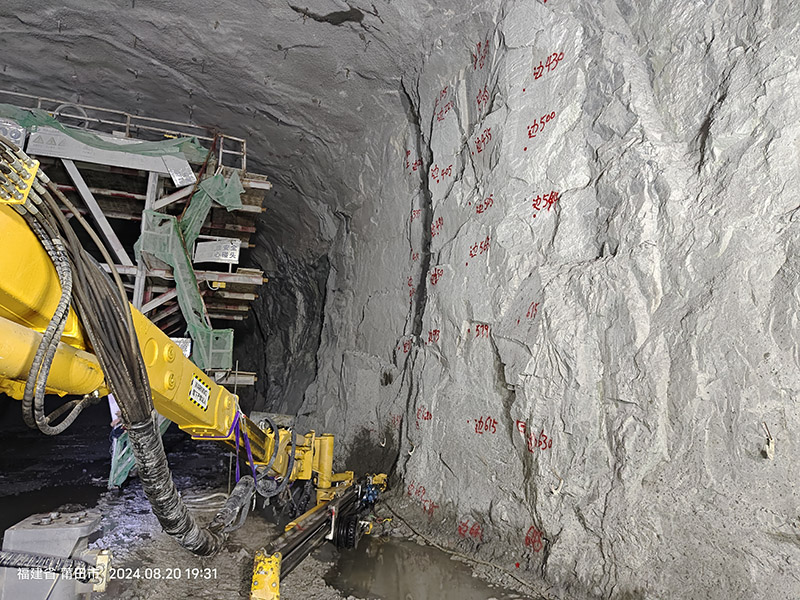
Development jumbos are electro‑hydraulic rigs used to excavate declines, ramps, and cross‑cuts. They carry two or three drilling booms equipped with hydraulic rock drills (e.g., 18–25 kW class) that drill blast holes of 38–51 mm diameter. Key technical parameters include:
- Drill steel length: Typically 3.7 m to 6.1 m, allowing round lengths up to 5.5 m in competent rock.
- Automated boom control: Computer‑assisted parallel holding and face profiling reduce overbreak and drilling time.
- Dust collection systems: Dry or wet dust collectors with filter efficiency >99% to meet ventilation constraints.
Advanced jumbos now incorporate wireless teleoperation, allowing the operator to tram and set up from a safe distance – a feature increasingly mandated in seismically active zones.
1.2 Production Drills – High‑tonnage Boreholes
For bulk mining methods such as sublevel stoping or bench stoping, production drills create long, large‑diameter holes (89–165 mm). These underground mining drilling machines can be self‑propelled crawler rigs or modular units lowered through raises. Critical specifications include:
- Rotation torque: Up to 2,500 Nm for deep hole drilling in abrasive ores.
- Rod handling: Fully automatic carousels that hold 8–12 rods, enabling unmanned drilling of holes up to 50 m.
- Angle accuracy: Electronic inclinometers and rod centralisers keep deviation below 2% to ensure proper ore fragmentation.
1.3 Rock Bolting Rigs – Ground Support Integration
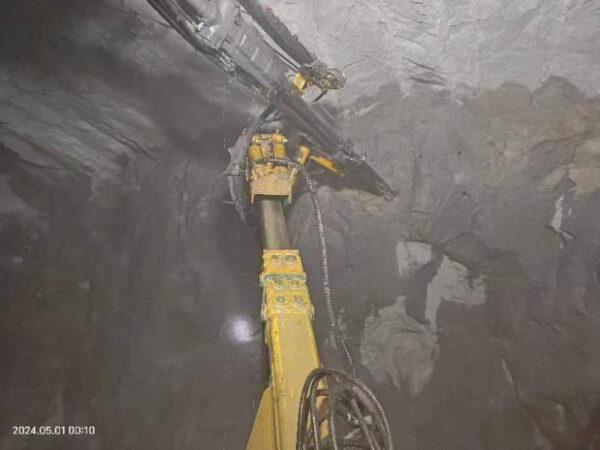
Safety and ground control rely on specialised bolting rigs that install resin or mechanical anchors immediately after blasting. Modern multifunction units combine drilling and bolt installation in one cycle, achieving up to 30 bolts per shift. The trend is towards mechanised mesh handling and remote bolting in unstable ground.
2. Technological Advancements Reshaping Drill Performance
The digital transformation of mining has placed new demands on underground mining drilling machines. Today’s rigs are sensor platforms that generate terabytes of data for process optimisation.
2.1 Automated Drilling Cycles and Tele‑remote Operation
Full‑cycle automation – from collaring to rod change – is now standard on high‑end jumbos and production drills. Parameters such as feed pressure, percussion pressure, and rotation speed are continuously adjusted by PID controllers to maintain optimal penetration while avoiding jamming. Aivyter’s latest rigs incorporate adaptive control algorithms that learn from the rock mass, reducing tool wear by up to 18% compared to manual operation.
2.2 Real‑time Data Integration (IT and OT Convergence)
Modern drills are equipped with IoT gateways that stream data to surface mine control centres. Parameters like hole depth, drilling speed, and flushing pressure are used to generate real‑time geological maps. This enables immediate grade control and reduces dilution. Some mines have reported a 5–7% increase in recovered ore value after implementing data‑driven drilling.
2.3 Electrification and Emission Reduction
With ventilation representing up to 40% of underground energy costs, battery‑electric and diesel‑electric hybrid underground mining drilling machines are gaining traction. Zero‑emission rigs eliminate diesel particulate matter, drastically reducing the required ventilation airflow and lowering operating costs. Aivyter’s electric‑hydraulic range, for example, offers a 30% reduction in total cost of ownership over a five‑year period compared to conventional diesel‑powered units.
3. Addressing Operational Pain Points with Engineered Solutions
Even the most advanced machinery must overcome persistent industry challenges. Below we analyse three critical pain points and how modern underground mining drilling machines provide tangible solutions.
3.1 Challenge: High Bit and Consumable Costs
In abrasive rock formations, steel consumption can account for 25–30% of drilling costs. Solution: intelligent feed control and anti‑jamming software that prevents over‑stroking and shock loads. Additionally, using rotation‑independent flushing (RIF) systems ensures cuttings are removed efficiently, reducing re‑grinding and bit wear.
3.2 Challenge: Unplanned Downtime and Maintenance Access
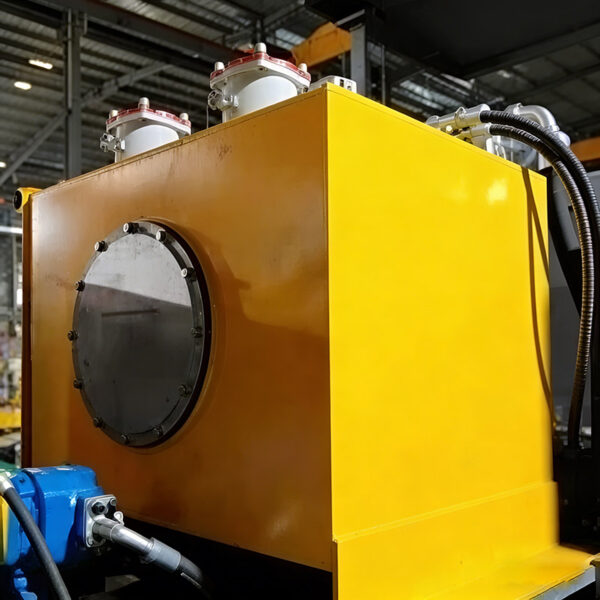
Narrow headings and remote locations make maintenance difficult. Solution: modular component design. Leading manufacturers now build rigs with plug‑in hydraulic valves and cartridge‑type filters that can be replaced in under 15 minutes. Aivyter’s drill rigs feature a centralised lubrication system and diagnostic ports that allow predictive maintenance scheduling, boosting mechanical availability above 92%.
3.3 Challenge: Operator Safety in Burst‑Prone Ground
Rockbursts and falls of ground remain the leading cause of fatalities. Solution: remote control and semi‑autonomous tramming. Operators can now position the rig from a protected cab or even from surface using low‑latency video feeds. Bolting rigs equipped with temporary ground support (e.g., sliding mesh canopy) create a safe working envelope before the operator exits the protected area.
4. Application Scenarios: Matching Machine to Mining Method
Selecting the correct underground mining drilling machine depends heavily on the mining method and geotechnical context.
- Cut‑and‑fill stoping: Favours compact electro‑hydraulic jumbos with high manoeuvrability in narrow veins (2.5 m width).
- Sublevel caving: Requires production drills capable of long, straight holes (up to 50 m) with automatic rod handling.
- Room‑and‑pillar: Uses multi‑boom drills for rapid development of parallel drifts; bolting rigs with high‑reach booms for roof support.
- Shaft sinking: Specialised shaft jumbos with swinging platforms to drill full‑face patterns in a confined space.
In every case, the ability to integrate with the mine’s existing fleet management system (e.g., toro‑control or modular’s MineCare) is now a procurement prerequisite.
5. Future Outlook: Autonomous fleets and AI‑Driven Drilling
The next decade will see underground mining drilling machines become fully integrated nodes in an autonomous mine ecosystem. We are already witnessing the first commercial deployments of multi‑rig autonomous fleets where a single surface operator supervises three to five production drills. Artificial intelligence is being applied to recognise rock interfaces while drilling and automatically adjust blasting patterns to improve fragmentation. Combined with 5G connectivity, latency is reduced to under 20 ms, making real‑time haptic feedback feasible.
6. How to Select the Right Underground Mining Drilling Machine
A structured selection process should consider the following technical and economic factors:
- Rock mass rating (RMR): Hardness (UCS) and abrasivity (Cerchar index) dictate the required rock drill power and carbide grade.
- Headroom and drift cross‑section: The machine’s tramming dimensions must fit existing excavations with adequate clearance.
- Hole diameter and depth requirements: Influence the choice between tophammer, DTH, or rotary drilling methods.
- Automation level: From manual to fully autonomous – balance capital cost against long‑term labour savings and safety gains.
- After‑sales support: Availability of spare parts and local service engineers can make or break a project. Aivyter provides regional hubs with 24/7 technical support, ensuring minimal logistics delays.
Frequently Asked Questions (FAQs)
Q1: What is the difference between a development jumbo and a production drill?
A1: A development jumbo is used to excavate the access drifts and tunnels; it drills smaller‑diameter blast holes (typically 38–51 mm) in a face pattern. A production drill, in contrast, creates long, large‑diameter holes (89 mm and above) for bulk ore extraction in stopes. Their design priorities – agility vs. reach – reflect these roles.
Q2: How does automated drilling improve safety in underground mines?
A2: Automation removes the operator from the immediate hazard zone. With tele‑remote and semi‑autonomous operation, the driller controls the machine from a protected cabin or surface control room. In rockburst‑prone mines, this can reduce personnel exposure by up to 80%. Automated systems also reduce the physical strain of handling heavy drill steels.
Q3: What are the typical maintenance intervals for a modern hydraulic drill rig?
A3: For a well‑maintained electro‑hydraulic rig, scheduled servicing is usually required every 250 operating hours (greasing, filter checks) with major hydraulic oil changes at 2,000 h. Condition‑based monitoring (vibration analysis, oil particle counters) allows intervals to be extended safely. Aivyter rigs are designed with easy‑access service points to minimise downtime.
Q4: Can I use the same underground drilling machine for both development and production?
A4: While some multi‑purpose rigs exist, they usually represent a compromise. A dedicated production drill offers better reach, rod‑handling capacity, and hole straightness for long holes. For small‑scale mines, a well‑equipped jumbo with extension rods can perform limited production duties, but efficiency will be lower.
Q5: How do I calculate the total cost of ownership for an underground drill?
A5: TCO includes the purchase price, expected life (years), maintenance and consumable costs (bits, rods, hydraulic oil), energy consumption, and residual value. For accurate estimation, also factor in operator training, automation retrofit costs, and ventilation savings if using electric rigs. Industry benchmarks suggest that labour and consumables account for 60–70% of lifetime costs.
Q6: What are the advantages of electric over diesel‑powered drilling machines?
A6: Electric rigs produce zero emissions at the point of use, dramatically reducing ventilation demand – often saving $2‑5 per tonne. They are also quieter, have lower vibration, and typically require less maintenance because there is no engine, exhaust after‑treatment, or high‑pressure fuel system. The main drawback is the trailing cable, which limits mobility; however, battery‑electric solutions are rapidly overcoming this.
Q7: How does rock type affect the selection of a drilling machine?
A7: Hard, abrasive rocks (e.g., quartzite, massive sulphides) require high‑power rock drills (20 kW+) and wear‑resistant components. Softer rocks (e.g., potash, coal) may allow rotary drilling, which is faster and quieter. The presence of fractures also demands anti‑jamming software and robust rod centralisers to prevent deviation and rod breakage.
For detailed specifications and tailored solutions, consult the engineering team at Aivyter. Their range of underground mining drilling machines is designed to meet the highest demands of safety, productivity, and digital integration.
about
Aivyter
We provides trusted air compressors and mining equipment, engineered for durability, efficiency, and demanding industrial applications.