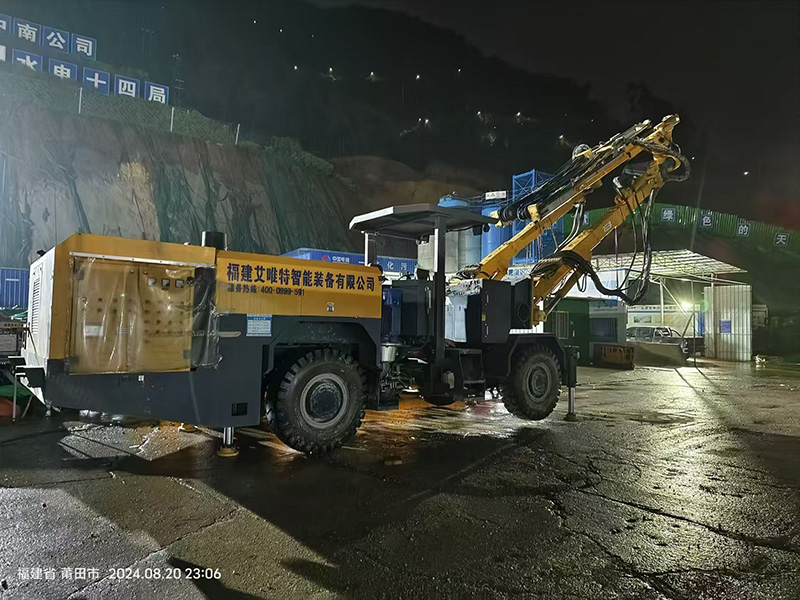
In underground hard rock mining, the selection of underground drill rigs represents a strategic decision that directly influences development advance rates, dilution control, and overall cost per ton. For mining engineers, project managers, and technical services teams, the specification process involves balancing capital expenditure against sustained reliability in some of the most demanding operational environments on earth. Drawing from extensive field experience across base metal, gold, and industrial mineral operations, this analysis provides a data-driven methodology for evaluating drill rig configurations—from twin-boom jumbos to longhole production drills—while integrating modern automation and fleet management architectures. The objective is to establish a framework that optimizes both penetration rates and total cost of ownership (TCO) over the equipment lifecycle.
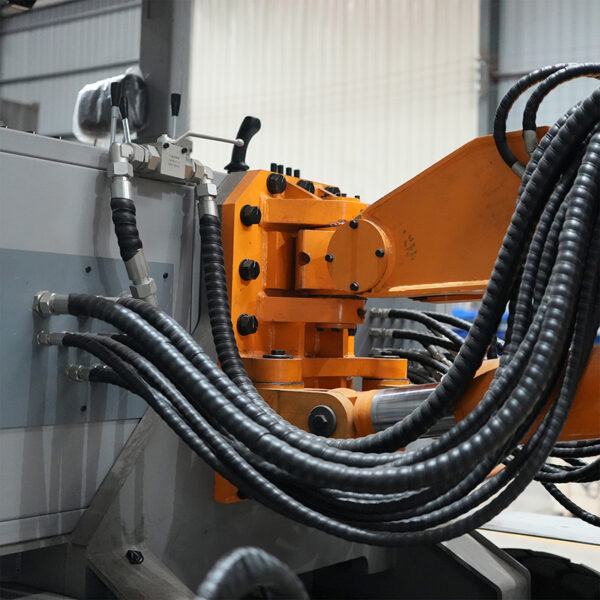
1. Technical Classification of Underground Drill Rigs by Application
The classification of underground drill rigs follows a functional segmentation based on the mining method and development stage. Misalignment between rig type and application leads to inefficiencies ranging from 15% to 25% in cycle times and increased consumables wear.
1.1 Development Jumbos (Twin-Boom and Single-Boom Configurations)
Development jumbos are designed for drifting, ramp development, and cross-cut excavation. Twin-boom units dominate in operations requiring advance rates exceeding 200 meters per month. Key performance indicators (KPIs) for these machines include boom coverage (typically 25–45 m² face area), hydraulic impact power (18–30 kW per boom), and automated drilling sequences. Modern units feature parallel drilling functions that reduce face drilling time by 30% compared to sequential operations. The adoption of direct control system (DCS) architectures allows for hole depth accuracy within ±2 cm, essential for perimeter control to minimize overbreak.
1.2 Production Drill Rigs (Longhole and Fan Drilling)
For sub-level caving, longhole open stoping, and bench stoping, production drills deliver precise blast hole patterns. These underground drill rigs are characterized by extended feed lengths (up to 3.7 meters per rod change) and high-torque rotary-percussion systems. The critical factor in production drilling is hole deviation; advanced rigs with computerized guidance systems maintain deviation below 1.5% over 40-meter holes, directly impacting dilution and ore recovery. For operations with complex geology, rigs equipped with real-time rock recognition adjust feed pressure and percussion automatically to maintain penetration rates through fault zones.
1.3 Bolting and Specialized Rigs
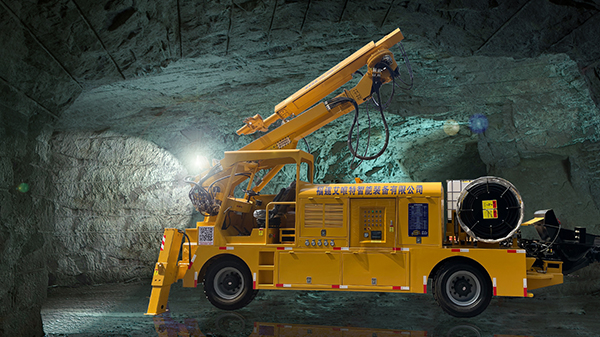
Ground support—a non-negotiable safety and production element—requires dedicated bolting rigs. These units integrate resin injection, mechanical expansion shells, and fully automated bolt placement. The shift toward bolting rigs with canopy-mounted drill heads reduces operator exposure to unsupported ground, aligning with modern mine safety protocols (e.g., MSHA Part 57). Multi-purpose carriers that accept interchangeable modules (drill, bolting, scaling) are gaining traction in narrow-vein operations where equipment fleet size must be minimized.
2. Propulsion and Power Systems: Diesel vs. Electric
The choice between diesel-powered and tethered electric underground drill rigs constitutes a significant operational and ventilation cost driver. Diesel units offer mobility and flexibility but impose ventilation demands that increase operating costs by an estimated $8–$12 per operating hour due to additional airflow requirements (typically 0.06 m³/s per kW of diesel power).
- Diesel-powered rigs: Preferred in development headings where frequent relocation is required. Modern Stage V / Tier 4 Final engines reduce NOx and particulate emissions but require active diesel particulate filter (DPF) regeneration cycles. Operators must account for regeneration downtime in production schedules—typically 20–30 minutes per 8-hour shift.
- Electric-hydraulic rigs: Offer lower ventilation costs, reduced noise (below 85 dB at operator station), and 15–20% higher energy efficiency compared to diesel equivalents. However, cable management systems (cable reels, festoon systems) must be robust; cable failures represent 22% of unscheduled downtime in electric rig fleets according to a 2023 industry reliability study. Hybrid units combining battery tramming with electric drilling provide a middle ground, allowing zero-emissions operation during drilling cycles while retaining tramming flexibility.
3. Automation and Digital Integration: From Tele-Remote to Fully Autonomous
The progression toward autonomous underground drill rigs is defined by three maturity levels: tele-remote (line-of-sight or video-assisted), semi-automated (pre-programmed drilling cycles with operator supervision), and fully autonomous (drill plans executed from a surface control room). Each level presents distinct ROI profiles.
Data from a large-scale copper mine in South America demonstrates that transitioning to semi-automated production drills increased utilization by 18% through reduced shift change delays and consistent drilling patterns. Fully autonomous fleets, while requiring substantial infrastructure (high-bandwidth underground Wi-Fi, laser-based positioning, and fleet management software), have shown 35% reductions in unscheduled maintenance due to controlled operation within design parameters. Critical to success is the integration of drill data with mine planning software; closed-loop systems that adjust drill patterns based on actual hole deviations and real-time geological feedback are achieving dilution reductions of 0.8%–1.2% in sub-level stopes.
Aivyter has been at the forefront of integrating such digital capabilities, offering scalable automation packages that allow mines to transition from manual operation to full autonomy without replacing the entire fleet. This modular approach aligns with capital preservation strategies while delivering measurable productivity gains.
4. Cost per Meter: Calculating True Operational Expenditure
Mine operators commonly evaluate underground drill rigs based on acquisition cost, but the metric that determines long-term profitability is the all-in cost per drilled meter. This includes:
- Consumables (drill steel, bits, couplings): Typically $2.50–$4.80 per meter in hard rock, influenced by steel quality and sharpening practices. Automated grinding stations have demonstrated 12–18% reductions in per-meter consumable costs by optimizing button bit wear patterns.
- Energy and ventilation: Diesel units add $0.80–$1.20 per meter in fuel and ventilation costs at current diesel prices; electric units average $0.25–$0.40 per meter.
- Maintenance labor and parts: Scheduled and unscheduled maintenance contributes 15–20% of total lifecycle costs. Rig designs with componentized systems (modular engine packs, centralized greasing points) reduce mean time to repair (MTTR) significantly.
Comparing two 50-meter-per-shift production drills over a 5-year period, a 12% difference in mechanical availability translates to over $1.2 million in lost production revenue potential, highlighting the importance of reliability-focused specifications.
5. Fleet Management and Spare Parts Optimization
In multi-rig operations, fleet management systems (FMS) become essential. Beyond basic tracking, advanced FMS for underground drill rigs includes predictive maintenance algorithms using vibration analysis, hydraulic oil particle counting, and real-time thermal monitoring. These systems reduce catastrophic failures; for example, early detection of hydraulic pump degradation (via trending of case drain flow) allows planned replacements during scheduled maintenance windows, avoiding 12–16 hours of unplanned downtime per event.
Strategic spare parts inventory—focusing on high-failure components such as rotation motors, rock drills, and feed chains—must be balanced against carrying costs. Reliability-centered maintenance (RCM) analysis suggests that 80% of unplanned downtime in drill fleets originates from just 15% of component types. Stocking these critical spares at the mine site or within a 2-hour logistics radius reduces mean time to repair (MTTR) by as much as 65% compared to relying on central warehouses.
6. Safety and Ergonomics: Design Innovations
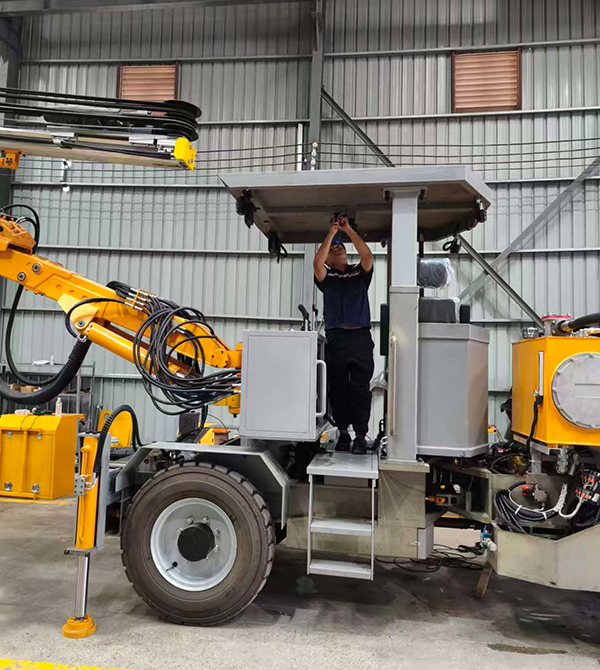
Operational safety in underground environments has driven design evolutions in modern underground drill rigs. Key innovations include:
- FOPS (Falling Object Protective Structure) and ROPS (Roll-Over Protective Structure) certified cabins with integrated air filtration to maintain positive pressure against dust ingress.
- Remote control stations that allow operators to position rigs from a safe distance while maintaining full drilling parameter control. New wireless remote systems provide haptic feedback to simulate rock drill response, improving operator situational awareness.
- Automatic rod handling systems that eliminate manual handling of drill steels, reducing ergonomic injuries—a primary cause of lost-time incidents in drilling crews. Mines implementing semi-automated rod handling report a 90% reduction in manual handling-related incidents.
These safety features not only protect personnel but also contribute to operational consistency, as automated sequences eliminate variability introduced by manual rod change techniques.
7. Electrification Trends and Future-Proofing Fleets
The global push toward decarbonization is accelerating the adoption of battery-electric underground drill rigs. Current battery technology (lithium-ion with thermal management) enables 4–6 hours of drilling on a single charge, with opportunity charging during shift changes. The total cost of ownership for battery-electric rigs is projected to reach parity with diesel units by 2027 when accounting for reduced ventilation infrastructure, lower energy costs, and carbon tax avoidance.
Mine operators should evaluate infrastructure requirements for electrification early, including charging stations with high-voltage distribution (typically 1,000V DC), battery swap stations, and fire suppression systems. Aivyter offers fully electric modular drill platforms that can be retrofitted to existing diesel fleets, providing a practical pathway to decarbonization without wholesale fleet replacement.
8. Frequently Asked Questions (FAQs)
Q1: What is the typical payback period for investing in automated underground drill rigs?
A: The payback period for automation features—such as computerized drilling control and tele-remote operation—typically ranges from 12 to 24 months in medium to large-scale mines. This is driven by a combination of factors: increased utilization (10–20%), reduced consumable wear (8–15% lower cost per meter), and decreased operator exposure to hazardous zones, which reduces safety-related downtime. Fully autonomous fleets require 3–5 years for ROI due to higher initial infrastructure investments but yield long-term labor and efficiency gains.
Q2: How do I determine the correct boom configuration for my development headings?
A: The boom configuration depends on the cross-sectional area of the drift. For headings up to 20 m², a single-boom rig is typically sufficient. For standard haulage drifts of 25–40 m², twin-boom jumbos are the industry standard. Key factors include parallel coverage of the face—the combined coverage of booms should exceed 90% of the face area without repositioning. Additionally, consider the type of tunnel lining; for curved or arched profiles, articulated booms with greater rotational angle (≥90 degrees) are necessary to achieve perimeter hole placement accuracy.
Q3: What is the acceptable hole deviation limit for longhole production drilling?
A: For sub-level stoping with 30–40 meter drill lengths, maximum hole deviation should not exceed 1.5% of the hole length (i.e., 0.6 meters at 40 meters). Deviations beyond this threshold result in unacceptable dilution—often 10–15% higher—and can lead to hanging-wall instability. Modern production drill rigs equipped with electronic angle sensors and drill string alignment systems can maintain deviation below 1.0% when operated within manufacturer specifications. Regular deviation surveys using downhole cameras or gyroscopic instruments are recommended every 1,000 drilled meters to verify alignment.
Q4: What maintenance intervals are critical for preventing unplanned downtime in underground drill rigs?
A: Three maintenance areas are critical: 1) Rock drill lubrication—ensure lubricator oil levels are checked every shift and feed rates calibrated to prevent premature shank failure. 2) Hydraulic system cleanliness—particle contamination above ISO 18/15/13 accelerates pump and valve wear; filter elements must be replaced every 500 operating hours or based on condition monitoring. 3) Feed beam and chain tension—loose chains contribute to hole misalignment and excessive wear; tension should be verified weekly. Implementing a systematic condition monitoring program reduces unplanned downtime by an average of 40% in underground drilling fleets.
Q5: How does rock hardness affect the choice of drill rig specifications?
A: Rock hardness (measured as UCS – uniaxial compressive strength) dictates required percussion power and rotational torque. For UCS below 100 MPa (e.g., potash, soft limestone), lower-powered rock drills (15–20 kW) with standard carbide bits suffice. For hard rock conditions exceeding 200 MPa (e.g., granite, massive sulfide), high-impact rock drills (25–35 kW) with premium button bits and robust feed systems are mandatory. Additionally, rigs intended for extremely abrasive ground (quartz-rich formations) should feature hardened wear plates on feed beams and central lubrication systems to extend component life. Selecting a rig with adjustable percussion parameters allows optimization across variable ground conditions.
Selecting and maintaining underground drill rigs is a multidisciplinary exercise requiring alignment of geological understanding, operational strategy, and lifecycle cost analysis. As mining depths increase and ore grades decline, the margin for operational error narrows. Equipment that delivers consistent accuracy, high utilization, and low consumable costs becomes a competitive advantage. By applying the technical parameters outlined—power system selection, automation integration, and predictive maintenance—mine operators can achieve sustained performance. For operations seeking to modernize their drilling fleet with scalable automation and electric propulsion, consulting with specialists such as Aivyter provides access to engineering expertise and field-proven solutions designed for the next generation of underground mining.
about
Aivyter
We provides trusted air compressors and mining equipment, engineered for durability, efficiency, and demanding industrial applications.