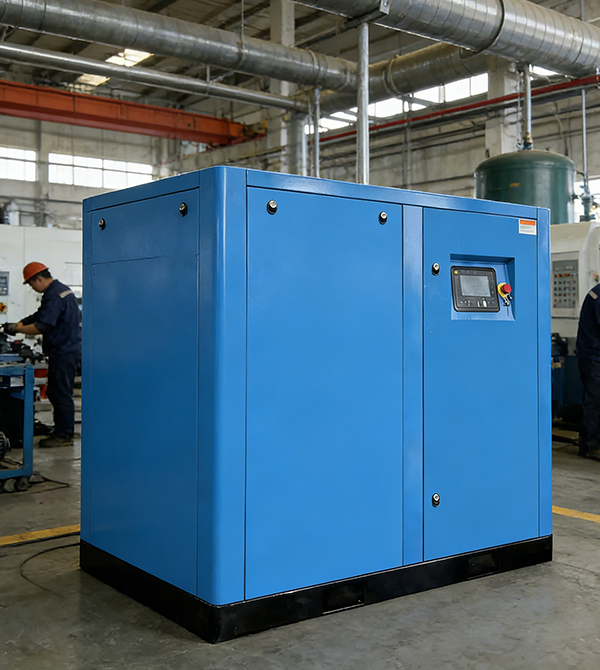
Industrial manufacturing, heavy engineering construction, and deep mining operations depend on a continuous, reliable source of compressed air. Often designated as the fourth utility, compressed air powers pneumatic actuators, drilling rigs, material transport systems, and automated assembly processes. However, when procurement managers and plant engineers look to buy screw compressor systems, the selection process must extend far beyond basic nominal horsepower ratings. High-durability equipment, such as the systems designed by Aivyter, is engineered to meet specific volumetric and environmental demands, ensuring long-term operational stability in harsh fields.
Rotary Screw Mechanics and Engineering Design
To make an informed acquisition, it is necessary to understand the mechanical design of rotary screw air compressors. Unlike reciprocating piston compressors that rely on pulsing displacement, rotary screw units utilize a continuous, positive-displacement mechanism. This process involves two intermeshing helical rotors—the male and female rotors—housed within a high-precision stator casing.
As the rotors rotate, the volume between their lobes decreases, drawing in atmospheric air, compressing it, and directing it toward the discharge port. The efficiency of this process depends heavily on the rotor profile. Modern industrial units typically utilize asymmetric rotor profiles, such as a 5:6 lobe ratio, which minimizes blow-by clearance and optimizes thermodynamic efficiency during the compression cycle.
When selecting a system, engineers must choose between two primary mechanical configurations:
- Oil-Injected Rotary Screw Compressors: In these systems, synthetic fluid is injected into the compression chamber. This fluid serves three purposes: lubricating the bearings and rotor contact points, sealing the clearance paths between the rotors to prevent backflow, and absorbing the heat generated during the compression process. Downstream filtration, including high-efficiency coalescing filters and multi-stage oil separator vessels, is required to clean the discharge air, typically reducing residual oil content to under 3 parts per million (ppm).
- Oil-Free Rotary Screw Compressors: These units utilize external timing gears to prevent the rotors from contacting one another, eliminating the need for oil injection inside the compression chamber. These are suited for industries where even minimal oil carryover is unacceptable, such as pharmaceutical production, cleanrooms, and food processing.
Industrial Pain Points in Compressed Air Systems
Operating rotary screw compressors in heavy industries like mining and construction introduces environmental and mechanical challenges. Recognizing these pain points helps engineers specify the correct equipment configurations:
1. Air Contamination and Quality Degradation
In high-dust environments, such as quarries or cement plants, ambient particles bypass standard intake filters, entering the compression cycle. This grit mixes with the lubricating oil, turning it into an abrasive slurry that accelerates rotor and bearing wear. High-quality systems address this with dual-stage intake filtration and heavy-duty separator systems that preserve fluid integrity.
2. Severe Thermal Conditions
Compressors in desert mining regions or unventilated industrial rooms often suffer from overheating, causing safety shutdowns and production stops. High ambient temperatures degrade lubricating fluid, leading to varnishing on the rotors and inside the coolers. Heavy-duty cooling packages, featuring oversized aluminum plate-fin radiators and thermostatically controlled cooling fans, are required to manage these thermal loads.
3. Fluctuating Air Demand
Many industrial processes do not require a constant, flat-line volume of compressed air. Operating a fixed-speed compressor during periods of low demand results in frequent unload cycles, where the motor continues running at full speed without producing air. This leads to higher wear on the inlet valve and high mechanical stress. Implementing Variable Speed Drive (VSD) systems allows the motor speed to match actual air demand, reducing mechanical strain.
Key Specifications to Evaluate Before You Buy Screw Compressor Plants
A successful decision to buy screw compressor machinery requires a detailed analysis of operational parameters. Standardizing your specifications around international standards ensures that the equipment delivered matches the physical realities of your plant.
Volumetric Flow Rate (FAD)
The flow capacity of an air compressor must be measured as Free Air Delivery (FAD) according to ISO 1217 Annex C standards. FAD measures the actual volume of air compressed and delivered to the discharge outlet, expressed in cubic meters per minute (m³/min) or cubic feet per minute (cfm), referenced back to inlet conditions. Calculating the sum of all pneumatic loads, while allowing for a safety margin and future pipeline expansions, prevents under-sizing the unit.
Working Pressure
System pressure, measured in Bar or PSI, must be calculated based on the highest pressure requirement of the downstream equipment. Specifying a compressor with an excessively high discharge pressure to compensate for downstream pressure drops is inefficient. Instead, engineers should focus on sizing the distribution piping correctly to minimize friction losses, and choose a compressor that operates within the designed pressure band.
Motor Protection and Insulation Class
For industrial and outdoor installations, the main drive motor must offer adequate ingress protection and thermal resilience. Standard specifications should demand an IP55-rated motor (dust-protected and resistant to water jets) paired with Class F insulation, which allows the motor to operate reliably at elevated winding temperatures without insulation breakdown.
Cooling System Selection
Engineers must choose between air-cooled and water-cooled systems. Air-cooled compressors are simpler to install and maintain but require adequate room ventilation to prevent hot air recirculation. Water-cooled systems are highly efficient for larger installations, but they require a continuous supply of cooling water and heat exchangers, which must be cleaned regularly to prevent scaling.
Sector-Specific Applications
Different industrial fields require unique equipment designs to handle specific field challenges:
Mining and Quarrying Operations
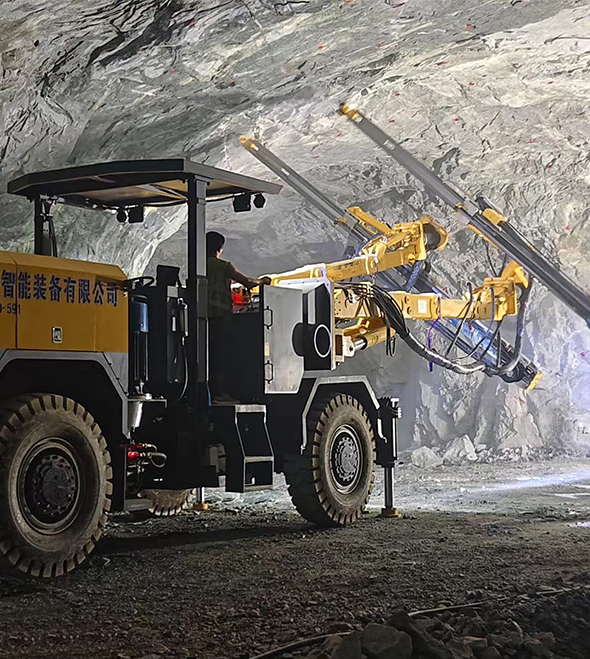
Mining operations require robust, skid-mounted or portable diesel-driven compressors capable of withstanding constant vibration, blasting dust, and wet underground conditions. For operations that intend to buy screw compressor installations for high-altitude mining, adjustments must be made for the lower air density, which affects cooling efficiency and volumetric output.
Engineering Construction
Construction projects rely on mobile, towable diesel screw compressors to power pneumatic breakers, sandblasting units, and concrete spraying equipment. These units require heavy-duty canopy structures, central lifting points, and integrated fuel filtration systems capable of handling varying fuel quality on remote sites.
Industrial Manufacturing
Automated manufacturing plants require quiet, stationary, cabinet-enclosed compressors that can be integrated near workspaces. These systems often utilize advanced PLC controllers that monitor parameters like discharge temperature, pressure drops across filters, and oil levels, communicating with central control systems via Modbus or Profibus protocols.
Structural Integration and Air Treatment
The screw air compressor is only one part of a complete industrial air system. To deliver clean, dry, pressurized air, downstream treatment equipment must be planned and integrated:
- Air Receiver Tanks: Acting as a pressure buffer, the receiver tank stabilizes pressure fluctuations in the piping network, reduces the load/unload cycles of the compressor, and cools the compressed air, allowing condensed moisture to drop out of the stream. These tanks must be certified to ASME Section VIII or CE pressure vessel standards.
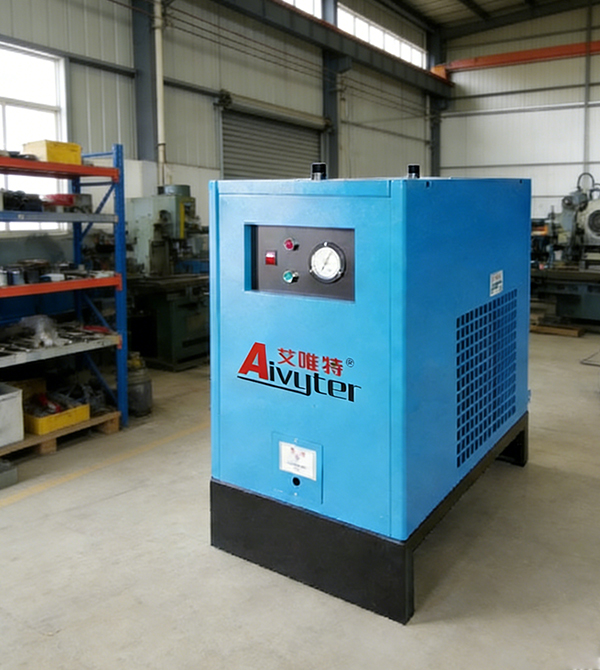
- Refrigerated Air Dryers: By cooling the compressed air to a pressure dew point of approximately 3°C, refrigerated dryers condense and remove water vapor, protecting downstream steel piping from corrosion and preventing pneumatic valves from sticking.
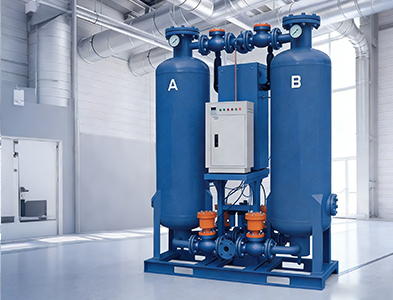
- Desiccant Air Dryers: For applications requiring dry air, such as outdoor pipelines in freezing climates or chemical processing, adsorption desiccant dryers utilize activated alumina or molecular sieves to achieve pressure dew points down to -40°C or -70°C.
- Coalescing Filtration: High-efficiency inline filtration stages are required to remove solid particles and oil aerosols. A typical layout includes a 1-micron pre-filter to protect the dryer, followed by a 0.01-micron coalescing filter to remove oil vapors down to food-grade or instrument-grade standards.
Integrating high-performance machinery from Aivyter into this structured layout ensures that moisture, dust, and oil carryover are managed before the air reaches pneumatic tools.
Key Decisions When Sourcing Equipment
When procurement teams prepare to buy screw compressor configurations, evaluating the physical design and accessibility of the machine is just as vital as reviewing the initial performance data sheets. Key design features to consider include:
- Direct-Drive vs. Belt-Drive: Direct-drive configurations utilize a flexible coupling to connect the motor directly to the air end, ensuring efficient power transmission and reducing maintenance needs. Belt-drive units are often more compact but require regular belt tensioning and replacement, which can lead to drive slippage and minor power losses over time.
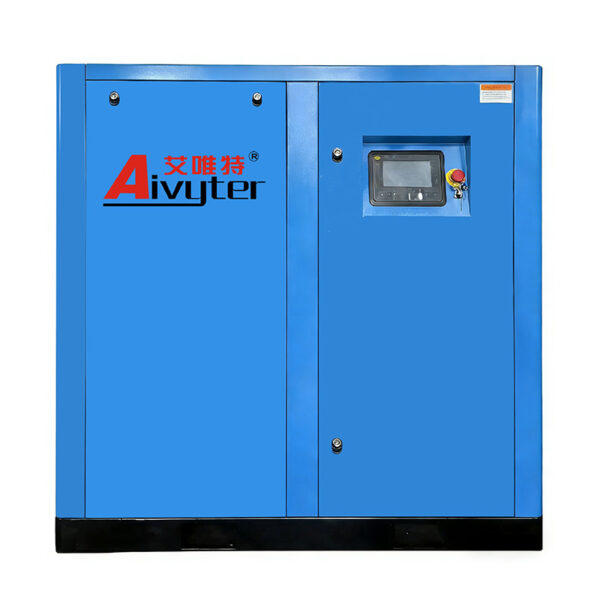
- Service Access: Look for cabinets designed with wide-opening doors or easily removable panels. This design ensures that daily maintenance tasks—such as checking fluid levels, replacing the oil filter, and swapping the air-oil separator element—can be executed quickly, reducing maintenance downtime.
- Component Quality: Premium bearings, precision-ground rotors, and high-performance valves reduce the rate of mechanical wear, ensuring the compressor maintains its volumetric efficiency over years of continuous operation.
How Aivyter Supports Industrial Operations
The product line from Aivyter addresses these demanding industrial requirements by incorporating precision-machined air ends, advanced control systems, and heavy-duty cooling packages. Whether supplying stationary units for manufacturing plants or specialized systems for mining and construction, their designs emphasize high volumetric output, structural durability, and ease of routine maintenance under demanding field conditions.
Engineering Inquiry and Project Consulting
Selecting the right air compressor system requires a careful evaluation of pneumatic loads, piping configurations, and environmental factors. To ensure your selected system matches your actual flow requirements and operational conditions, you can consult our engineering team before you buy screw compressor systems. Our engineering specialists are available to review your pipeline layouts, calculate pressure drop values, and provide detailed equipment specifications, system schematics, and performance data sheets.
Submit an inquiry detailing your required volumetric flow rate, operating pressure, and site environmental conditions, and our team will prepare a detailed engineering proposal to optimize your compressed air infrastructure.
Frequently Asked Questions
Q1: What is the primary difference between fixed-speed and variable-speed (VSD) rotary screw compressors?
A1: A fixed-speed compressor operates at a constant motor speed, delivering a set volume of air. When demand drops, it unloads the inlet valve but continues running, consuming significant energy. A VSD compressor uses a frequency inverter to adjust motor speed in real time to match actual air demand, reducing energy consumption and mechanical wear during low-load periods.
Q2: How often should the air-oil separator be replaced in a screw compressor?
A2: Under normal operating conditions, an air-oil separator element should be replaced every 3,000 to 4,000 operating hours, or when the pressure drop across the separator reaches 0.8 to 1.0 Bar. Operating past this threshold increases oil carryover downstream and raises energy consumption due to higher backpressure.
Q3: What causes high discharge temperatures in oil-injected screw air compressors?
A3: High discharge temperatures are typically caused by insufficient or degraded cooling fluid, clogged oil coolers, restricted air intake filters, or a malfunctioning thermostatic bypass valve. Ensuring proper ventilation around the compressor and maintaining clean radiator fins will prevent thermal shutdowns.
Q4: Why is an air receiver tank necessary for a rotary screw compressor system?
A4: An air receiver tank acts as a buffer vessel that dampens pulsations, cools the compressed air to precipitate moisture, and stores air volume to handle peak demand periods. This storage volume prevents the compressor from cycling too frequently between load and unload states, extending the service life of the inlet valve and motor contactors.
Q5: How does ambient temperature affect the volumetric efficiency of a screw compressor?
A5: High ambient temperatures reduce the density of the intake air, resulting in a lower mass flow rate and a slight decrease in volumetric efficiency. Additionally, higher temperatures put extra load on the oil cooler, meaning the cooling package must be sized appropriately for hot summer conditions to prevent automatic high-temperature shut-offs.
about
Aivyter
We provides trusted air compressors and mining equipment, engineered for durability, efficiency, and demanding industrial applications.