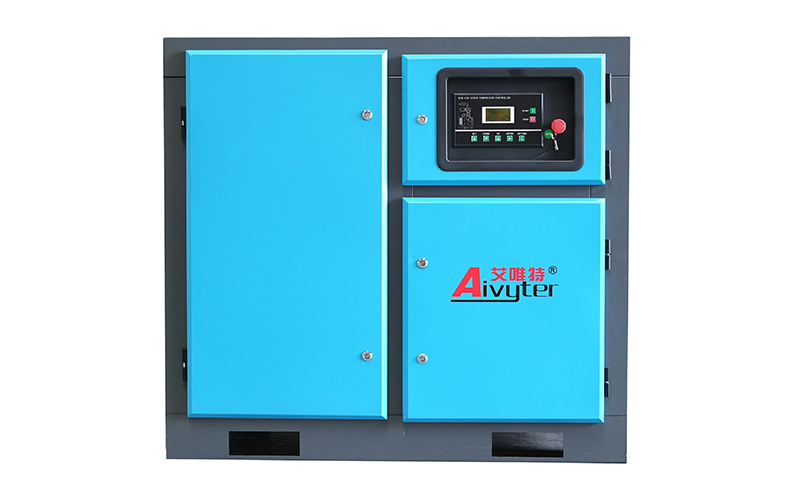
Heavy industries and specialized manufacturing facilities rely on steady pneumatic power to drive their daily production lines. Selecting the correct system configuration represents one of the most significant capital and operational decisions a plant manager must make. The ongoing debate between choosing oiled machinery and dry running alternatives often focuses too heavily on simple marketing terms rather than the physical realities of thermal management, mechanical wear, and fluid dynamics. A high-quality oil lubricated air compressor remains a standard in many industrial workshops, yet modern environmental standards are pushing plants to evaluate oil-free alternatives. At Aivyter, we observe that the decision requires a balance between air quality demands, maintenance overheads, and total lifecycle costs.
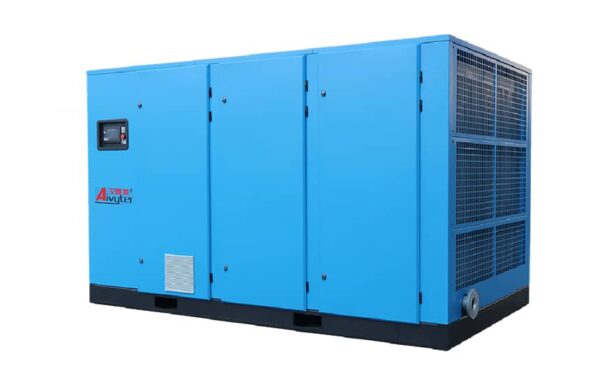
The Tribology of Compression: Fluid Film vs. Sacrificial Materials
To understand the core differences between these two compression technologies, one must look closely at the mechanical interface within the compression chamber. In an oiled system, a continuous layer of lubricant is injected into the cylinder or screw profile. This process creates a hydrodynamic fluid film that completely separates the moving metal components, preventing direct metal-on-metal friction. This fluid barrier serves three primary mechanical purposes: sealing the clearance gaps to prevent air backflow, absorbing the thermal energy generated during compression, and protecting the mechanical surfaces from abrasive wear.
Dry-running systems operate under entirely different physical constraints. Because no liquid lubricant is present to seal and cool the components, the system must rely on material science to manage friction. These machines utilize pistons fitted with carbon-filled or polytetrafluoroethylene (PTFE) rings that glide against treated cylinder walls. While this method successfully prevents liquid hydrocarbons from entering the compression chamber, these dry polymer seals are sacrificial by design. They wear down continuously during operation, generating fine microscopic dust that must be captured by downstream filtration systems before the air enters the distribution network.
Operating Limits: Comparing Duty Cycle Limits of an oil lubricated air compressor and Dry Systems
The presence or absence of a liquid cooling medium directly dictates the operational duty cycle of the compressor unit. Industrial applications often require continuous air delivery over extended shifts. An industrial-grade oil lubricated air compressor is engineered to run at a 100% duty cycle. The circulating oil actively carries thermal energy away from the areas of friction, routing it through an external radiator or heat exchanger. This constant thermal regulation prevents the pump head from reaching temperatures that could damage mechanical tolerances, allowing for non-stop operation under maximum load.
In contrast, dry systems operate under strict thermal boundaries. Without a fluid medium to absorb heat, the internal air temperature rises rapidly during the compression cycle. To prevent the polymer seals from melting or deforming, many dry reciprocating compressors are rated for a maximum duty cycle of 50% to 70%. This means the machine requires regular periods of rest to dissipate accumulated heat. Running a dry system beyond its specified duty cycle accelerates seal degradation and can lead to cylinder scoring, which represents a major operational hazard for facilities requiring uninterrupted air flow.
Rebuildability and Capital Asset Lifespan
From a mechanical asset perspective, the long-term lifecycle of the pump assembly differs dramatically between these two designs. When an oiled compressor pump eventually suffers wear after thousands of hours of service, the cylinder walls can typically be honed, and oversized piston rings can be installed. This rebuildability makes the physical pump a long-term asset that can be serviced indefinitely at a fraction of the cost of a new unit. The cast-iron cylinders and heavy-duty crankshafts are protected from oxidation by the residual oil film, maintaining their structural integrity over decades.
Looking at dry-running compressors, the maintenance reality is quite different once the sacrificial coatings wear thin. The wear on the cylinder wall is often uneven, and because the wall itself is coated with specialized friction-reducing materials, simple honing is not an option. In most cases, the entire pump head or air end must be discarded and replaced. This reality transforms the dry compressor pump from a rebuildable asset into a modular, disposable component over a long operational timeline.
Acoustic Ergonomics: Decibel Ratings vs. Human Perception
Acoustic comfort in a production environment is a major factor in worker fatigue and workplace safety. While manufacturers publish decibel (dBA) ratings, these figures do not paint a complete picture of the acoustic impact. The frequency of the sound is often more influential on human comfort than the raw sound pressure level.
Low-RPM vs. High-RPM Operation
Oiled systems typically run at lower rotational speeds, often between 800 and 1500 RPM, using belt-driven configurations. This produces a low-frequency, rhythmic sound that is easily dampened by standard acoustic panels.
Dry System High-Frequency Whine
To compensate for the lack of sealing oil, dry direct-drive compressors often operate at high speeds, sometimes exceeding 3000 RPM. This high rotational speed produces a high-pitched, piercing whine that can penetrate standard hearing protection and cause psychological fatigue over an eight-hour shift.
Air Quality, Intake Filtration, and Legal Compliance
The assumption that using a dry compressor guarantees pure air is a common misunderstanding in pneumatic system design. All compressors pull in ambient atmospheric air, which contains moisture, dust particles, and vaporized hydrocarbons from nearby machinery or vehicle exhaust.
When a dry compressor compresses this ambient air, it concentrates these external hydrocarbons. Therefore, even if the compressor chamber is completely dry, downstream filtration is still required to remove atmospheric oil vapors to achieve sterile or paint-safe air. Under the ISO 8573-1 international standard, air purity is classified from Class 0 to Class 9. Achieving Class 0 air (the highest purity) is possible with oiled systems if high-efficiency coalescing filters and carbon absorbers are maintained properly. Conversely, a dry system without adequate filtration can still output air that fails to meet Class 1 standards due to ambient air pollution.
Environmental protection laws in many regions prohibit discharging oily water directly into public sewer systems. When moisture condenses out of compressed air inside the receiver tank of an oiled system, it contains trace amounts of lubricating oil. Plant operators must install and maintain oil-water separators, which separate the lubricant from the water before disposal. While this adds to the operational routine, dry systems avoid this specific disposal cost, making them highly appealing to operations wanting to bypass complex environmental logging. For organizations seeking a compromise, water-lubricated options, such as those discussed by Aivyter, offer a way to eliminate oil disposal concerns while maintaining high cooling efficiency.
Thermodynamic Efficiency and Total Cost of Ownership (TCO)
An objective financial comparison must factor in thermodynamic efficiency. Compression produces heat. In an oiled system, the oil acts as an active cooling agent, bringing the compression process closer to an isothermal curve. This is thermodynamically efficient because less energy is required to compress cool air than hot air. Dry compression is closer to an adiabatic process, meaning the air temperature rises rapidly during compression. Hot air occupies more volume, which increases the resistance within the cylinder and requires more electrical horsepower to achieve the same volumetric flow (CFM) at a given pressure. Over several years of continuous industrial operation, this energy penalty can exceed the initial purchase price of the machine.
| Cost Element | Oil Lubricated Systems | Dry Oil-Free Systems | Water-Injected Oil-Free Systems |
|---|---|---|---|
| Initial Capital Expenditure | Low to Moderate cost structure | Moderate to High initial investment | Very High upfront capital cost |
| Energy Consumption | Highly efficient due to isothermal cooling | Lower efficiency; higher energy cost | Highly efficient; water cools the charge |
| Routine Maintenance | Requires oil, filter, and separator changes | Minimal routine changes needed | Requires water filtration and treatment |
| Overhaul Expenses | Low to Moderate; pump is fully rebuildable | High; usually requires complete pump swap | High; specialized component replacement |
| Wastewater Management | Requires active oil-water separator systems | No hydrocarbon separation needed | No hydrocarbon separation needed |
Strategic Selection Framework
Evaluating these factors leads to a systematic selection framework based on the specific requirements of the production facility.
- Heavy Mechanical and General Workshops: For powering pneumatic wrenches, sandblasters, and general assembly lines, a heavy-duty oil lubricated air compressor represents the most economical path. The tools themselves often require inline lubrication, meaning the trace oil in the airstream is actually beneficial to tool lifespan.
- Sensitive Production Environments: For food processing, pharmaceutical manufacturing, and semiconductor assembly, the presence of any trace hydrocarbons can spoil entire batches of products. In these scenarios, despite the higher energy and maintenance costs, dry or water-lubricated oil-free systems are required to eliminate the hazard of lubricant carryover.
Choosing the right compressed air setup is a long-term investment that shapes the productivity and operational costs of your facility. For detailed system design, pressure drop calculations, and custom industrial configurations, our engineering team is ready to assist. Please send your system requirements and operational parameters via our inquiry form so we can provide a tailormade proposal. Contact Aivyter today to receive a detailed quotation.
Frequently Asked Questions
Q1: Why do dry air compressors run hotter than lubricated ones?
A1: Dry compressors do not have a liquid oil barrier to absorb heat from the compression cycle. Oil acts as a thermal sink, transferring heat from the compression chamber to the sump or cooler. Without it, dry systems must rely on air cooling, causing them to operate at significantly higher temperatures.
Q2: Can I get clean air from an oil lubricated air compressor?
A2: Yes. By installing high-efficiency inline coalescing filters, activated carbon towers, and particulate filters, you can clean the compressed air to meet ISO 8573-1 Class 1 or even Class 0 requirements. This configuration requires strict filter replacement schedules to ensure consistent air purity.
Q3: What are the main maintenance tasks for lubricated reciprocating models?
A3: Maintenance includes checking oil levels daily, changing the compressor lubricant every 500 to 1000 operating hours, cleaning or replacing the intake air filter, draining moisture from the receiver tank, and checking belt tension on belt-driven units.
Q4: Why does a dry compressor pump typically have a shorter lifespan?
A4: Dry units use sacrificial polymer or PTFE coatings on the piston rings and cylinder walls. These coatings gradually wear away due to friction and thermal stress. Once these materials wear down, the sealing capability is lost, and unlike lubricated pumps, they cannot be easily honed or rebuilt.
Q5: How does ambient temperature affect compressor performance?
A5: High ambient temperatures reduce air density, which lowers the mass flow rate of the compressed air. For dry units, high ambient temperatures accelerate thermal wear because the system cannot dissipate heat effectively, whereas lubricated units manage thermal loads better due to their circulating cooling fluid.
about
Aivyter
We provides trusted air compressors and mining equipment, engineered for durability, efficiency, and demanding industrial applications.