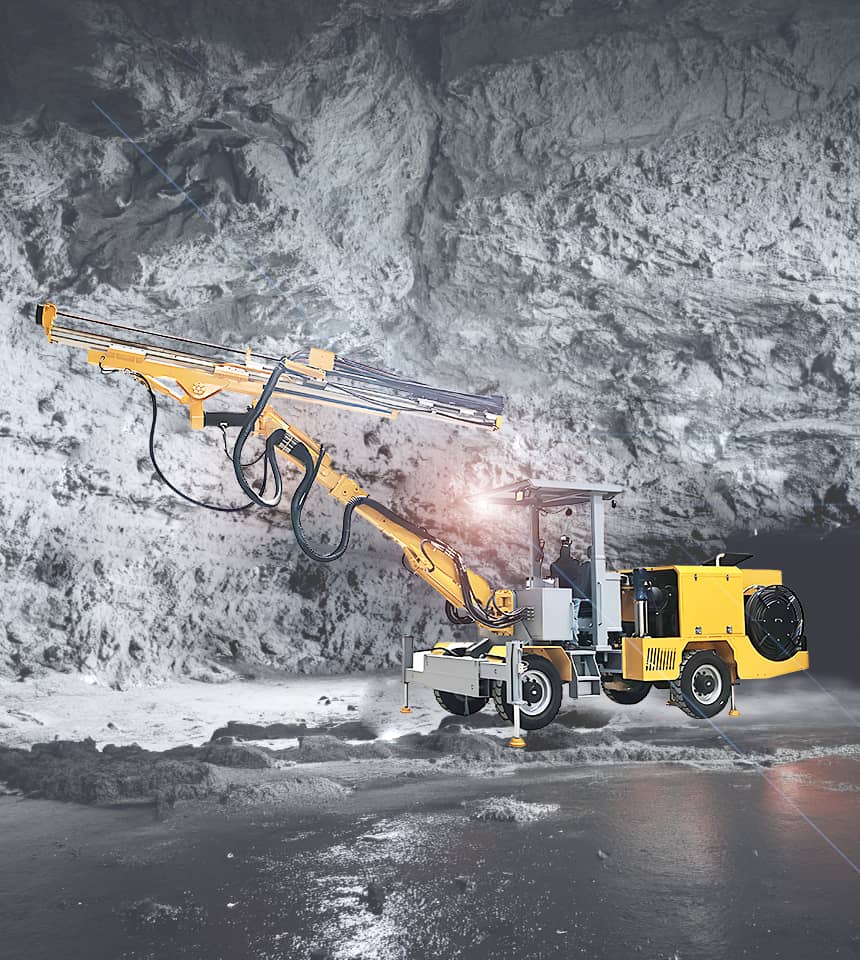
Mining and tunneling operations run in some of the most unforgiving environments on earth. High humidity, abrasive dust, and tight subterranean passages push heavy machinery to its physical limits every single day.
When drilling equipment breaks down hundreds of meters underground, project schedules halt immediately. Unplanned downtime can cost operators tens of thousands of dollars per shift in lost production and idle crews.
To minimize operational risk, procurement directors and project managers are moving away from third-party trading intermediaries. Instead, they choose to deal directly with an experienced underground drill rig factory that can guarantee engineering control, structural durability, and reliable spare parts supply.
This B2B sourcing guide provides practical criteria to help you vet manufacturers, verify production standards, and choose a manufacturing partner capable of supporting heavy-duty excavation projects worldwide.
The Operational Stakes of Underground Machinery Sourcing
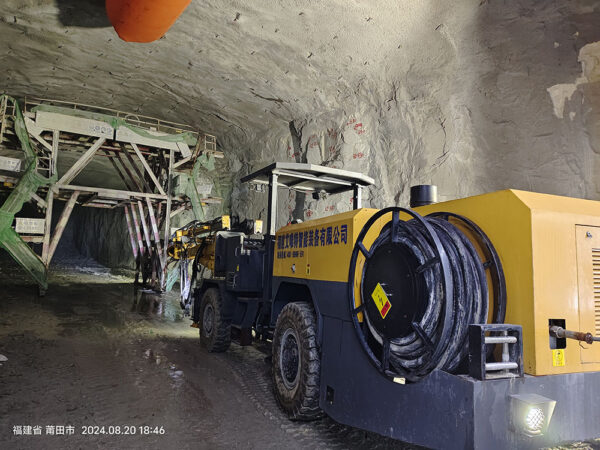
Underground rock excavation demands mechanical precision and immense structural resilience. Drill jumbos must deliver high-frequency percussion and stable penetration through complex rock formations, from soft shale to hard granite.
Third-party traders often lack the technical depth required to resolve core engineering issues. If a hydraulic arm fails or a feed beam misaligns, a broker can only relay messages between you and the actual fabricator, causing costly delays.
Partnering directly with a qualified underground drill rig factory eliminates these communication bottlenecks. Factory-direct sourcing grants your team direct access to the mechanical engineers who design the hydraulic circuits, chassis frames, and automated boom systems.
5 Core Sourcing Criteria for Vetting an Underground Drill Rig Factory
Before issuing a purchase order or signing a long-term supply agreement, evaluate prospective manufacturing partners against these five essential operational benchmarks.
1. Production Infrastructure and Manufacturing Scale
A manufacturer’s physical footprint indicates their financial stability and capacity to handle large capital equipment orders. Small workshop assemblers often suffer from inconsistent batch quality, limited component testing, and unpredictable lead times.
A premier production facility should operate dedicated machining bays, CNC structural cutting lines, robotic welding stations, and specialized assembly lines for chassis and boom fabrication.
- Shop Floor Area: Look for facilities with over 10,000 square meters of dedicated production space.
- Machining Precision: In-house CNC milling ensures boom joints and pivot pins meet micro-level tolerances.
- Production Capacity: Reliable factories maintain steady monthly output rates, preventing project delivery delays.
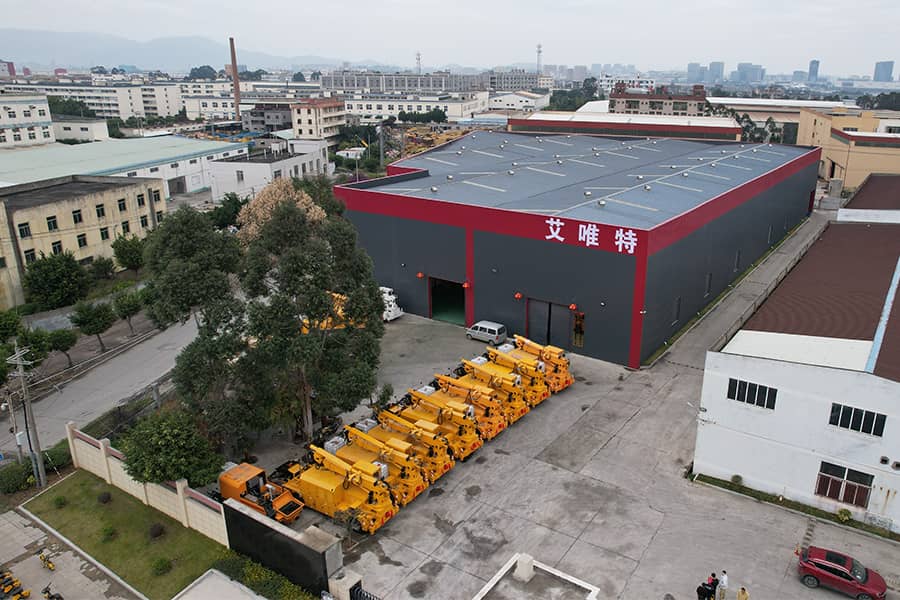
Industry leaders like Aivyter operate modern, standardized manufacturing facilities spanning more than 10,000 square meters. This infrastructure enables end-to-end quality control across every stage of drill rig and compressor assembly.
2. Engineering R&D and Customization Capabilities (OEM/ODM)
Geological conditions vary significantly across different mining regions. A standard drilling rig designed for wide civil highway tunnels will rarely fit into narrow-vein gold mines or low-profile coal seams.
Your chosen manufacturer must possess mature OEM/ODM engineering capabilities. Their in-house design team must know how to modify boom reach, diesel-electric hybrid powertrains, hydraulic systems, and chassis turning radiuses according to your site specifications.
- Cross-Section Adaptability: Capability to design single-boom, double-boom, or low-profile configurations.
- Power Options: Custom integration of electric-hydraulic drives for zero-emission working faces or diesel engines for remote transit.
- Control Systems: Options for direct hydraulic pilot control or computerized anti-jamming auto-drilling systems.
With an engineering foundation dating back to 2009, Aivyter brings over 15 years of technical expertise to custom mining machinery. Their engineering team develops tailored solutions that match specific tunnel cross-sections and rock hardness ratings.
3. International Quality Certifications and Testing Protocols
Underground mining requires strict compliance with international safety and environmental regulations. Never buy heavy equipment from a supplier that cannot provide verifiable quality certifications from recognized testing agencies.
A legitimate underground drill rig factory must hold ISO9001 quality management certifications, alongside international safety approvals such as CE, TUV, and SGS testing reports.
Beyond paperwork, inspect their quality assurance protocols. Every machine must undergo rigorous static and dynamic testing before it leaves the factory floor:
- Hydraulic Pressure Holding Tests: Validating that valves and cylinders sustain maximum pressure without internal bypass leakage.
- Full-Cycle Drilling Trials: Running percussion rock drills against test blocks to calibrate feed force and rotation speeds.
- Chassis Load & Gradeability Checks: Testing heavy axle braking, articulation joints, and climbing ability under full payload.
4. Complete Excavation and Support Equipment Ecosystem
Drilling is only one part of the underground development cycle. Once blast holes are drilled and fired, tunneling teams require high-pressure air for ventilation and flushing, followed by shotcrete spraying for immediate ground support.
Sourcing equipment from multiple disconnected vendors creates operational headaches. A drill jumbo from one vendor may have compressed air requirements that mismatch an air compressor bought elsewhere, resulting in poor flushing efficiency and premature drill bit wear.
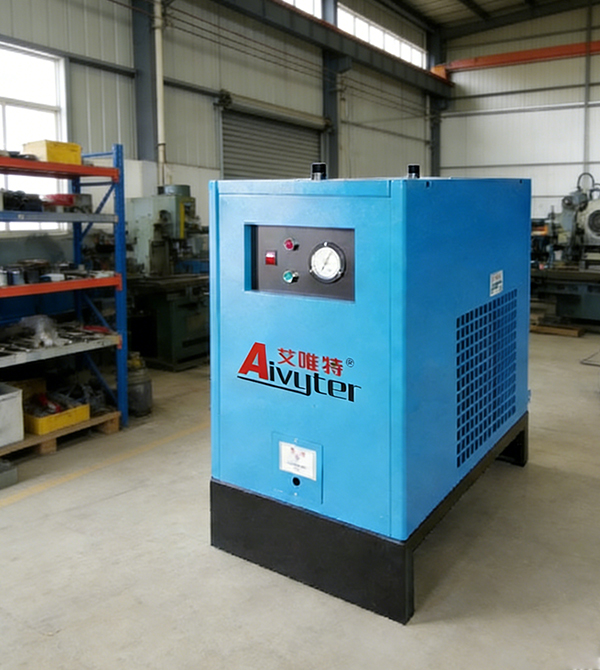
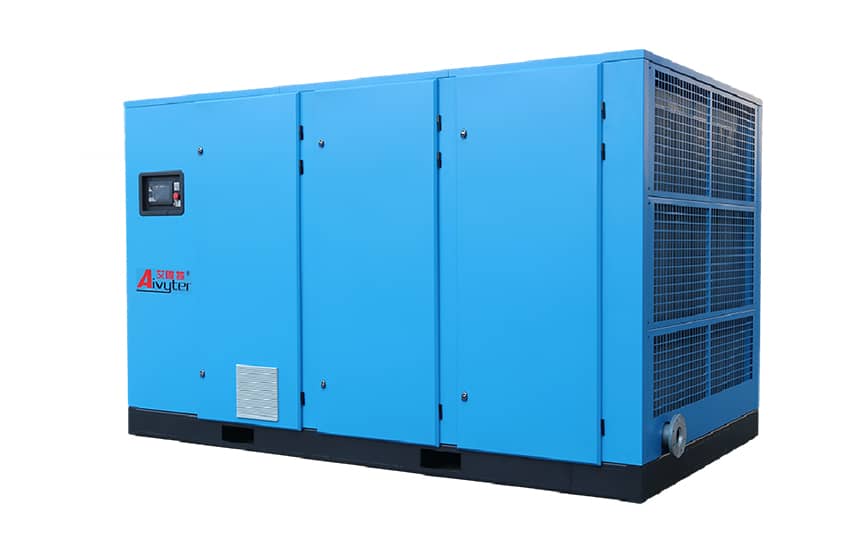
Working with a supplier that builds a cohesive machinery ecosystem simplifies procurement and maintenance. For instance, an integrated underground drill rig factory also manufactures matching stationary screw air compressors and robotic wet shotcrete manipulators.
This equipment synergy ensures that all pneumatic, hydraulic, and electrical interfaces work smoothly across your entire excavation and ground support cycle.
5. Global After-Sales Support and Spare Parts Availability
The true cost of mining machinery includes its long-term maintenance. High-wear parts—such as shank adapters, hydraulic seal kits, feed chains, and drill bushings—require regular replacement.
Assess the factory’s spare parts management strategy before purchasing:
- Component Standardisation: Does the factory use globally recognized hydraulic valves, pumps, and electrical components?
- Parts Dispatch Speed: Can the manufacturer ship emergency repair kits via international express within 24 to 48 hours?
- Technical Field Support: Does the engineering team offer remote video diagnostics, on-site commissioning, and operator training?
Suppliers with established export channels maintain structured inventory reserves, ensuring your project never stalls due to backordered consumable parts.
Factory Verification Checklist: How to Avoid Trading Middlemen
The industrial machinery market includes many trading companies posing as direct manufacturers. Use this checklist during your supplier vetting process to confirm you are dealing with a real production plant.
- Request a Live Video Facility Walkthrough: Ask for an unscripted video tour of the main fabrication shop, laser cutting area, and final assembly lines.
- Examine the Business License: Check the official business scope on their registration documents. True manufacturers list “production” and “fabrication,” whereas trading companies list only “sales” and “consulting.”
- Inspect Export Packaging and Crating: Heavy mining machinery requires heavy-duty anti-rust coating, hydraulic cylinder protection, and reinforced sea-freight packing to prevent maritime moisture damage.
- Review Proven Project Track Records: Ask for photo and video documentation of their drill jumbos operating in active overseas mining or civil tunneling projects.
Why Partner with Aivyter for Underground Drilling Solutions
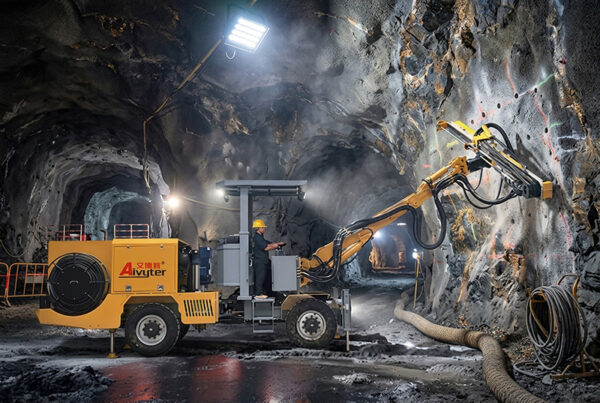
Selecting the right production partner protects your capital investment and ensures predictable progress underground. Aivyter stands out as a reliable Chinese manufacturer dedicated to underground mining and tunneling equipment since 2009.
Operating a modernized 10,000+ square meter manufacturing base, the company integrates advanced structural machining, hydraulic assembly, and rigorous testing protocols under one roof. All machinery holds full CE, TUV, SGS, and ISO certifications, giving international buyers complete compliance confidence.
What sets the company apart is its unified product ecosystem. In addition to high-efficiency drill jumbos, the company produces heavy-duty screw air compressors and shotcrete spraying machines. This end-to-end manufacturing capability gives contractors an integrated equipment suite for drilling, blasting, and ground support.
Frequently Asked Questions (FAQ)
Q1: What is the average production lead time for an underground drill jumbo?
A1: Standard drill jumbo models typically require 30 to 45 days for manufacturing, assembly, and testing. Custom OEM/ODM orders—such as special chassis dimensions, dual-power systems, or specialized boom configurations—generally take 60 to 75 days depending on component specifications.
Q2: Can an underground drill rig factory customize equipment for narrow mine tunnels?
A2: Yes. Professional manufacturers can design compact single-boom jumbos with articulated steering and narrow wheel tracks specifically engineered for small headings down to 2m x 2m cross-sections.
Q3: What critical spare parts should be ordered alongside the main drilling rig?
A3: We recommend ordering a 1,000-hour operational spare parts kit. This package should include rock drill seal kits, striking bars (shanks), hydraulic filter elements, feed guide pads, sensor cables, and high-pressure hose sets.
Q4: How do direct factory prices compare to equipment distributor pricing?
A4: Sourcing directly from an established underground drill rig factory typically lowers initial capital expenditure by 15% to 30% by eliminating middleman markups. It also gives you direct access to genuine spare parts at standard factory rates.
Q5: How does the factory handle overseas commissioning and operator training?
A5: Leading factories provide complete digital manuals, detailed hydraulic schematics, and step-by-step video commissioning tutorials. For large fleets or complex multi-boom projects, factory-trained field service engineers can be deployed on-site to oversee commissioning and train your mechanical crew.
Secure Your Mining Productivity Today
Choosing an underground drill rig is an investment in your project’s long-term safety and output. By focusing on manufacturing scale, R&D flexibility, international certifications, and unified equipment support, you protect your operation against costly downtime.
Partnering directly with a proven source manufacturer ensures you receive rugged machinery built to your exact geological requirements at competitive factory pricing.
Contact the engineering sales team at Aivyter today to request technical specifications, receive a competitive factory-direct quote, or schedule a virtual factory inspection for your next mining project.
about
Aivyter
We provides trusted air compressors and mining equipment, engineered for durability, efficiency, and demanding industrial applications.