
Every mining cycle begins at the rock face. If your drilling cycle falls behind schedule, your entire blast-and-haul workflow stalls. Mining engineers and procurement managers face a critical decision when browsing every underground drill rig for sale: should you invest in an air-driven pneumatic rig or transition to a modern electro-hydraulic drilling jumbo?
Most buyers evaluate equipment based solely on machine price tags. That approach often leads to expensive underground bottlenecks. Your choice between pneumatic and hydraulic drilling equipment depends directly on your mine’s compressed air infrastructure, power grid capacity, and operational scale.
Since 2009, Aivyter has manufactured both high-efficiency underground mining machinery and industrial air compression systems. We evaluate this machinery decision through a practical lens: matching the rock drill to your real-world air network.
Planning an equipment upgrade or expanding your heading? Contact the Aivyter engineering team today to audit your mine’s air system and get a detailed quote on custom-engineered drilling equipment.
The Technical Core: Pneumatic vs. Hydraulic Drilling Principles
Pneumatic and hydraulic rock drills transfer impact energy into rock formations using fundamentally different mechanical methods. Knowing how these drills generate percussion, rotation, and feed force helps you select the right machine for your ground conditions.
Pneumatic Rock Drills
Pneumatic machines use compressed air to cycle a lightweight steel piston back and forth. The piston strikes the drill steel directly, delivering percussive blows to break the rock face. A rifle bar or independent air motor supplies the required rotation.
These units feature simple mechanical components. They have fewer internal moving parts and carry zero risk of oil leaks contaminating drill water. However, air is a compressible gas. Because air compresses under load, pneumatic drills lose substantial energy during the transmission cycle, limiting overall piston velocity.
Hydraulic Drill Jumbos
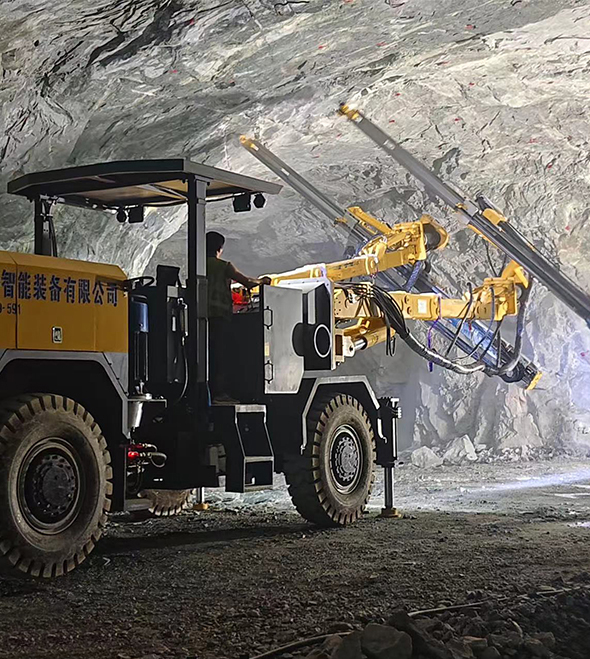
An electro-hydraulic drilling jumbo uses an onboard electric motor to drive hydraulic pumps. These pumps circulate non-compressible hydraulic fluid at pressures often exceeding 150 to 250 bar. The fluid drives a double-damped hydraulic rock drill (drifter).
Because hydraulic oil does not compress like air, energy transfer remains crisp and immediate. Modern hydraulic jumbos achieve a rate of penetration (ROP) two to three times faster than standard pneumatic equivalents. For deep research into hydraulic percussion mechanics, refer to studies published by the Society for Mining, Metallurgy & Exploration (SME) on rock fragmentation efficiency.
How Your Mine’s Air System Dictates Your Drill Rig Choice
Many mines buy equipment without calculating line pressure drop. Before committing to an underground drill rig for sale, assess your mine compressed air system capacity. Compressed air is one of the most expensive utilities in an underground operation.
Scenario A: Mines with Centralized Compressor Stations
If your mine already operates a large surface or central underground compressor room, pneumatic rigs present a low initial capital expense. Pusher legs and basic pneumatic jumbos connect directly to existing air manifolds running down your shafts and declines.
However, distributed pneumatic networks suffer severe drawbacks over long distances:
- Friction and Pressure Drop: Every 1,000 meters of piping, coupled with valves, joints, and moisture traps, bleeds line pressure. A drill designed for 6.5 bar often operates at less than 4.5 bar at the active heading.
- Efficiency Drops: A 20% drop in compressed air pressure cuts percussive penetration rates by roughly 30% to 40%.
- High Leak Costs: Piping networks leak air constantly. The U.S. Department of Energy notes that up to 30% of a mine’s compressed air can be lost to small leaks across unmaintained lines.
Scenario B: Air-Constrained Mines and High-Speed Development
If your compressors run near peak capacity, adding multi-boom pneumatic drills will collapse your line pressure. Handheld stopers or jackhammers pull 100 to 180 CFM of air each. A twin-boom pneumatic rig easily consumes 600 to 900 CFM.
This is where an electro-hydraulic jumbo excels. A hydraulic rig relies on electric cables for percussion, feed, and boom positioning. It only requires a modest air stream (typically 30 to 80 CFM) to flush drill cuttings from the hole and mist-lubricate the drifter’s front-head bearings.
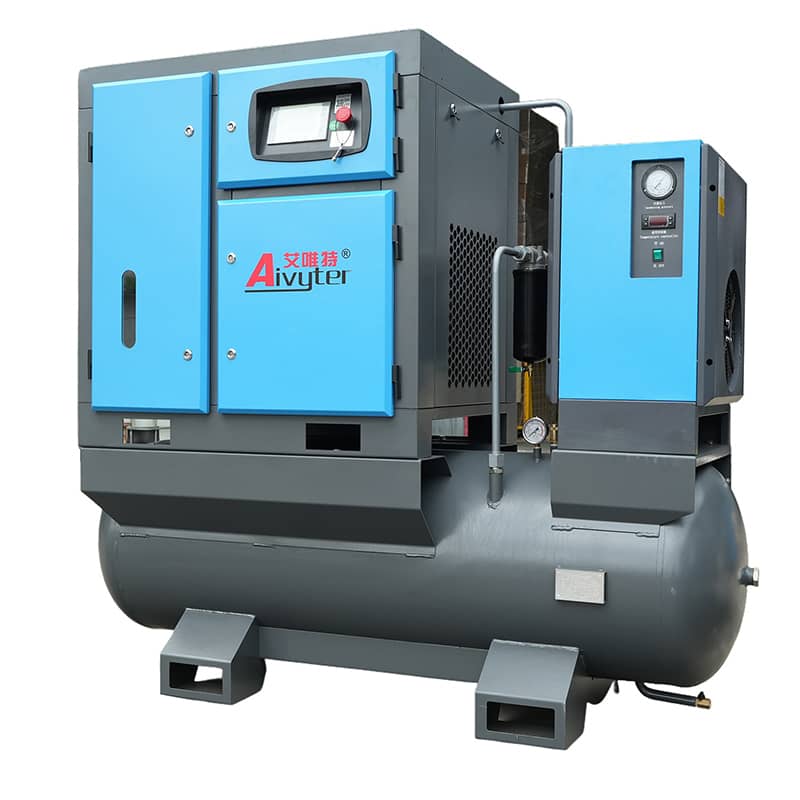
Aivyter solves this trade-off directly. As a comprehensive mining equipment manufacturer, Aivyter builds advanced drill jumbos alongside energy-efficient screw air compressors. If your headings run beyond the reach of your central plant, Aivyter supplies rugged, mobile skid-mounted screw compressors designed specifically to power active headings with zero transmission loss.
Head-to-Head Comparison: Evaluating Your Underground Drill Rig for Sale
Use the technical matrix below to weigh performance indicators when reviewing an underground drill rig for sale against your site infrastructure.
| Performance Metric | Pneumatic Drill Rig | Hydraulic Drill Jumbo |
|---|---|---|
| Penetration Rate (ROP) | Moderate (0.4 – 0.8 m/min in hard rock) | High (1.2 – 2.5+ m/min in hard rock) |
| Capital Cost (CAPEX) | Low to Moderate | Higher initial capital investment |
| Energy Operating Cost (OPEX) | High per meter drilled (pneumatic inefficiency) | Low per meter drilled (direct electrical conversion) |
| Mine Air System Demand | Extremely high (Requires 5-7 bar at massive CFM) | Minimal (Only for flushing and shank lubrication) |
| Hole Accuracy & Steel Life | Moderate deviation; higher shockwave bounce | High accuracy with anti-jamming; longer rod life |
| Working Environment | High noise (>115 dB), oil-fog mist, cold exhaust | Lower noise, no oil mist, enclosed FOPS/ROPS cabin |
While pneumatic machinery saves capital up front, hydraulic equipment reduces the cost per drilled meter over the life of the asset. Hydraulic shock-dampening systems absorb recoil shockwaves. This protects internal striking components and doubles the service life of drill rods, shanks, and button bits.
Operator safety also splits these two systems. Guidelines from the NIOSH Mining Program highlight the health impacts of acoustic noise and oil-mist inhalation from straight pneumatic exhausts. Modern hydraulic rigs feature climate-controlled, sound-dampened cabins with ergonomic joysticks, shielding operators from vibration, noise, and falling rocks.
Decision Matrix: Which Underground Drill Rig Should You Buy?
Review your mine plan against these operational parameters before issuing a purchase order for an underground drill rig.
Choose a Pneumatic Drill Rig If:
- Your mine features narrow veins: Small drift profiles (under 2.5m x 2.5m) cannot accommodate heavy mechanized jumbos.
- Capital reserves are limited: Starting a small-scale operation on a lean budget makes pneumatic machinery attractive.
- Underground maintenance skills are basic: Mechanics can easily rebuild air legs and pneumatic drifters without diagnosing sensitive proportional valves or electrical PLCs.
- Ventilation safely clears oil mist: Your headings have enough airflow to clear lubricating exhaust oil and water vapors quickly.
Choose a Hydraulic Drill Jumbo If:
- Advance rates determine profitability: Fast cycle times demand dynamic multi-boom rigs that complete blast rounds rapidly.
- Compressed air capacity is capped: Your air generation plant cannot support more pneumatic tools without line pressure collapsing.
- Tunnel cross-sections exceed 3m x 3m: Larger headings give rubber-tired or crawler-mounted mechanized jumbos room to maneuver efficiently.
- Long-term operating costs matter: Lower electrical consumption per meter drilled saves money in high-tonnage mines.
Why Partner with Aivyter for Your Underground Mining Equipment?
Sourcing an underground drill rig for sale requires a manufacturing partner who understands total mine utilities, not just machine assembly. Aivyter provides turn-key excavation and tunneling packages that eliminate integration issues underground.
- Integrated Air & Drilling Expertise: Founded in 2009, Aivyter manufactures both rock drilling rigs and industrial screw air compressors. We understand the pneumatic demands of your heading better than equipment-only brokers.
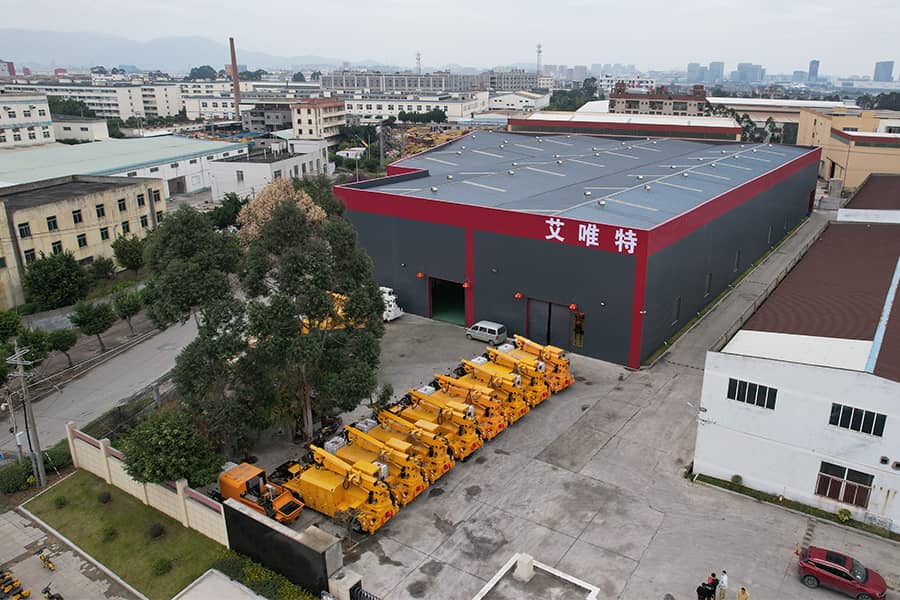
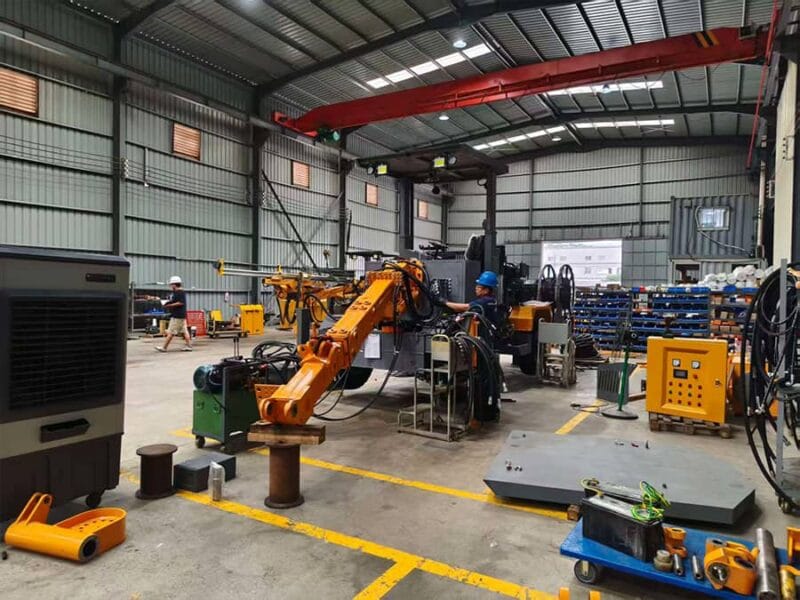
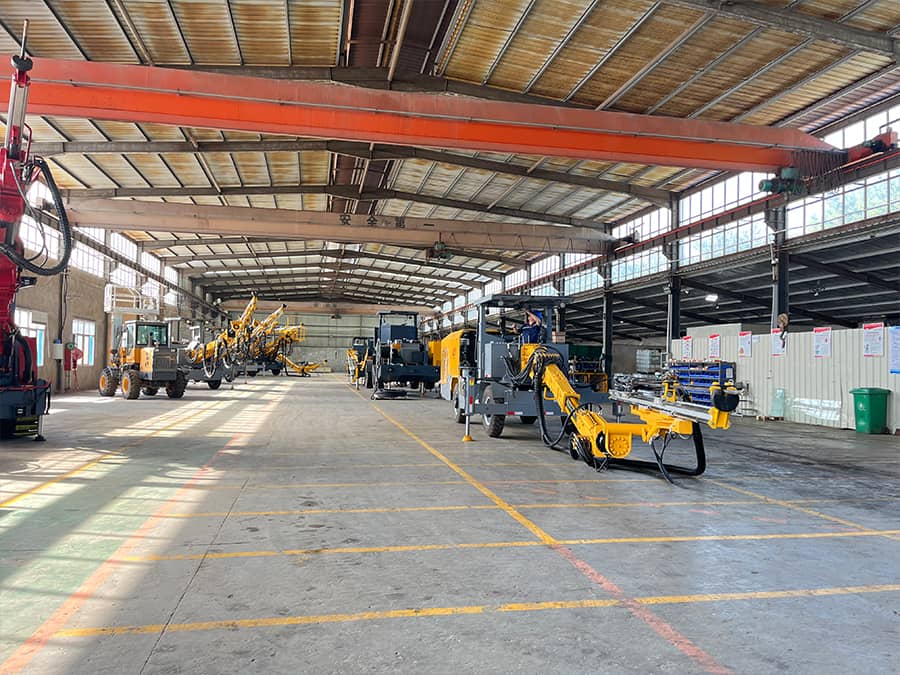
- Manufacturing Scale: Operating from a state-of-the-art facility spanning over 10,000 square meters, Aivyter produces single and twin-boom hydraulic drill jumbos, wet shotcrete manipulators, and auxiliary mine equipment.
- Certified Quality Standards: Every Aivyter rig carries CE, TUV, SGS, and ISO certifications. Components are built to handle hard abrasive rock, high humidity, and poor water quality.
- Tailored OEM / ODM Engineering: We configure boom geometry, chassis widths, engine emissions (Tier 3 to Stage V/Electric), and onboard compressor specs to match your tunnel section and voltage limits.
- Global Field Support: Aivyter maintains responsive international parts depots and service teams to assist with commissioning, operator training, and hydraulic drifter rebuilds.
Frequently Asked Questions (FAQ)
Q1: Can I convert my existing pneumatic mine to use hydraulic drill jumbos?
A1: Yes. Transitioning requires three-phase electrical power (typically 380V, 660V, or 1000V depending on the jumbo size) routed to your active face. You also need basic process water at 2 to 4 bar for cuttings flushing. Switching to hydraulic rigs frees up existing compressed air capacity for refuge chambers, secondary pumps, and air tools.
Q2: How much compressed air does an electro-hydraulic drill rig actually consume?
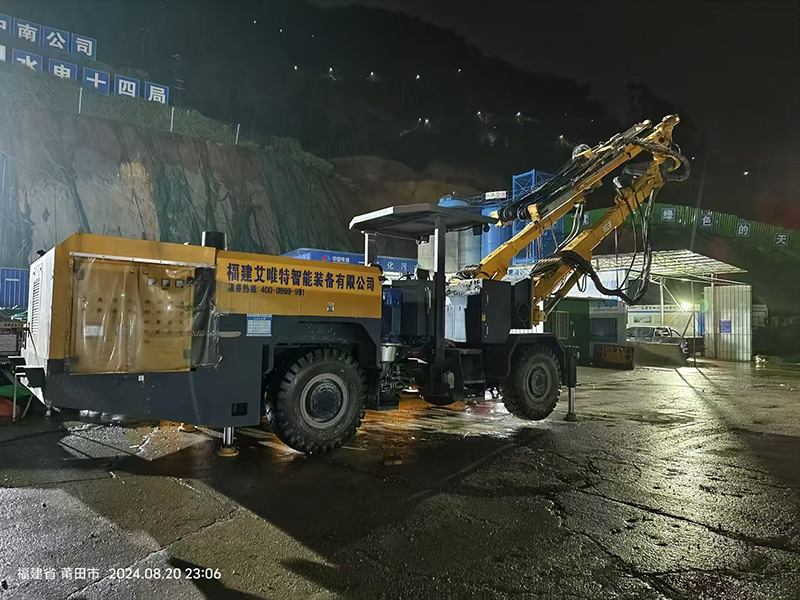
A2: An electro-hydraulic jumbo uses air strictly to flush cuttings and lubricate the rock drill’s shank adapter. Most single-boom hydraulic jumbos require between 30 and 50 CFM at 4 to 6 bar. Many Aivyter hydraulic rigs come with their own onboard screw air compressor, so they don’t draw any air from mine-wide piping networks.
Q3: Why does my pneumatic rock drill run slowly despite high compressor pressure on surface?
A3: The issue is friction drop and line distribution loss. Inadequate pipe diameters, closed bends, valve restrictions, and line leaks drop pressure across long underground distances. If your surface station outputs 7.5 bar, you may only see 4.5 bar at a working face two kilometers away. Pneumatic performance drops steeply when pressure falls below design levels.
Q4: How does drilling cost per meter compare between pneumatic and hydraulic rigs?
A4: Pneumatic drilling typically costs 40% to 60% more per meter drilled in pure energy consumption compared to electric-over-hydraulic systems. Pneumatic drills also wear down drill bits faster due to uncontrolled rebound shockwaves. Hydraulic drifters use dampening systems that extend bit life and reduce total drill steel turnover.
Q5: What maintenance support is required for an underground hydraulic jumbo?
A5: Hydraulic machinery requires clean hydraulic oil, routine filter changes, nitrogen accumulator pressure checks, and basic electrical troubleshooting skills. While pneumatic drills tolerate dirty environments, modern hydraulic systems deliver far greater drilling output in exchange for systematic maintenance.
Secure the Right Rig for Your Operation
Equipment matching determines your cost per meter. Choosing between a pneumatic rig and a hydraulic jumbo requires balancing current capital constraints against long-term development targets and compressor network capacity.
Aivyter eliminates the guesswork. Whether you need a low-profile mechanized drilling jumbo, an efficient screw air compressor, or complete underground tunneling machinery, our engineering group builds equipment packages around your mine plan.
Contact Aivyter today. Send our mining specialists your drift dimensions, rock compressive strength, and mine air layout. We will provide an engineering review alongside a competitive quotation on our complete underground drill rig for sale inventory.
about
Aivyter
We provides trusted air compressors and mining equipment, engineered for durability, efficiency, and demanding industrial applications.