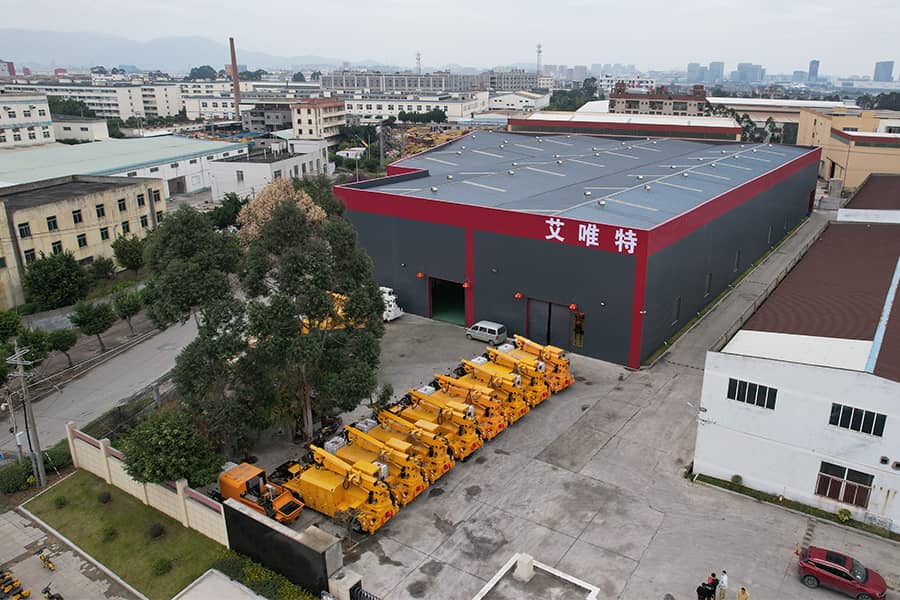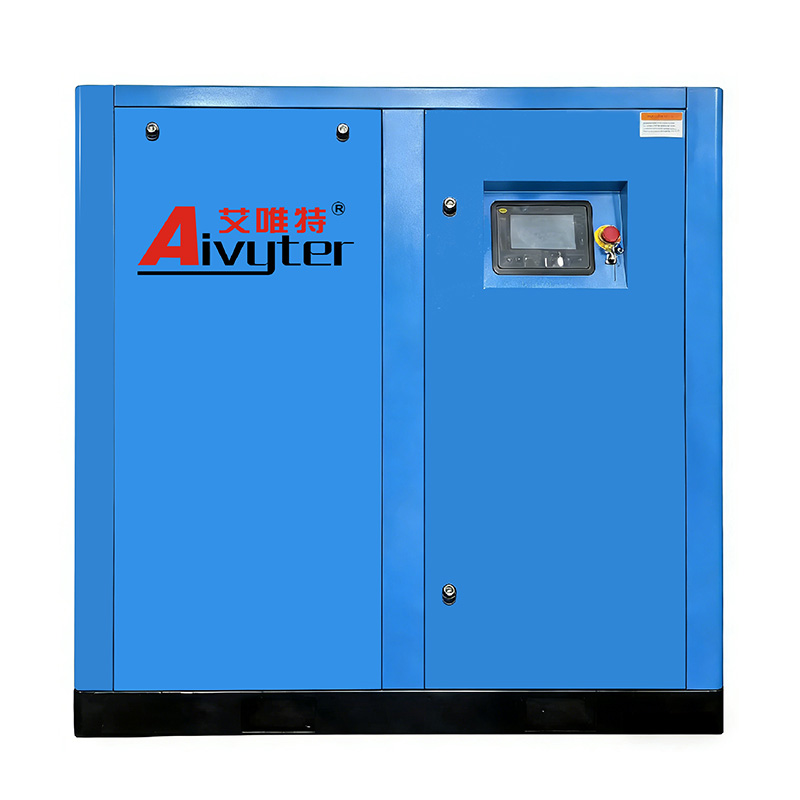
Aivyter has manufactured compressed air and gas equipment since 2009. Its PSA oxygen generators cover 5 to 200 Nm3/h, with a typical output of 93 ± 2%. If you already know your flow and purity targets, send them to Aivyter for a sized proposal. A short technical review now can prevent a costly mismatch later.
How Pressure Swing Adsorption Produces Oxygen
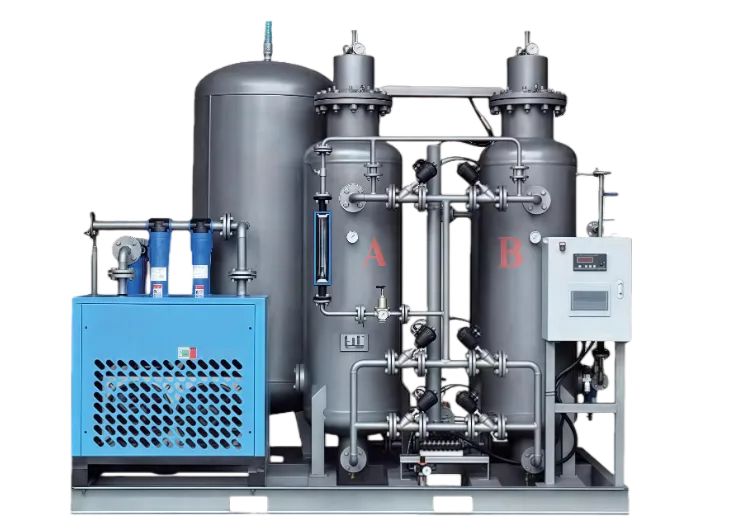
Pressure swing adsorption separates oxygen from nitrogen with a zeolite molecular sieve. The sieve does not collect oxygen. It adsorbs nitrogen at higher pressure while oxygen passes through the bed. Once the sieve nears saturation, the vessel depressurizes and releases the nitrogen. The sequence repeats on a timed cycle.
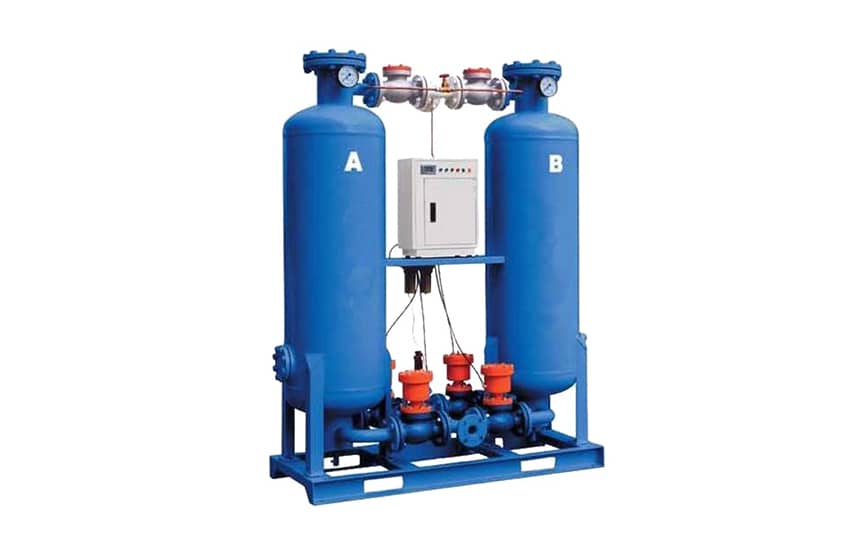
Two vessels work as a pair. One produces oxygen while the other regenerates. That overlap keeps gas flowing to the receiver. A small purge stream helps clean the bed before the next adsorption step.
Inside the adsorption cycle
Every vessel passes through four stages:
- Adsorption: compressed air enters the bed, and the sieve holds nitrogen.
- Blowdown: pressure drops, and the bed releases the captured nitrogen.
- Purge: a small amount of product oxygen sweeps the remaining nitrogen out.
- Repressurization: the vessel returns to operating pressure and rejoins production.
Valve timing decides how well those stages work. Good PLC logic adjusts to demand and protects purity during start-up. Poor timing shows up as drifting purity, oxygen lost to the vent, or a sieve bed that ages too fast.
Where the oxygen goes
Most plants use the gas at the point of demand, not in a cylinder. Common applications include:
- Oxy-fuel cutting, welding, and metal fabrication
- Furnace enrichment and combustion control
- Glass melting and high-temperature thermal processes
- Wastewater treatment, aquaculture, and ozone generation
- Pulp bleaching and chemical oxidation
- Cylinder filling through an oxygen booster
Medical oxygen requires more than a standard industrial package. It needs validated materials, continuous purity monitoring, documented change control, and compliance with local pharmacopoeia and hospital rules. Do not assume a general-purpose generator can serve a medical pipeline without that work.
Size the System Around Four Numbers
Most sizing errors begin with a missing data point. A supplier can only guarantee performance when the duty is clear. Start with flow, purity, pressure, and site conditions. Then add the process details that change the load.
Flow rate
State the required flow in Nm3/h and say whether that figure is average, peak, or future demand. A plant that needs 40 Nm3/h at peak cannot be sized from a 25 Nm3/h average. Add a realistic margin for leakage, analyzer drift, and production growth. A 20% margin may be sensible. A 100% margin wastes capital and energy.
Check the turndown as well. Some plants run at full output for one shift and at 30% for the next. The generator should hold purity across that range without venting excess oxygen for hours.
Purity
Purity drives air consumption, bed size, and energy. Many industrial processes run well at 90 to 95% oxygen. The standard range is quoted at 93 ± 2%. Higher purity, such as 99.5%, needs extra treatment or a different separation route. Every extra point of purity raises the amount of air you must compress for each cubic meter of product.
Define purity at the point of use, not inside the adsorption vessel. An analyzer at the generator outlet may read higher than a sample taken after the receiver, booster, or long piping run. The difference matters when the process has a tight limit.
Pressure and dew point
Check the pressure at the outlet of the generator, not at the compressor. The specification lists an outlet pressure of 0.5 MPa, adjustable, with a feed pressure of 0.7 to 0.8 MPa. The quoted oxygen dew point is -40°C or better. If you fill cylinders, the booster inlet pressure and the filling ramp design matter as much as the generator itself.
Long or narrow piping adds pressure loss. So does an undersized filter or a partially closed valve. Ask for the pressure at the battery limit and confirm that the downstream process can live with the expected drop.
Ambient conditions
Temperature, humidity, and altitude change actual performance. A unit rated at sea level will lose capacity at 2,000 m unless the supplier corrects for thinner air. High ambient temperature makes the compressor and dryer work harder. Keep the room cool, dry, and ventilated. Most PSA packages are rated for 2 to 40°C, but the site must stay inside that band.
Send the site conditions with the inquiry. A supplier who sizes only from the model table is guessing about your plant.
Air Preparation Decides Reliability
A PSA generator oxygen system is only as reliable as the air that enters it. In a PSA plant, the compressor is part of the separation process. It is not a background utility.
Oil aerosol, water, and dust that reach the sieve reduce capacity. They can also shorten sieve life. The dryer must match the required dew point, not just the compressor flow.
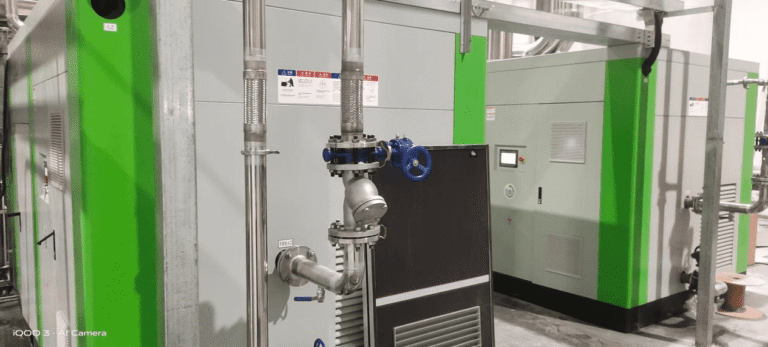
A refrigerated dryer alone will not protect a PSA bed from moisture. Use coalescing filters, a desiccant dryer when the dew point target demands it, and a final dust filter to stop adsorbent fines from traveling downstream. An oil-free compressor removes one major risk, but it still needs proper drying and filtration.
Tank sizing also matters. A receiver between the compressor and the generator smooths demand spikes. A product receiver gives the booster or the process a stable supply. Do not let a small buffer tank turn every downstream valve movement into a purity upset.
Aivyter can package the compressor, dryer, filtration, and generator as one train. That approach keeps the performance guarantee with one supplier instead of splitting responsibility across three vendors.
Why oil carryover is expensive
Oil does not simply sit on the surface of the sieve. It can block pores, coat the binder, and change the adsorption behavior of the bed. The first symptom is often a slow loss of purity or capacity. By the time the problem is obvious, the damage may be permanent.
Use a coalescing filter with a demonstrated oil removal rating, followed by a carbon filter where oil vapor is a concern. Check the filters at the recommended interval, not only when the differential pressure alarm trips. A filter that is bypassed during maintenance is worse than no filter at all.
Purity, Flow, and Pressure: The Trade-offs Buyers Miss
Purity, flow, and pressure are linked. A change in one usually moves the others. Buyers who compare only the headline flow often miss this.
- Higher purity lowers usable flow for the same compressor and sieve volume.
- Higher outlet pressure can improve adsorption but costs more compression energy.
- Colder, drier feed air helps the sieve, while hot, humid air reduces capacity.
- A larger purge flow protects purity but wastes product oxygen.
Ask for a guaranteed point, not a best-case number. Define the flow, purity, pressure, and power at the battery limit. State the ambient temperature and relative humidity behind that guarantee. Then check whether the quote includes the dryer purge loss and the booster power.
Part-load operation deserves attention too. Many plants run below nameplate for most of the year. A system with fixed cycle timing may hold purity but waste air during low demand. Look for controls that adjust the cycle or idle one vessel without upsetting the other.
One more trap: a quote may list oxygen flow without saying whether it is measured at standard conditions. Nm3/h and m3/h are not interchangeable when the site temperature and pressure differ from the reference. Convert every number to the same basis before you compare suppliers.
Energy and Lifecycle Cost
The cost of a PSA generator oxygen system has three layers. The first is equipment. The second is installation, including piping, foundations, ventilation, and electrical work. The third is operation. The third layer usually decides the real winner.
The air compressor uses most of the electricity. Specific energy, expressed in kWh per Nm3 of oxygen, is a better comparison than motor kW alone. Ask each supplier for the expected specific energy at your duty point. Then multiply by your annual hours and local power price.
Consider a simple case. A 100 Nm3/h plant runs 8,000 hours a year. If one design uses 0.05 kWh more per Nm3, the difference is 40,000 kWh a year. At USD 0.10 per kWh, that is USD 4,000 in annual cost. Over ten years, the gap pays for a lot of maintenance.
Sieve replacement, valve service, analyzer calibration, and filter changes belong in the model. A cheap package with short sieve life can cost more than a better-built unit. Aivyter supplies spare parts and service support, which matters when a shutdown is measured in lost production.
Where the hidden costs sit
- Dryer purge: desiccant dryers consume a slice of compressed air that the compressor must replace.
- Booster power: cylinder filling adds a second compression step with its own energy demand.
- Venting: poor cycle control can send usable oxygen to the atmosphere.
- Downtime: a failed valve or analyzer can stop production even when the sieve is fine.
- Freight and installation: large skids may need special transport, lifting, and site assembly.
Ask for a lifecycle cost sheet with the quote. A supplier who cannot explain the operating assumptions is asking you to accept the risk.
Layout, Installation, and Safety
Plan the room before the equipment arrives. Sieve vessels need clearance for inspection and replacement. The booster and filling ramp need a safe exclusion zone. Vent lines must carry rejected nitrogen and oxygen to a place where they cannot accumulate.
- Keep the air inlet away from dust, solvent vapor, and engine exhaust.
- Leave service access around valves, analyzers, and filter housings.
- Slope and drain condensate lines properly.
- Protect oxygen piping from oil, grease, and sources of ignition.
- Post clear oxygen-rich atmosphere warnings and control smoking.
Oxygen makes a fire burn faster. It does not need a special fuel to be dangerous. Use oxygen-compatible materials and lubricants, and keep the system free of oil. Train operators on start-up, shutdown, and emergency isolation. A good supplier will include a hazard review with the drawings, not after the first incident.
Ventilation is part of the safety case, not a building afterthought. Oxygen that leaks into a closed room raises the fire risk for clothing, grease, and ordinary materials. Nitrogen rejected by the process can displace air in a poorly ventilated space. Design both vents with the room airflow in mind.
How to Vet a Supplier
Ask for documents, not assurances. A serious supplier can answer technical questions without hiding behind a brochure. Every PSA generator oxygen system should come with a performance guarantee tied to your site conditions.
- P&ID and general arrangement drawing
- Mass and energy balance for your duty point
- Guaranteed flow, purity, pressure, and specific energy
- Make and model of the compressor, dryer, valves, analyzer, and sieve
- Factory test record and calibration certificates
- Spare parts list with lead times
- Reference sites with similar gas demand
- Warranty terms and field service response
Visit the factory if the order is large. Look at how the supplier handles piping cleanliness, wiring, and test documentation. Ask who signs the performance test and what happens if the unit misses the guarantee. Aivyter provides test data and custom configurations, and the team can review an existing quote if you want a second opinion.
Check the scope boundary carefully. Does the quote include the air compressor, dryer, filters, oxygen receiver, booster, and filling ramp? Does it include installation supervision and operator training? A low price with a narrow scope is not a low project cost.
Frequently Asked Questions
Q1: What purity can a typical PSA oxygen generator deliver?
A1: Most industrial systems deliver 90 to 95% oxygen. The standard range is 93 ± 2%. If you need 99.5% or higher, expect additional purification and a higher cost per Nm3. The right choice depends on the process, not on chasing the highest number on a datasheet.
Q2: How much compressed air does the generator need?
A2: For 93% oxygen, a practical estimate is about 13 Nm3 of compressed air per Nm3 of product. The exact figure depends on purity, temperature, sieve design, and recovery. At 5 Nm3/h, the model table shows about 1.08 m3/min of feed air. Always size from the supplier’s guaranteed balance, not a generic ratio.
Q3: How long does the zeolite molecular sieve last?
A3: With clean, dry feed air, many beds last 5 to 10 years. Oil carryover, water slugs, and thermal cycling shorten that life. Monitor dew point and oil content, replace filters on schedule, and keep a sieve sample or baseline test. A premature failure is usually an air-treatment problem, not a sieve problem.
Q4: Can a PSA generator fill oxygen cylinders?
A4: Yes, when paired with an oxygen booster and a proper filling ramp. The generator typically delivers about 0.5 MPa, so the booster raises the pressure to the cylinder rating. You also need filtration, a high-pressure receiver, grounding, and operator safeguards. Check local rules for cylinder filling and oxygen storage before you finalize the layout.
Q5: What maintenance does the system need?
A5: A PSA generator oxygen system needs daily pressure and purity checks, scheduled filter changes, valve maintenance, analyzer calibration, and periodic sieve inspection. Keep a log of dew point and oxygen concentration. A trend that drifts slowly is easier to fix than a sudden failure. Aivyter can supply a maintenance plan matched to the installed package.
Next Step: Send Your Project Data
Bring four numbers to the first call: flow, purity, pressure, and duty cycle. Add the site altitude, ambient conditions, and intended use. If you plan to fill cylinders, say so early. That single detail changes the booster, the filling ramp, and the room layout.
When you compare a PSA generator oxygen system, compare the guaranteed numbers behind the price. Aivyter can size the generator, compressor, dryer, filtration, and booster as one package. The team will confirm the utility requirements and the scope before you commit.
Send your inquiry through the Aivyter contact page or email sale@aivyter.com. Include your country, required flow, purity, and whether you need cylinder filling. A complete brief leads to a faster review and a more accurate quote.
Inquiry checklist: required oxygen flow in Nm3/h, purity target, outlet pressure, dew point, site altitude, ambient temperature, daily operating hours, intended application, and whether the project includes cylinder filling. Send those details and Aivyter can respond with a configuration built around your duty, not a generic catalogue number.
about
Aivyter
We provides trusted air compressors and mining equipment, engineered for durability, efficiency, and demanding industrial applications.