Global mining operations face tougher underground conditions in 2026 than ever before. Deeper ore bodies, tighter diesel emission caps, and rising skilled labor expenses force contractors to rethink every piece of heading equipment.
Picking the wrong face drill rig slows down your entire excavation schedule. An oversized frame jams in narrow drifts, while an underpowered drifter causes slow penetration, irregular blast profiles, and costly downtime.
This 2026 mining equipment guide gives project managers, procurement directors, and regional dealers a clear framework for equipment selection. You will learn how to match tunnel geometry, hydraulic power, emissions compliance, and factory support to your site conditions.
Planning an upcoming tender or fleet upgrade? Reach out to Aivyter’s technical specialists today for a free heading assessment and a custom 2026 equipment quotation.
What is a Face Drill Rig and Why Does It Matter in Modern Mining?
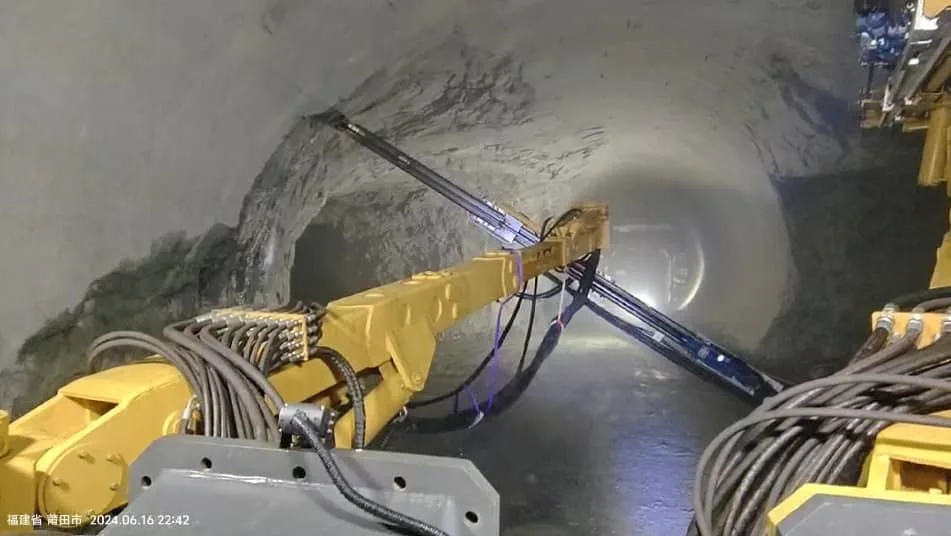
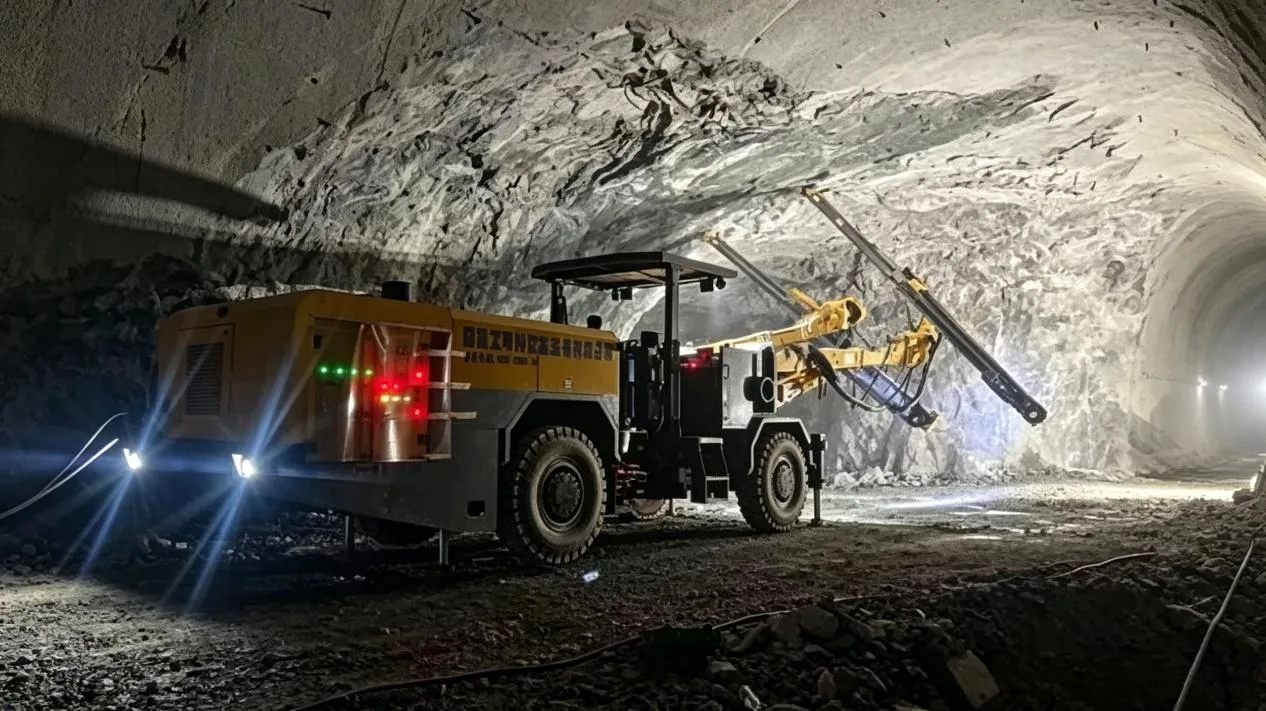
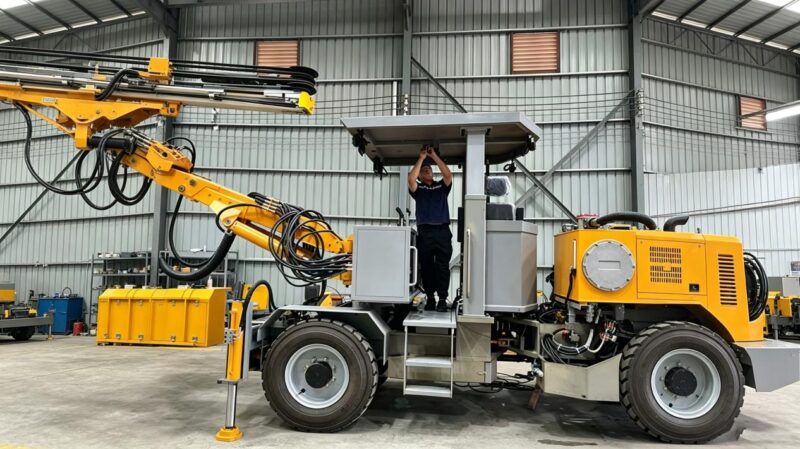
A face drill rig, commonly called an underground drilling jumbo, acts as the primary excavation workhorse in hard rock mines and civil tunnels. Mounted on a rugged wheeled chassis, it uses articulated hydraulic booms to bore precise hole patterns into solid rock faces.
Modern units handle multiple underground tasks without swapping machines at the heading:
- Production & Development Drilling: Boring parallel blastholes and perimeter cut holes for controlled advance rounds.
- Rock Bolting & Anchoring: Drilling roof and rib holes to install resin bolts or cable anchors that stabilize freshly blasted ground.
- Utility & Drainage Holes: Creating water relief channels, ventilation conduits, and service anchor points along main haulage drifts.
Unlike manual pneumatic jacklegs, a full hydraulic face drill rig delivers consistent striking energy and high torque directly to the tungsten-carbide bit. Technical research published by the Society for Mining, Metallurgy & Exploration (SME) demonstrates how mechanized hydraulic drilling slashes cycle times while protecting operators from vibration injuries and falling rock.
Precise boom alignment also protects your operating budget. Millimeter-level collar accuracy keeps perimeter holes on design line, preventing costly rock overbreak, reducing concrete backfill waste, and cutting explosive consumption per cubic meter of excavated rock.
6 Key Factors to Consider Before Buying a Face Drill Rig in 2026
Spec sheets often highlight maximum numbers that look impressive on paper yet fail underground. Evaluate these six practical engineering criteria before signing any purchase order.
1. Tunnel Cross-Section & Coverage Area
Your minimum and maximum heading dimensions dictate the entire machine footprint. Narrow-vein gold or copper operations require tight turning radii, whereas wide haulage declines demand tall boom reach.
Buy a rig that is too small, and your operator cannot reach the tunnel crown without building unsafe muck piles. Buy a rig that is too wide, and the chassis will tear down ventilation bags and water pipes during tramming.
Always verify both the tramming dimensions and the maximum boom coverage envelope. Flexible configurations—such as Aivyter’s underground line covering 2×2 m entries up to 5×6.5 m headings—let one machine transition smoothly between narrow stope accesses and large intersection chambers.
2. Drilling Speed, Impact Pressure & Hole Diameter
Rock hardness directly controls drill bit wear and penetration speed. Engineers typically classify rock drillability using the Protodyakonov strength coefficient (f-value) or uniaxial compressive strength (MPa).
Match your rock formation against three interconnected drifter specifications:
- Hole Diameter (43–115 mm): Standard development faces typically use 43 mm to 51 mm blastholes, while central burn-cut relief holes and specialized anchors require 76 mm to 115 mm diameters.
- Impact Pressure: Dense granite, basalt, and quartzites resist weak strikes. High-performance hydraulic rock drills generating up to 230 bar of impact pressure fracture tough rock cleanly without overheating hydraulic oil.
- Penetration Rate: Maintaining steady drilling speeds between 0.8 and 2.0 m/min keeps your drill-and-blast crew on a predictable shift schedule.
Never evaluate drifter power in isolation. Ensure the feed beam rigidity and rotation torque match your target bit diameter so the drill string tracks straight without deflecting.
3. Powertrain, Transmission & Emission Standards
Underground ventilation systems consume massive amounts of electricity to clear heat and diesel exhaust from deep headings. In 2026, mine safety inspectors enforce strict limits on particulate matter and nitrogen oxides underground.
Choosing a hydrostatic transmission drill rig delivers clear mechanical and environmental advantages over older powershift gearboxes. Hydrostatic drive applies stepless torque to all four wheels, giving the carrier smooth climbing power on steep 14-degree mine ramps without burning clutch plates.
Pair that drivetrain with a clean, water-cooled turbocharged diesel engine certified to National IV or EURO IV standards—such as reliable 55.8 kW or 129 kW Yuchai diesel powerplants. Meeting strict underground air quality benchmarks, including guidelines established by the Mine Safety and Health Administration (MSHA), keeps underground crews healthy and trims mine ventilation costs.
4. Smart Control & Hydraulic Efficiency
Experienced jumbo operators are hard to recruit and retain across every major mining region. Modern hydraulic control systems compensate for operator fatigue while shortening training time for newer crews.
Look for built-in protective hydraulic logic as standard equipment:
- Automatic Anti-Jamming: Sensors detect sudden spikes in rotation pressure when hitting clay seams or fractured rock, instantly retracting the feed to save stuck drill steels.
- Auto-Return & Collaring Control: Soft-start collaring prevents the bit from wandering on sloped rock faces, while auto-return resets the drifter automatically at the end of each hole.
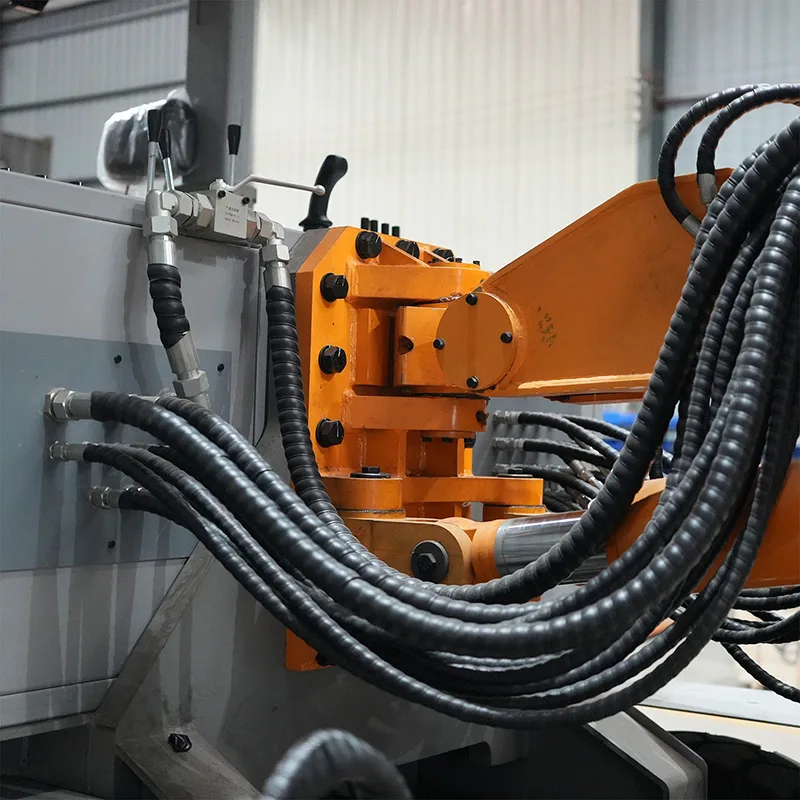
- Load-Sensing Hydraulics: Variable displacement pumps supply exact oil flow on demand, cutting fuel burn and keeping hydraulic oil cooler in warm, deep headings.
5. Compliance Certifications & Build Quality
Mining contractors cannot afford customs holds at port or rejected safety inspections at the mine gate. Before wire-transferring a deposit, audit the supplier’s international compliance portfolio.
Confirm that the tunneling drilling jumbo holds valid CE marking alongside independent inspection credentials from TUV or SGS. Production plants should also operate under audited ISO 9001 quality management systems to ensure repeatable weld metallurgy, clean hydraulic flushing, and traceable component sourcing.
Verify FOPS and ROPS structural certifications on the operator canopy as well. Certified overhead protection guards the operator against loose rock slabs while tramming or collaring near the face.
6. Manufacturer Strength, After-Sales & Fleet Synergy
A drilling jumbo never advances a tunnel by itself. Crews rely on compressed air lines for hole flushing and rapid shotcrete spraying to secure freshly exposed ground.
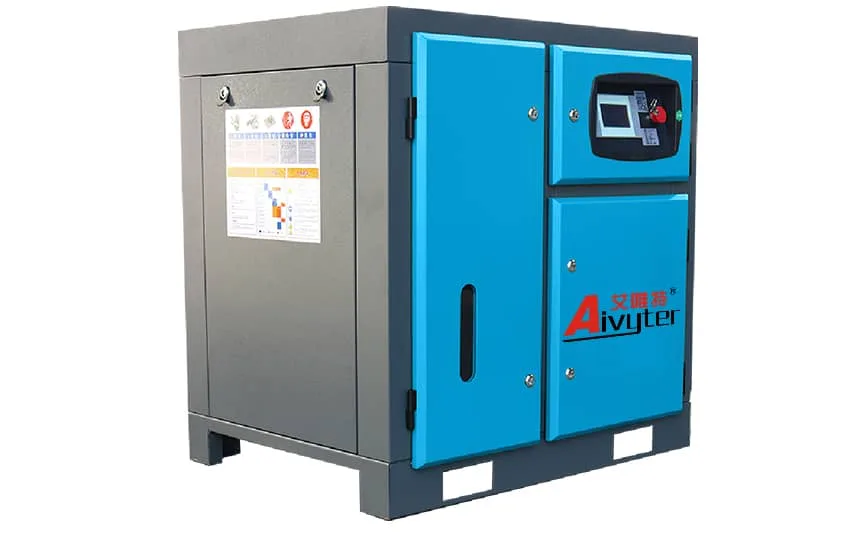
Sourcing compatible equipment from a single OEM face drill rig manufacturer lowers lifecycle maintenance expenses. When your drilling rig, screw air compressor, and shotcrete manipulator share common service intervals and dealer support, mechanics spend less time hunting for mismatched parts.
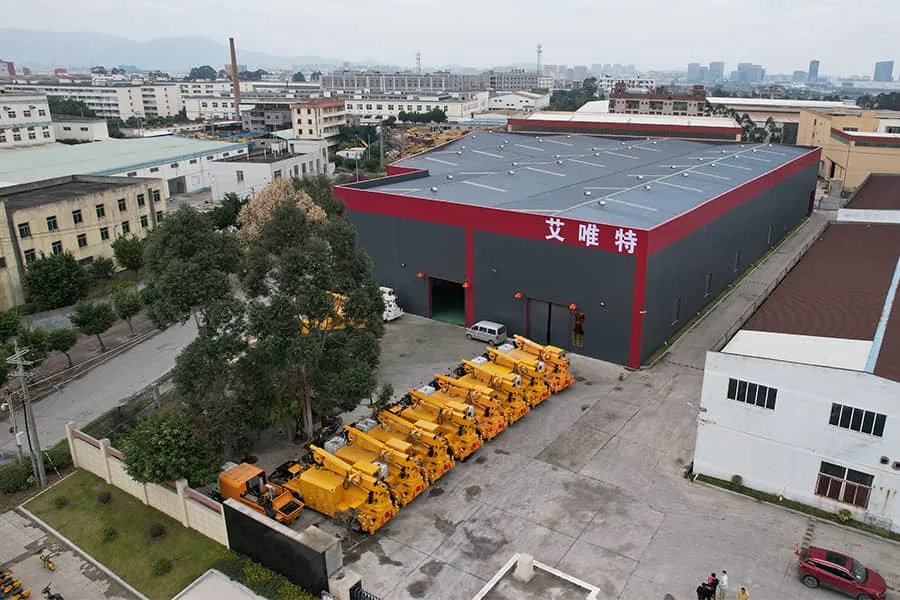
Buying directly from an established factory covering 10,000+ square meters also protects your parts pipeline. Direct factory engineering guarantees ready access to seal kits, drifter diaphragms, and custom carrier modifications without middleman delays.
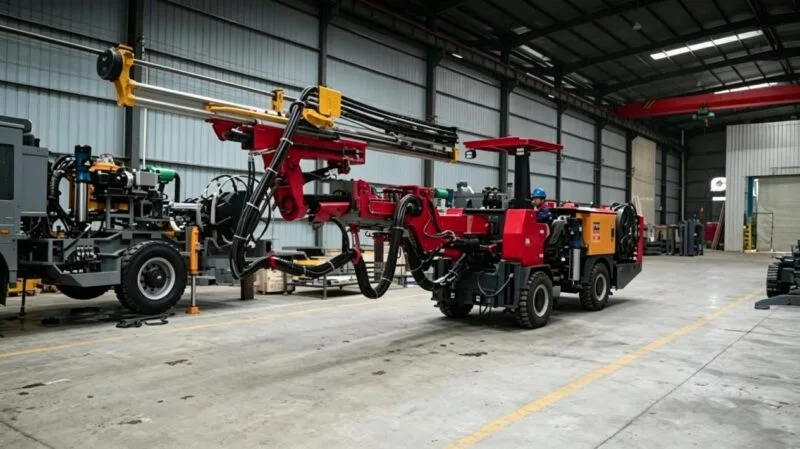
Comparing the Best Face Drill Rigs for Different Mining Scenarios
No single machine fits every underground layout. The table below compares four proven Aivyter configurations engineered for distinct cross-sections, rock strengths, and production targets.
| Model | Coverage Area | Cross-Section Range | Hole Diameter | Powertrain & Key Specs | Best Mining Scenario |
|---|---|---|---|---|---|
| Aivyter AZT-125 | 24 m² | 2×2 – 5×4 m | 45–115 mm | Yuchai 55.8 kW (National IV / EURO IV) | Narrow-vein mines & high-flexibility drifting |
| Aivyter AZK-125B | Up to 30 m² | From 2×2 m | 45–102 mm | Compact heavy-duty diesel-hydraulic | Ultra-narrow entries requiring wide boom reach |
| Aivyter AZT1-6500 | 5×6.5 m | 3×3 – 5×6.5 m | 43–102 mm | Water-cooled turbocharged diesel | Medium-to-large tunnels & versatile development |
| Aivyter AZT2-9700 | Heavy-duty envelope | Medium-to-large headings | 45–76 mm | 129 kW turbo diesel, 230 bar impact, 0.8–2 m/min | Hard rock formations & high-speed production |
Use these practical field guidelines to match a model to your mine plan:
- Narrow-Vein & Tight Turning Radii: Select the Aivyter AZT-125 for compact 2×2 m to 5×4 m drifts with strict emission limits, or step up to the AZK-125B when ultra-narrow access galleries open into 30 m² stopes.
- All-Around Tunnel Development: Deploy the Aivyter AZT1-6500 for standard 3×3 m to 5×6.5 m haulage declines and civil tunnels needing wide single-setup face coverage.
- Extreme Rock Hardness & High Tonnage: Choose the Aivyter AZT2-9700 when dense abrasive rock demands a 129 kW powerpack, 230 bar impact pressure, and rapid 2 m/min penetration speeds.
Why Global Mining Contractors Choose Aivyter as Their OEM/ODM Partner
Equipment reliability starts on the factory floor long before a rig enters an underground portal. Founded in 2009 in Fuzhou, China, Aivyter brings 17 years of focused underground machinery engineering to contractors, mine owners, and regional dealers worldwide.
Our self-owned manufacturing campus spans more than 10,000 square meters. Inside this facility, dedicated mechanical and hydraulic engineers control structural welding, boom assembly, and full-pressure bench testing under strict quality checkpoints.
Global mining partners work with Aivyter for three core operational advantages:
- Complete Underground Fleet Integration: Beyond intelligent drilling jumbos, we build industrial screw air compressors and concrete shotcrete manipulators so your drilling, air supply, and ground support teams work seamlessly together.
- Flexible OEM/ODM Customization: Our engineering team modifies pneumatic circuits, chassis widths, canopy heights, and electric motor voltages to match your mine’s local power grid and drift clearances.
- Global Export & 24/7 After-Sales Network: Holding independent import and export rights, Aivyter ships certified rigs worldwide through a stable dealer network backed by rapid spare parts dispatch and round-the-clock technical troubleshooting.
Frequently Asked Questions (FAQ) About Buying a Face Drill Rig
Q1: What is the difference between a single-boom and heavy-duty face drill rig?
A1: A compact single-boom face drill rig prioritizes tight turning radii and narrow carrier widths for headings starting at 2×2 m. Heavy-duty rigs carry stronger diesel or electric powerpacks, reinforced booms, and higher-impact drifters engineered to tackle larger 5×6.5 m faces and hard rock production targets without excessive thermal stress.
Q2: How do I choose the right drilling diameter for underground mining?
A2: Your explosive cartridge dimensions, rock hardness, and blast design determine ideal hole diameter. Most development headings use 43 mm to 51 mm blastholes for clean perimeter control, whereas central relief cut holes or cable bolt installations require 76 mm to 115 mm diameters. Always match bit sizing to your drifter’s torque and flushing capacity.
Q3: Why is a hydrostatic transmission drill rig preferred for underground slopes?
A3: A hydrostatic transmission drill rig removes dry mechanical clutches and traditional gearboxes that frequently overheat or wear out on steep mine ramps. Hydrostatic drive delivers smooth, continuous torque to all wheels, providing strong climbing traction uphill and controlled hydraulic braking on slick downhill grades.
Q4: What certifications should an export-grade tunneling drilling jumbo hold?
A4: International buyers should verify CE compliance alongside third-party inspection reports from accredited bodies such as TUV or SGS. In addition, the factory should hold ISO 9001 quality management certification, and the diesel powertrain should meet strict emission tiers like EURO IV or National IV for safe underground ventilation.
Q5: Does Aivyter support customized face drill rigs (OEM/ODM) and overseas after-sales service?
A5: Yes. Aivyter offers complete OEM and ODM engineering from our 10,000+ m² Fuzhou plant, customizing pneumatic layouts, chassis dimensions, and electrical specifications for local mine standards. Every exported unit receives global dealer support, fast OEM spare parts delivery, and 24/7 remote engineering assistance.
Get Your Custom 2026 Face Drill Rig Proposal
Buying the right face drill rig in 2026 protects your mine schedule, lowers explosive waste, and shields crews from underground hazards. Matching drift cross-sections, rock drill impact energy, and clean diesel power to your exact geology prevents expensive downtime before excavation begins.
Aivyter’s engineering team helps contractors and equipment distributors remove guesswork from underground fleet planning. Send us your tunnel cross-section dimensions, rock hardness parameters, and power grid details today.
Request a free technical consultation now to receive a tailored equipment selection proposal and factory-direct 2026 quotation from Aivyter within 24 hours.
about
Aivyter
We provides trusted air compressors and mining equipment, engineered for durability, efficiency, and demanding industrial applications.