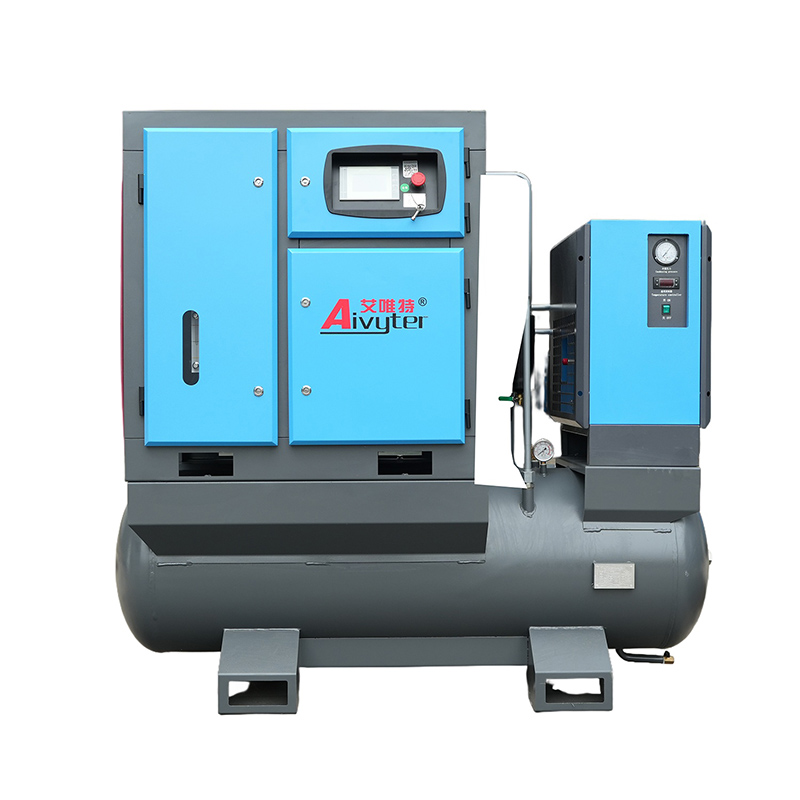
Across underground mining, tunnel boring, and large-scale civil engineering, compressed air reliability directly impacts production schedules. The screw drive air compressor has displaced reciprocating units in continuous heavy-duty service due to its pulse-free delivery, lower vibration, and ability to run 24/7 at full load. This article provides a component-level analysis — from matched rotor geometries to separator vessel sizing — for engineering teams specifying equipment in abrasive, high-humidity, or remote environments.
Understanding how a rotary twin-screw airend manages internal leakage, thermal expansion, and lubricant degradation allows maintenance planners to extend service intervals beyond 8,000 hours. We examine measurable performance data, control strategies (load/unload, VFD, dual setpoint), and field-proven solutions for sectors such as open-pit mining, shotcreting, and offshore construction. Each recommendation follows ISO 1217 (displacement compressor testing) and ISO 8573‑1 air quality classifications.

1. Core Mechanics of a Screw Drive Air Compressor
1.1 Rotor Profiles and Compression Thermodynamics
The heart of any modern screw drive air compressor comprises a male and female helical rotor housed within a precision-machined cylinder. As the rotors counter-rotate, the flute volume decreases progressively, raising air pressure from ambient to typically 7–13 bar(g) in a single stage. Key engineering parameters include:
- Rotor lead angle — affects internal blow‑hole losses and discharge ripple. Asymmetric profiles (e.g., 5+6 lobe combination) achieve volumetric efficiencies above 85%.
- Built-in volume ratio (Vi) — pre‑determines the internal pressure at which discharge ports open. Mismatch between Vi and system backpressure causes over‑ or under‑compression, wasting 4‑8% energy.
- Tip speed and clearance — typical tip speeds range from 20 to 40 m/s. Maintaining radial clearances below 0.05 mm prevents leakage while avoiding rotor contact during thermal transients.
For mining applications where ambient temperatures exceed 45°C, engineers select a screw drive air compressor with oversized bearing housings and synthetic lubricant (PAO or PAG base) to preserve film strength. Cast iron or ductile iron airends with integral cooling jackets are mandatory to dissipate the heat of compression.
1.2 Lubrication Architecture: Flooded vs. Oil-Free
Two fundamental configurations dominate industrial compressed air:
- Oil‑injected (flooded) rotary screw: Lubricant is injected directly into the compression chamber, sealing internal gaps, removing compression heat, and lubricating the rotors. This design achieves high pressure ratios in one stage and allows compact footprint. Residual oil carry‑over after the separator is typically 2‑5 ppm.
- Oil‑free (dry) screw: Uses timing gears to maintain rotor clearance without internal lubrication. Ideal for processes requiring ISO 8573‑1 Class 0 air (e.g., food contact, pharmaceuticals). For construction and mining, oil‑injected units dominate due to lower sensitivity to dust ingestion and simplified maintenance.
Selecting the right architecture depends on downstream air quality requirements. For rotary blasthole drills and rock bolters, an oil‑injected unit provides adequate lubrication for pneumatic tools. When abrasive blasting in confined tunnels, secondary coalescing and activated carbon filters reduce oil content to 0.01 ppm.
2. Performance Advantages for Heavy Industrial Sectors
Compared to piston compressors, rotary screw systems offer distinct benefits in 24/7 environments:
- Continuous duty cycle — designed for 100% load without thermal cycling stress. No cool‑down periods required.
- Low pulsation and vibration — reduces fatigue on discharge piping and eliminates need for heavy foundations; mobile skids for construction sites benefit directly.
- Stable flow under varying backpressure — positive displacement characteristic maintains air delivery even when multiple tools are connected at once.
- Variable Frequency Drive (VFD) readiness — integrated VFD models achieve 15‑30% energy savings at partial load compared to load/unload regulation.
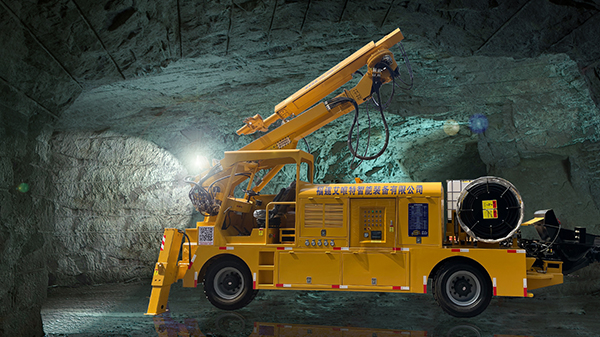
In underground mine development headings (e.g., using jumbo drills and shotcrete robots), a single screw drive air compressor skid of 45 m³/min at 10 bar provides sufficient capacity for simultaneous operation of three rock drills and a scaling hammer. The sound‑attenuated enclosure (typical noise level 75‑80 dBA at 7 m) meets underground health regulations.
3. Technical Deep Dive: Lubricant Selection, Separation, and Thermal Control
3.1 Lubricant Degradation Monitoring
In oil‑injected screw compressors, the lubricant performs sealing, cooling, and bearing lubrication. Field data from construction sites indicate that using Group IV (PAO) or Group V (diester) synthetic oils extends change intervals to 6,000‑8,000 hours, whereas mineral oils degrade after 2,000 hours due to oxidation and carbon formation. Key parameters to track:
- Viscosity at 40°C — ISO VG 46 is standard for ambient temperatures 20‑40°C. For hot climates (above 40°C), ISO VG 68 prevents viscosity drop.
- Total acid number (TAN) — a TAN increase above 1.5 mg KOH/g indicates oxidation; varnish deposits on rotors and separators follow.
- Particle count (ISO 4406) — target code 18/16/13 or cleaner to prevent bearing abrasion. In dusty environments (silica or coal dust), high‑efficiency inlet filters (F9 class or MERV 15) are necessary.
Expert recommendation: Install a differential pressure gauge across the oil filter. When ΔP exceeds 1.5 bar at operating temperature, replace the filter to avoid oil starvation to the airend.
3.2 Air/Oil Separation and Sealing Integrity
The separator vessel contains a coalescing element that reduces residual oil content to 3‑5 ppm for standard industrial tools. Separator life is shortened by three factors: high discharge temperature (>105°C), excessive oil carry‑over due to foaming, and repeated load/unload cycles that disturb the coalescing media. For sensitive applications like painting or food‑adjacent processes, secondary filtration (coalescer + activated carbon tower) achieves 0.01 ppm oil content. Aivyter offers separator kits with double O‑ring sealing and differential pressure indication, tested under high humidity and fluctuating load profiles common in Asian infrastructure projects.
Shaft seals on the airend input shaft represent another leakage path. Carbon face seals or Teflon labyrinths prevent oil migration into the coupling or gearbox. Regular inspection of seal drain ports (if equipped) can detect early wear.
4. Selecting a Screw Drive Air Compressor for High‑Dust, High‑Demand Sites
When specifying equipment for open-pit mines, tunnel boring, or concrete spraying, consider these engineering criteria:
- Inlet air filtration: Two‑stage cyclonic pre‑separator plus primary filter element rated at 5 µm nominal (upgrade to 1 µm for fine silica or cement dust). Monitor filter restriction via ΔP sensor; replace when ΔP reaches 500 Pa above clean value.
- Ambient temperature range: For Middle East or Australian summer operations (ambient >45°C), specify high‑ambient package including a larger oil cooler, variable speed cooler fan, and synthetic lubricant. Derate the compressor output by 1% per 3°C above 40°C.
- Pressure stability: For shotcrete rigs and rock drills, pressure variation must stay within ±0.3 bar. Install a receiver tank sized at 15‑20% of the compressor FAD (free air delivery) to dampen demand peaks.
- Corrosion protection: Offshore construction and coastal mines require epoxy‑coated coolers, stainless steel hardware for the airend housing, and NEMA 4X / IP55 motor enclosures.
A properly specified screw drive air compressor for mining should also include a minimum pressure valve (MPV) set to 4‑5 bar to maintain sufficient oil circulation during start‑up and unloading. Avoid belt‑driven units in high‑dust environments — direct coupling eliminates belt dust and slippage.
5. Control Strategies and Energy Optimization
Industrial rotary screw compressors employ three primary control methods, each suited to different demand patterns:
- Load/Unload (constant speed) — the compressor runs fully loaded until system pressure reaches the upper setpoint, then unloads (no air delivery but motor continues turning). Typical unload power is 15‑30% of full load power. Simple and robust for base loads above 70%.
- Variable Frequency Drive (VFD) — adjusts motor speed continuously to match air demand down to 20‑30% of nominal flow. VFD units achieve high efficiency at part load (40‑80% range) and eliminate unload losses. Ideal for construction sites with intermittent pneumatic tool use.
- Dual setpoint and sequencing — for multiple compressor installations, a central controller stages compressors based on network pressure. By keeping one unit fully loaded and others off or VFD‑controlled, overall energy use drops by 8‑12% compared to independent operation.
For remote mining operations, install telemetry modules that transmit key parameters (discharge pressure, temperature, separator ΔP, motor current) to a central maintenance platform. This enables condition‑based alerts before failures occur. Aivyter integrates Modbus RTU and industrial IoT gateways into its compressor controllers, allowing seamless connection to site SCADA systems.
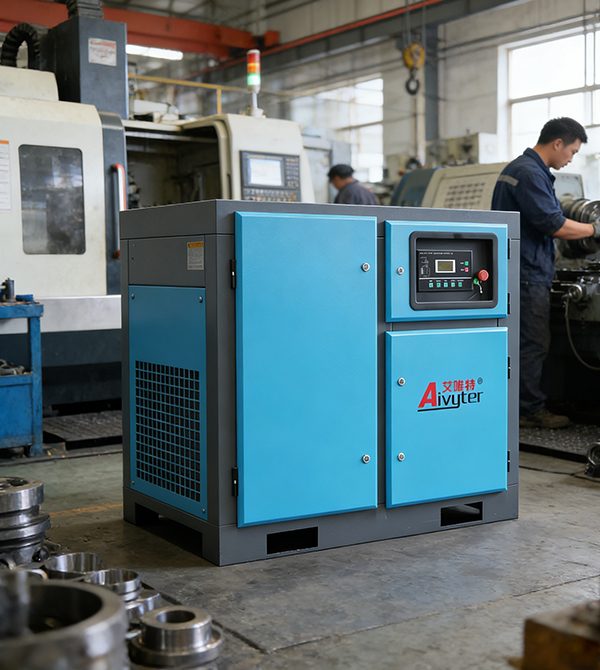
6. Maintenance Protocols Based on Operating Hours
Proactive maintenance extends the service life of rotors and bearings. The following schedule is derived from field data across hundreds of construction and mining sites:
- Daily (or every 8 hours): Check oil level (visual sight glass), drain condensate from receiver tank and moisture traps, inspect for unusual noise or vibration, record discharge temperature and pressure.
- 500 hours or monthly: Take an oil sample for laboratory analysis (viscosity, TAN, particle count). Inspirate inlet air filter differential; clean or replace when ΔP exceeds threshold.
- 2,000 hours or 6 months: Replace air filter element, clean oil cooler fins (compressed air or low‑pressure water), inspect flexible hoses for cracks or bulges.
- 4,000‑6,000 hours: Replace oil filter and air/oil separator element. If pressure drop across the separator exceeds 0.8 bar (manufacturer specified), replace earlier.
- Major overhaul (40,000‑50,000 hours): Replace rotor bearings (both radial and thrust), inspect rotor profile coatings (e.g., PTFE or MoS2), replace shaft seals, regrind mating surfaces of the airend housing if necessary.
Common failure indicators monitored weekly: discharge temperature >105°C indicates insufficient cooling or lubricant degradation; increased motor current (above full load ampere rating) points to bearing wear or rotor contact; vibration velocity >7 mm/s on the airend housing requires immediate inspection.
7. Integrating the Air Network: Piping, Receivers, and Dryers
Distributing compressed air over long distances (e.g., 1‑2 km in a mine decline) demands careful system design:
- Pipe material and sizing: Schedule 80 galvanized steel or HDPE for corrosive mine water. Velocity should stay below 15 m/s to avoid excessive pressure drop. Use the formula: ΔP (bar/100m) = (flow rate in m³/min²) × (pipe ID in mm)⁻⁵ × factor. For a 45 m³/min flow at 10 bar, a 100 mm ID pipe yields ΔP ≈ 0.07 bar/100m.
- Slope and drain points: Install piping with 1‑2% slope towards low points. Place automatic condensate drains every 100‑150 m and at the bottom of risers. For tunnels subject to freezing, use heat‑traced drains or heated drain valves.
- Receiver tank location: A main receiver after the dryer (volume = 10‑20% of FAD) stabilizes pressure. For long feeders, place a secondary 500‑1,000 L tank near the point of use to dampen pressure dips during tool start‑up.
- Air dryer selection: Refrigerated dryers achieve pressure dew points (PDP) of +3°C to +10°C, suitable for most construction tools. For Arctic conditions (ambient below 0°C), desiccant dryers with heater blowers provide PDP of -40°C to prevent ice formation in distribution pipes.
When multiple screw drive air compressor units operate in parallel, install check valves on each discharge to prevent backflow during shutdown. Pressure transmitters at remote endpoints enable master controllers to stage compressors efficiently, avoiding simultaneous loading.
Frequently Asked Questions (FAQ)
Q1: What is the typical efficiency difference between a screw drive air compressor and a piston compressor at 10 bar discharge pressure?
A1: At full load, a modern rotary screw unit achieves specific power of 6.5‑7.5 kW per m³/min (e.g., 45 kW for 6 m³/min). A two‑stage piston compressor may reach similar full‑load efficiency, but screw compressors maintain higher efficiency across varying loads due to better volumetric efficiency and continuous cooling. Additionally, screw units do not have the 50‑60% derating that occurs when piston compressors run continuously without off‑cycles.
Q2: How do I determine whether my construction site requires a VFD screw drive air compressor?
A2: Perform a load profile analysis over a typical 8‑hour shift. If the average air demand is below 70% of the compressor’s rated capacity and consumption varies frequently (e.g., multiple pneumatic tools used intermittently), a VFD unit will reduce energy use by 20‑35%. For operations with stable base loads above 80%, a load/unload constant‑speed unit is more cost‑effective. Many mining sites use a base‑load fixed‑speed compressor plus a smaller VFD unit for trim flow.
Q3: What lubricant viscosity grade should I use for a screw drive air compressor operating in a desert environment (ambient 50°C)?
A3: In ambient temperatures above 40°C, an ISO VG 68 synthetic lubricant (PAO or diester) is recommended instead of standard ISO VG 46. The higher viscosity maintains adequate film thickness between rotors and bearings while resisting oxidation. Supplement this with a larger oil cooler and check that the minimum pressure valve maintains at least 4 bar during unload periods to ensure oil flow.
Q4: Can I use a screw drive air compressor for abrasive blasting without additional filtration?
A4: Direct use is not recommended. Even with a highly efficient air/oil separator, residual oil carry‑over (2‑5 ppm) will be present. For abrasive blasting on steel surfaces prior to coating, oil contamination causes fish eyes and adhesion failures. Install a coalescing filter followed by an activated carbon adsorber downstream of the compressor to achieve ISO 8573‑1 Class 1 (oil content ≤0.01 mg/m³). Also verify that the dryer provides a pressure dew point of +3°C or lower to prevent moisture condensation in the blast hose.
Q5: How often should the safety valves on a screw drive air compressor be tested?
A5: According to ASME Section VIII (for receiver tanks) and ISO 4126 (for compressor units), safety valves must be tested at least annually. The test can be performed in‑situ using a lifting lever (if equipped) or by a calibrated pressure‑lifting device. For mining applications with vibration, test every six months. The set pressure should be 10% above maximum working pressure but below the design pressure of the weakest component (e.g., separator vessel). Document each test and replace any valve that fails to reseal properly.
Q6: What is the typical pressure dew point requirement for underground pneumatic drilling equipment?
A6: For jackleg drills, stopers, and rock drills operating in underground mines where ambient temperature may drop to 0‑5°C, a pressure dew point (PDP) of +3°C or lower is required to prevent ice formation in the drill’s valve body and hoses. A refrigerated air dryer with a properly sized aftercooler and water separator achieves this. For extremely cold climates (below freezing), a desiccant dryer with PDP -20°C is preferred. Always install a moisture trap immediately before each drill to remove liquid water that condenses in long pipelines.
Q7: How can I reduce noise from a screw drive air compressor on an urban construction site?
A7: Three measures: (1) Specify a unit with a sound‑attenuated enclosure (target 75 dBA at 7 meters). (2) Install a flexible discharge hose (length >1 m) to break mechanical noise transmission. (3) Place the compressor behind a portable acoustic barrier or inside a temporary structure lined with mineral wool (50‑100 mm thickness). For night work (regulations often require <70 dBA at property line), a VFD unit operating at reduced speed produces significantly lower noise than a load/unload unit at full speed.
Need a reliable compressed air solution for your mining, tunneling, or heavy construction project? Aivyter engineers provide site‑specific calculations, filtration packages, and remote monitoring integration for screw drive air compressor systems. Submit your inquiry with flow rate, pressure, and ambient conditions to receive a technical proposal, including power consumption estimates and maintenance schedules, within 48 hours. Ensure your worksite maintains maximum productivity with zero unplanned downtime.
about
Aivyter
We provides trusted air compressors and mining equipment, engineered for durability, efficiency, and demanding industrial applications.