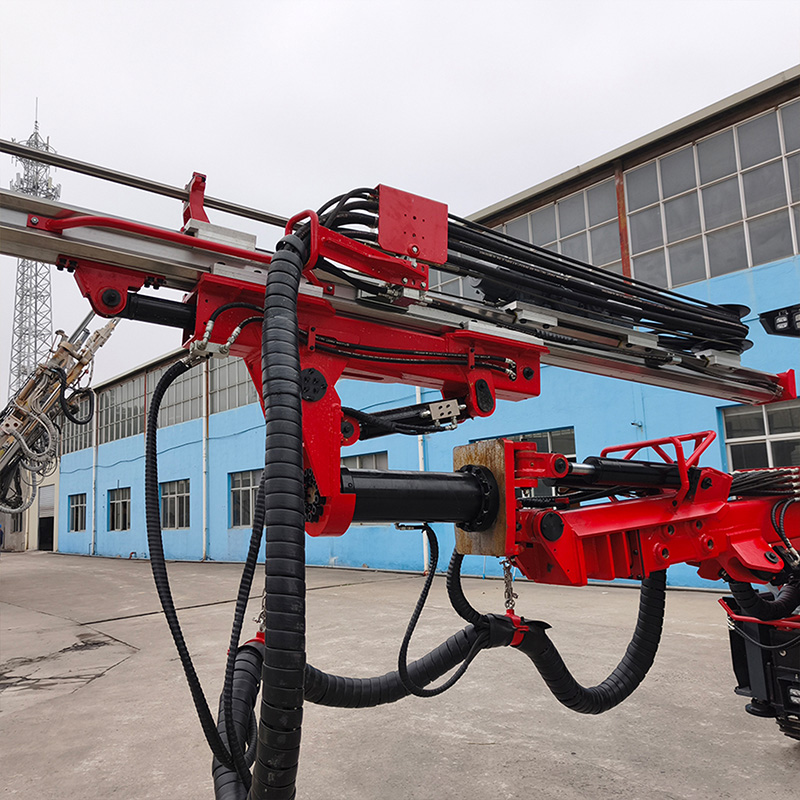
Selecting the appropriate underground drill rig for sale requires a systematic evaluation of operational parameters, geological conditions, and production targets. For contractors and mine operators, the decision directly impacts advance rates, drilling accuracy, and overall project economics. This guide provides a technical framework for assessing available equipment, with emphasis on hydraulic systems, boom configurations, and automation capabilities that define modern underground drilling.
Core Considerations When Evaluating an Underground Drill Rig for Sale
The underground mining and tunneling sector demands equipment that balances power, precision, and reliability. When reviewing an underground drill rig for sale, the first technical layer involves understanding the rig’s classification. The primary distinction rests between top-hammer and down-the-hole (DTH) systems. Top-hammer rigs excel in hard rock formations with hole diameters ranging from 38mm to 102mm, while DTH configurations handle larger diameters, often exceeding 127mm, for deep-hole blasting patterns in massive sulfide deposits or block caving operations.
Hydraulic System Architecture and Power Management
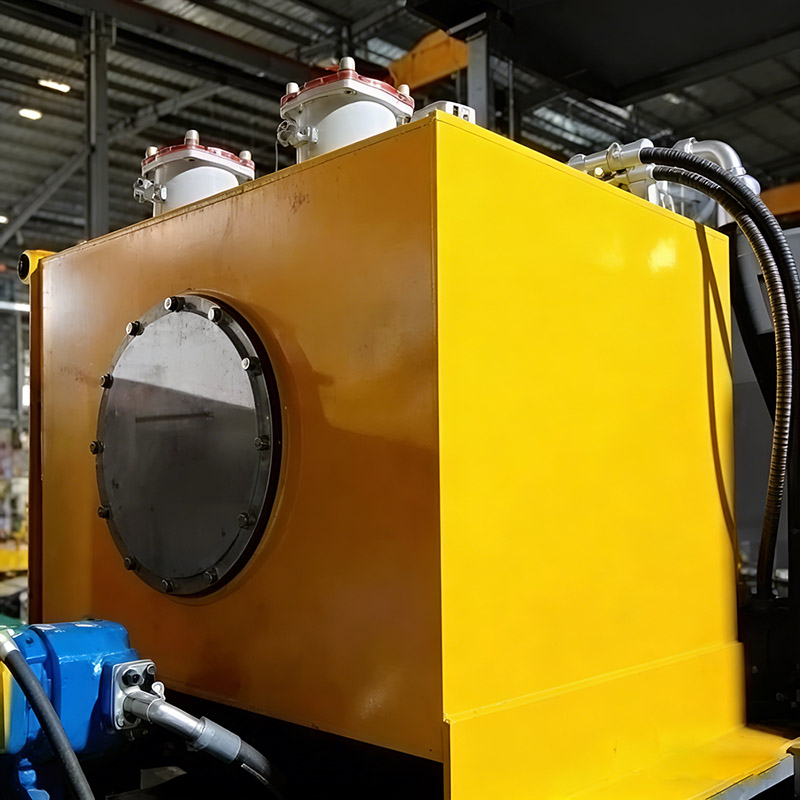
Modern underground drill rigs utilize variable-displacement piston pumps that deliver flow rates between 120 and 250 liters per minute at operating pressures of 250 to 320 bar. The hydraulic circuit design—whether open-loop or closed-loop—influences thermal management and response times. Closed-loop systems provide smoother control for feed and rotation functions, reducing shock loading on drill steel. When inspecting a used or new underground drill rig for sale, examine the hydraulic oil filtration specification; units with 3-micron absolute filtration and built-in condition monitoring sensors offer extended component life in dusty underground environments.
Boom Geometry and Coverage Envelopes
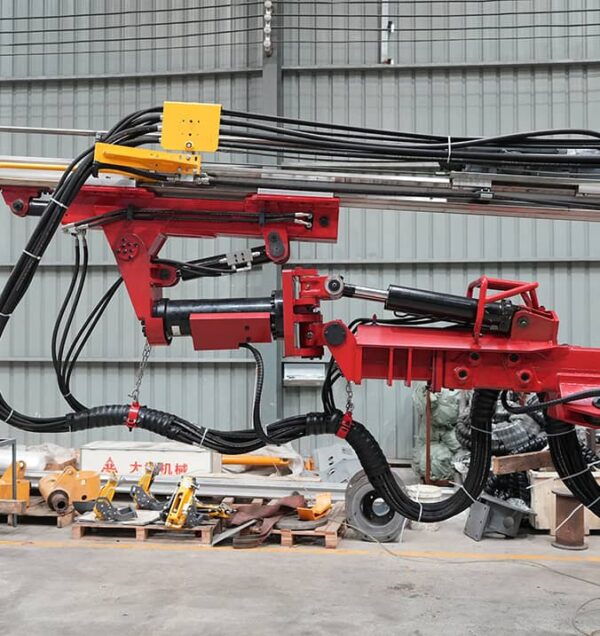
Boom configuration determines the rig’s ability to cover cross-sectional profiles. Single-boom units suit smaller drifts (2.5m x 2.5m to 3.5m x 3.5m), while double-boom and triple-boom arrangements address main haulage drifts and production stopes. The articulation points—typically three to five axes—enable parallel holding and automatic angle compensation. For tunneling applications requiring strict profile control, look for booms with proportional joystick control and electronic angle sensors that feed back to the drilling computer. Coverage area specifications should match the planned tunnel cross-section with a minimum 15% overlap margin to avoid redrilling.
Application-Specific Requirements for Underground Drill Rigs
Different underground operations impose distinct demands on drilling equipment. The following breakdown connects operational scenarios with specific machine attributes.
Development Drilling in Hard Rock Mines
- Hole diameter range: 45mm to 89mm for production blasting patterns
- Feed length: Minimum 3.7m to accommodate standard 3.66m drill steel
- Rotation speed: 0 to 200 rpm with variable torque up to 1,500 Nm
- Auto-parallel holding: Essential for maintaining consistent drill angles across the face
- Dust collection: Dry-type or wet-type systems matching ventilation regulations
Development rigs typically operate in advancing headings, requiring rapid positioning between holes. A underground drill rig for sale intended for development should feature a robust carousel or rod-handling system that minimizes non-productive time. The feed carriage design—whether chain-driven or cylinder-driven—affects both pulling force and feed speed. Chain-driven systems provide smoother extension rates for long holes, while cylinder-driven units offer simpler maintenance in high-abrasion conditions.
Production Drilling for Longhole Stoping
Longhole production drilling extends hole lengths from 15m to over 60m, demanding exceptional feed stability and hole deviation control. Key technical specifications include:
- Feed force: 12 to 20 tonnes for accurate hole straightness
- Rotation torque: 2,500 to 4,500 Nm for efficient rock cutting
- Guide tube diameter: Matches drill string size to minimize vibration
- Electronic angle measurement: Inclinometers with ±0.1° accuracy
When evaluating a production-class underground drill rig for sale, prioritize units with automated drilling cycles. These systems allow the operator to pre-program feed pressure, rotation speed, and flushing parameters for each rock type encountered. The result is consistent hole quality and reduced drill steel consumption—factors that directly impact monthly tonnage from the stope.
Tunneling and Civil Infrastructure Applications
Civil tunneling projects introduce additional constraints: strict overbreak control, limited working space, and often, urban vibration limits. Tunnel drill rigs require:
- Low ground pressure: Track or wheel systems with ground pressure below 100 kPa
- Multiple boom capability: Cover larger face areas efficiently
- Precision feed alignment: Laser or total station integration for accurate profile
- Noise reduction: Acoustically dampened cabins and exhaust systems
These rigs often include roof-bolting attachments or can be configured with multiple carrier modules. For infrastructure projects, the underground drill rig for sale should demonstrate a service history in similar ground conditions—whether soft sedimentary rock, weathered granite, or mixed face geology.
Technical Performance Indicators for Rig Evaluation
Beyond basic specifications, several performance metrics distinguish high-capability underground drill rigs. These indicators help mining engineers and equipment managers compare different models effectively.
Penetration Rate and Specific Energy
Penetration rate—measured in meters per minute—depends on rock hardness, bit type, and applied feed force. A typical range for competent granite is 0.8 to 1.5 m/min with a 64mm bit. However, specific energy (kJ/cm³) provides a more standardized comparison metric. Lower specific energy values indicate more efficient rock fragmentation, translating to lower fuel consumption and reduced drill steel wear. When assessing a underground drill rig for sale, request penetration data from the manufacturer’s rock database or independent testing reports.
Hole Deviation Characteristics
Hole deviation—the angular change over the hole length—remains a critical quality parameter. For longhole production rigs, deviation should not exceed 2% of hole length under standard conditions. Factors influencing deviation include feed beam stiffness, rotation concentricity, and automatic alignment systems. Advanced rigs incorporate adaptive control algorithms that adjust feed parameters during drilling to compensate for changing rock hardness.
Availability and Maintainability
Equipment availability directly affects project schedules. Look for rigs with modular component designs that enable fast replacement of wear parts—drifters, rotation motors, and feed cylinders. Maintainability features to consider:
- Centralized greasing points: Reduce service time and ensure proper lubrication
- Quick-connect hydraulic fittings: Speed up hose replacement
- Onboard diagnostics: Display fault codes and service intervals
- Access platforms: Safe, stable walkways for daily inspections
Aivyter designs its drilling equipment with maintainability as a primary engineering requirement, ensuring that daily service checks and major overhauls can be completed with standard workshop tools.
Automation and Data Integration in Modern Drill Rigs
The transition toward semi-autonomous and fully autonomous drilling operations has transformed equipment selection criteria. Modern underground drill rig for sale offerings increasingly include these automation features:
- Drilling cycle automation: One-touch sequence control for the entire hole
- Collision avoidance systems: Proximity sensors and interlocked boom movements
- Data logging: Record penetration, pressure, and rotation values per hole
- Remote operation: Line-of-sight or tele-remote control from a safe location
Data integration with mine planning software enables real-time adjustment of blast designs based on actual drilling results. This feedback loop improves fragmentation and reduces overbreak, particularly in complex ore bodies with variable geology.
Operational Factors for Underground Drill Rig Selection
Several site-specific parameters influence the final selection decision. These include drift dimensions, tramming distances, ventilation capacity, and power availability.
Drift Dimensions and Tramming Clearance
The physical profile of the underground opening dictates machine dimensions. Measure the minimum width, height, and turning radius at the operating site. The rig’s tramming speed—typically 4 to 8 km/h for track-mounted units—affects cycle times between headings. For multi-level operations, ensure the selected rig has adequate gradeability (minimum 25° for ramp access) and ground clearance for sump crossings.
Ventilation and Power Supply
Diesel-powered rigs require ventilation rates that match the engine’s exhaust output—typically 0.05 to 0.08 m³/s per kW of engine power. Electric-hydraulic rigs eliminate this ventilation burden but require trailing cables and suitable power distribution. The choice between diesel and electric drive often depends on the mine’s infrastructure and the distance from the portal or electrical substations.
Ground Conditions and Bit Compatibility
Ground hardness, abrasivity, and fracture frequency affect both bit selection and drilling strategy. For abrasive formations like quartzite or banded iron formations, consider rigs with higher rotation torque and robust dust collection. For fractured or blocky ground, lower feed force and higher rotation speeds reduce bit jamming and rod breakage.
Common Technical Challenges and Mitigation Strategies
Even with careful selection, underground drilling operations encounter recurring challenges. Understanding these issues helps in specifying the right equipment and operational protocols.
Drill Steel Breakage and Fatigue Management
Rod breakage results from fatigue cycles, improper thread torque, or rapid feed rate changes. Mitigation involves selecting rigs with thread-joint sensors that detect over-tightening and implementing rod rotation programs that distribute wear evenly. Automated flushing systems that maintain consistent air or water pressure also reduce stress on drill steel connections.
Water Ingress and Flushing Efficiency
Water inflow in wet ground conditions can overwhelm flushing systems, leading to poor hole cleaning and reduced penetration. Rigs with high-pressure water pumps (above 25 bar) and variable flow control adapt to changing water conditions. Some advanced systems include automatic flow adjustment based on return-water pressure, ensuring optimal chip removal without excessive water usage.
Dust Control in Dry Operations
In dry-ground applications, dust generation creates health and visibility hazards. Wet-type dust suppression systems that inject water at the bit face are effective, but they require careful water quality management. Dry-type systems with cyclone pre-separators and cartridge filters are preferred for operations where water availability is limited. Regular filter maintenance—daily cleaning or replacement—is essential for sustained performance.
Inspection Protocol for Used Underground Drill Rigs
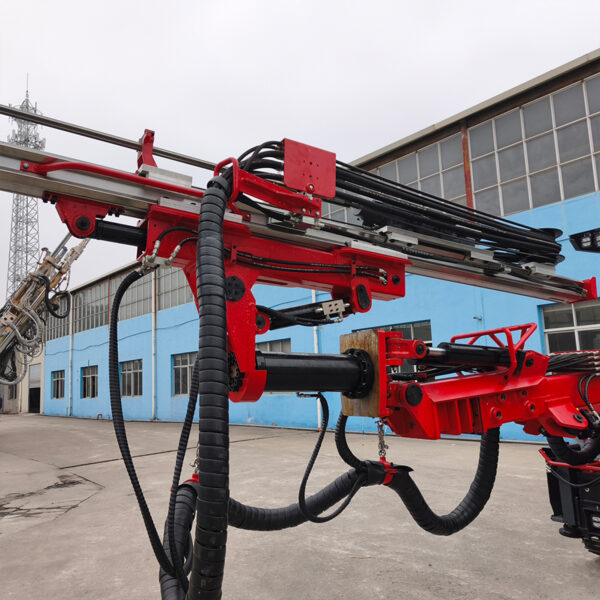
For operations considering a used underground drill rig for sale, a structured inspection process identifies potential issues before purchase. The inspection should cover:
- Hydraulic oil analysis: Check for water, particle counts, and viscosity changes
- Drifter performance: Test impact rate and feed pressure under load
- Track or tire condition: Measure wear depth and inspect for cracks
- Boom pivot points: Check for slop or excessive play in bushings
- Electrical system: Test all sensors, displays, and control circuits
- Cooling system: Inspect radiator, charge-air cooler, and fluid levels
Request maintenance records and service history for the past 2,000 operating hours. Pay attention to drifter rebuild intervals and any major hydraulic component replacements. A well-documented service history indicates the rig has received proper care, reducing the risk of unscheduled downtime after purchase.
Aivyter provides comprehensive technical documentation and pre-sale inspection services for its range of underground drilling equipment, supporting buyers in making informed decisions.
FAQ: Underground Drill Rig for Sale
Q1: What distinguishes a top-hammer drill rig from a DTH rig for underground use?
A1: Top-hammer systems transmit impact energy directly through the drill string to the bit, making them effective for hole diameters up to 102mm in hard rock. Down-the-hole rigs locate the hammer directly behind the bit, delivering more energy per blow for larger diameters (102mm to 203mm) and deeper holes. Top-hammer rigs generally have higher penetration rates in competent ground, while DTH rigs maintain better hole straightness in fractured or variable geology.
Q2: How do I determine the right feed force and rotation speed for my ground conditions?
A2: Feed force and rotation speed are interdependent—higher feed forces require corresponding increases in rotation torque to maintain efficient cutting. As a starting point, calculate feed force (kN) as 1.2 to 1.5 times the bit diameter (mm) for hard rock. Rotation speed (rpm) should be between 150 and 250 for bits up to 64mm, reducing to 80-120 rpm for 89mm bits. Field testing with instrumented rigs provides the most accurate settings for specific formations.
Q3: What maintenance intervals are typical for a heavy-duty underground drill rig?
A3: Daily maintenance includes greasing all pivot points, checking hydraulic oil levels, inspecting filters, and cleaning dust collection systems. Weekly intervals cover oil sampling, coolant checks, and track tension adjustments. Major service intervals—including drifter rebuilds, hydraulic pump overhauls, and engine servicing—occur every 1,500 to 2,000 operating hours, depending on manufacturer recommendations and operating conditions.
Q4: Can an underground drill rig be used for both development and production drilling?
A4: Multi-purpose rigs exist but involve compromises. A rig configured for development typically has a single boom, higher tramming speed, and automation for face drilling patterns. Production rigs emphasize feed stability, longer feed lengths, and higher torque for extended holes. Some manufacturers offer modular designs where the same carrier accepts different feed booms, enabling role changes with a few hours of workshop time.
Q5: How does automation affect the productivity of an underground drill rig?
A5: Automation reduces cycle time by eliminating manual adjustments between holes, maintaining consistent drilling parameters, and enabling parallel tasks—the operator positions the next boom while the current boom drills. Data from automated systems also supports predictive maintenance by tracking parameter trends. A well-implemented automation package can increase daily advance by 15-25% compared to manual operation in identical ground conditions.
Q6: What safety features should I prioritize when selecting an underground drill rig?
A6: Key safety features include falling-object protection structures (FOPS) and rollover protection structures (ROPS) certified to ISO 3449 and ISO 3471 standards. Automatic emergency stop systems, audible reversing alarms, and proximity detection systems for personnel are also critical. For electric-powered rigs, ensure ground-fault protection and cable-handling systems that prevent tripping hazards.
Q7: How does hole deviation affect blasting results and how can it be controlled?
A7: Hole deviation changes the effective burden and spacing in blast patterns, leading to inconsistent fragmentation and potential overbreak. Control measures include using heavy-wall drill pipes, maintaining straight feed beams, and implementing electronic angle guidance systems. For longhole production, deviation monitoring during drilling allows real-time adjustments to charge design, compensating for any angular drift.
For detailed technical specifications and customized recommendations for your underground operation, please send your inquiry to our engineering team.
Aivyter offers a comprehensive range of underground drilling solutions, supported by application engineering and after-sales service. Contact our specialists to discuss your project requirements.
about
Aivyter
We provides trusted air compressors and mining equipment, engineered for durability, efficiency, and demanding industrial applications.